Blog / Systems
Systems · Buyer guide
Zero-Radius or Rounded Stainless-Steel Sink Corners?
The short answer
Choose the corner shape you can comfortably wipe and that suits the cookware you wash. A small radius can keep a rectangular appearance while making the transition less abrupt, but the exact bowl matters. Compare physical samples; corner radius alone does not establish drainage quality or how often a sink needs cleaning.
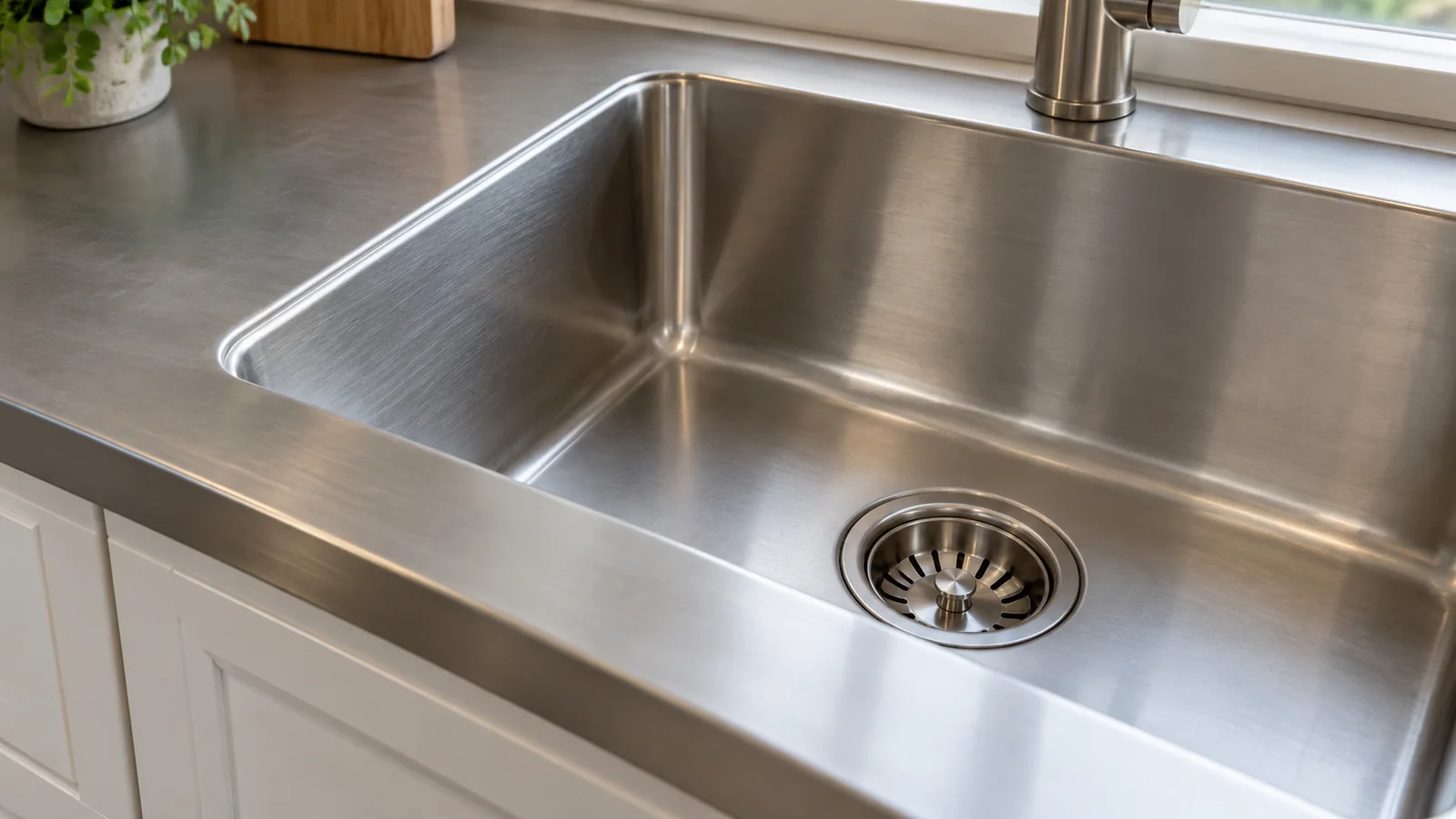
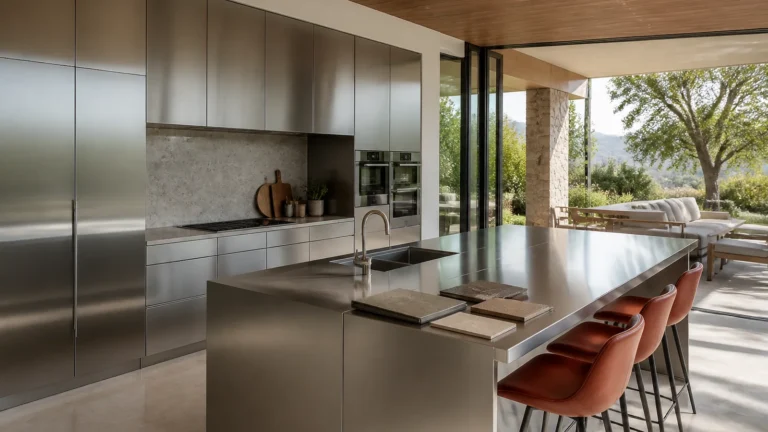
A squared bowl can suit a slim stainless-steel worktop and flat-front cabinetry. Before choosing it from a photograph, check how you would wipe cooking residue out of its corners.
What does “radius” mean in a sink specification?
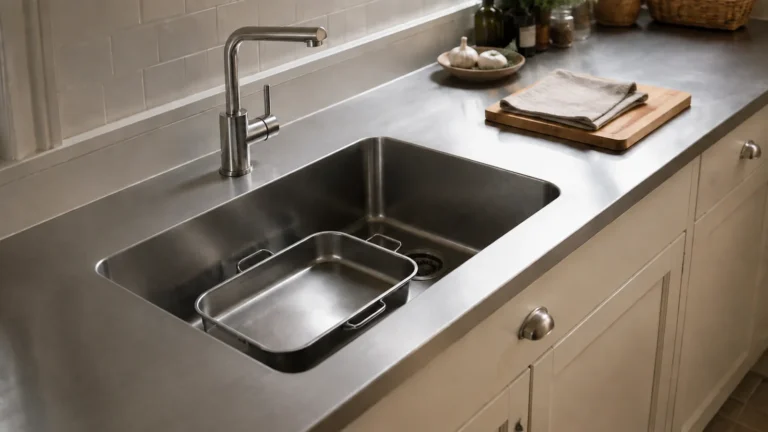
Radius describes a curve, not the angle of the corner. A zero-radius description refers to a sharp-looking junction; a small-radius bowl has a tighter curve than a broadly rounded one. Ask the supplier which junction the stated measurement describes: the vertical corners, the bottom-to-wall transition, or both. A rectangular top opening does not answer that question.
There are documented residential options between a visibly sharp corner and a generously curved bowl. For example, BLANCO identifies 10 mm corners in its RADIUS 10 U Large model and presents them as a cleaning feature. That dimension is an example, not a universal recommendation or an Anray standard. BLANCO RADIUS 10 specification.
Compare the actual internal drawing. “Modern square sink” and “easy-clean radius” are not sufficiently precise descriptions for a custom fabrication order.
Do zero-radius corners always create a cleaning problem?
Owner experiences differ. In two discussions, some owners were satisfied while others disliked the extra attention their corners needed. Those comments give you a cleaning question to test on a sample; they do not establish a failure rate for zero-radius sinks. First owner discussion; second owner discussion.
Try the cleaning tools your household normally uses. If reaching a sample’s corner requires an awkward movement or an extra brush you do not want to keep, choose another shape. You may also decide that the appearance is worth the additional cleaning step.

Use a wipe test before choosing the bowl
The following sample exercise checks your cleaning preference. It does not measure hygiene or provide a laboratory comparison.
- View the candidate bowl in person, or request a representative corner sample and section drawing.
- With the owner’s permission, use a clean damp cloth to trace the bottom junction and vertical corner. Do not introduce staining material or unapproved chemicals to a showroom sample.
- Check whether your hand and normal cleaning tool reach the full junction without forcing the movement.
- Lift out any removable grid and repeat. Include the extra handling in your assessment.
- Record the shape you prefer against the sample or model reference, rather than approving only a marketing name.
A video can show access, but it cannot tell you how a surface feels to your hand. Where a physical comparison is not possible, note that limitation instead of claiming the cleaning question has been settled.
Check cookware fit at the bottom, not only at the opening
Draw the base outline of the largest item you regularly wash, including any part that needs to sit flat. Compare it with the usable bowl bottom on the supplier’s drawing. Two bowls with similar top openings can place that item differently because their corners and sides are different.
Do not automatically enlarge the entire sink to compensate for a corner you have not tested. You may be trading away preparation space unnecessarily. The separate sink size and depth guide covers that wider layout decision.
Will rounded corners make the sink drain better?
Do not approve drainage from the corner radius. A drawing’s radius dimension is not a water-test result. Evaluate the bowl floor, drain arrangement and installed assembly separately, using an agreed observation method rather than assuming a rounded bowl will empty perfectly.
Manufacturer specifications also separate these features. Franke’s RGX160 sheet lists its corner radius, rear drains and sound treatment as distinct entries. The procurement lesson is to keep those requirements distinct in your own schedule. Franke RGX160 technical sheet.
For water collecting in an installed bowl, use the existing integrated-sink drainage guide. This corner-selection article does not replace that diagnostic or acceptance process.
What should be approved before fabrication?
Ask for an internal plan and a section that label the relevant radii, usable bottom dimensions and drain position. Link these to the agreed surface sample. For a welded bowl, have the fabricator explain how the proposed corner will be made and finished; the rendering is not evidence of the manufactured result.
The practical choice is the corner that meets the household’s cleaning preference without losing the usable bowl shape or visual character it wants. A small radius is worth comparing when the brief calls for clean rectangular lines with a less abrupt internal transition. Zero-radius and broader curves remain options if the actual sample fits the user’s routine.
Review the project before production
Send your floor plan, destination country and project quantity for a preliminary specification review.