Blog / Materials
Materials · Buyer guide
304 vs 316 Stainless-Steel Kitchen Sinks: Is the Upgrade Worth It?
The short answer
A 316 sink can be worth considering when chloride exposure makes additional corrosion resistance useful. It is not an automatic upgrade for every indoor kitchen. Compare the actual bowl, finish, fabrication and supplied parts on equal terms, then ask the supplier to justify the grade for your water, location and cleaning routine.

Before paying more for a 316 sink, ask the supplier what the extra cost buys for your kitchen. Compare the two quotations against the same bowl dimensions, finish and installation detail.
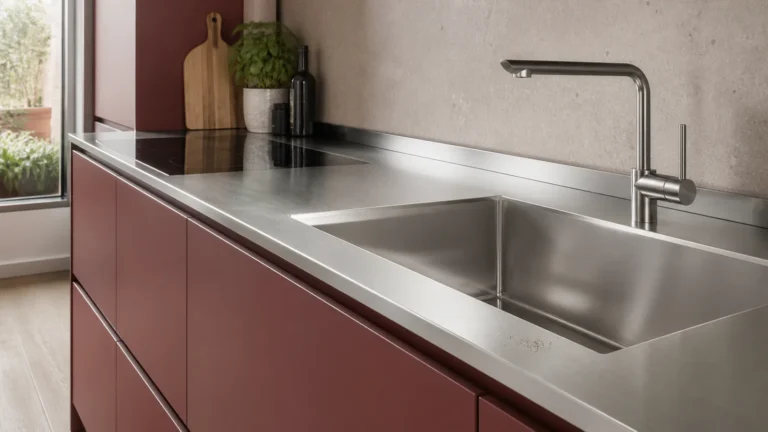
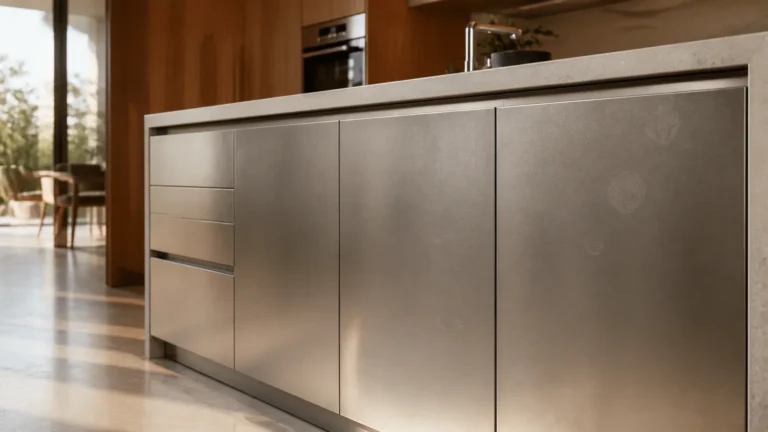
This guide concerns the sink in a residential stainless-steel worktop or kitchen system. It does not assume that every cabinet front is exposed metal, or that the bowl, worktop and concealed cabinet parts share one material specification.
What does the grade change?
The relevant difference is corrosion resistance. A grade label does not establish how the finished sink will look. The British Stainless Steel Association explains that molybdenum in 316 helps resist chloride-related breakdown of the protective surface layer. Temperature and acidic conditions also affect localised corrosion. These are reasons to review 316 for demanding exposure, although it remains susceptible to damage. BSSA: localised corrosion and alloy selection.
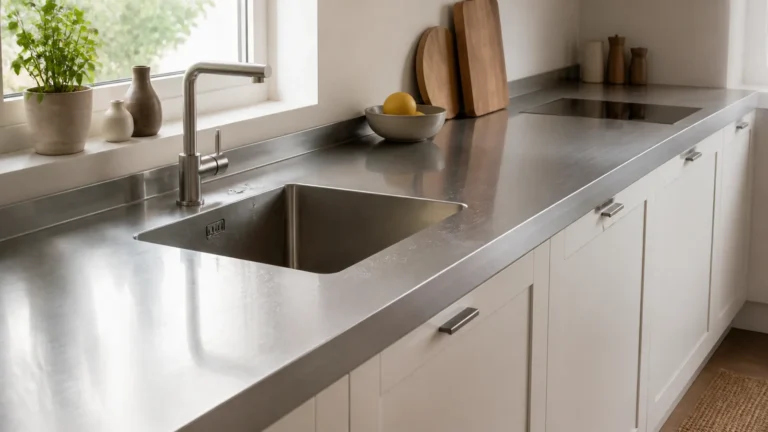
Keep two decisions separate: whether the alloy suits the environment, and whether the complete sink suits the household. The grade label does not tell you the bowl dimensions, drain location, corner shape, underside treatment or installation detail. None of those should disappear from the comparison simply because one quote says 316.
Does an indoor kitchen sink need 316?
304 is used in residential sinks: BLANCO specifies 304-series steel for its RADIUS 10 U Large model. That example establishes a use in this product category, but suitability still depends on the particular sink and its intended conditions. BLANCO product specification.
Ask the supplier to assess a documented 304 option for a normal indoor brief and explain whether the actual exposure justifies a different grade. Include salt-laden air, an unusual water supply or outdoor exposure in that review. A coastal address alone tells the supplier less than the sink’s location and what reaches it.
Do not import a chloride limit from an industrial water-system chart and treat it as a kitchen guarantee. A household sink has its own wetting, drying, deposits and cleaning conditions. Where water chemistry is a material concern, obtain the available water information and have the supplier or corrosion specialist assess it.

Ask what the 316 price actually includes
A homeowner discussion about sourcing a particular sink combines alloy, dimensions and drain position in the same request. That is a useful buying lesson: a suitable material in the wrong configuration is still the wrong sink. The comments are shopping experiences, not material verification. Homeowner sink-selection discussion.
Request two quotations against the same drawing and fill in the following comparison. Treat blank entries as unresolved, not as equivalent.
| Item to compare | What to request | Why it matters to the decision |
|---|---|---|
| Alloy scope | Grade for bowl, worktop, waste fitting and other supplied metal parts | Identifies exactly which components are included in the upgrade |
| Construction | Specified sheet thickness, support and joining detail | Prevents unlike assemblies being presented as a grade-only comparison |
| Daily use | The same usable bowl dimensions, corners and drain arrangement | Keeps the washing task constant |
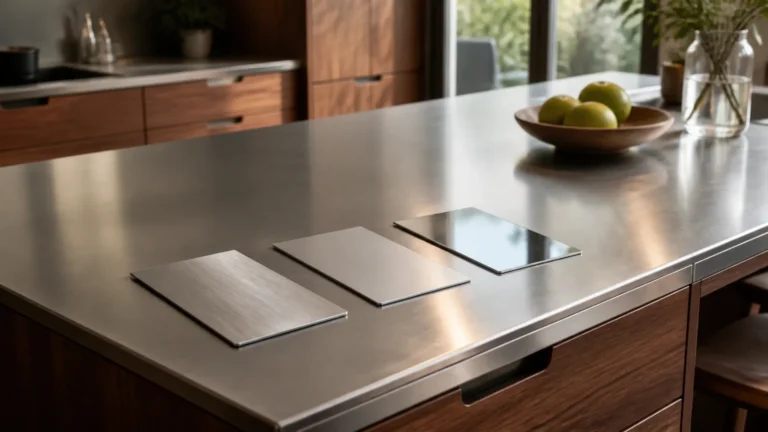
| Appearance | Named finish and approved physical sample | Makes the visual requirement explicit |
| Commercial scope | Freight basis, included parts, exclusions and written warranty terms | Shows what is actually being purchased |
Do not apply a generic percentage premium found in a forum. Ask for the project-specific difference and what causes it. If changing the grade also changes the bowl model or fabrication route, it is no longer an alloy-only price comparison.
Which specification belongs in the order?
Use a component schedule, not a line that says “all premium stainless.” Identify the bowl and worktop separately, record the agreed grades and connect the material documents to the supplied parts. The amount of verification should reflect the purchase risk and agreed scope.
For a welded-in bowl, ask the fabricator to confirm the proposed material combination and fabrication procedure before ordering either component. Do not assume a separately purchased sink can be welded into any worktop. For the verification process, use our material-identification guide; a visual impression is not a material record.
How should you make the final choice?
Choose the lower-cost option only after the supplier has accepted the exposure brief and the complete specification meets the project requirements. Consider the 316 option when its additional corrosion resistance addresses a documented condition. If neither quote identifies construction, finish or scope, resolve those omissions before comparing totals.
For a whole-kitchen material decision, start with the broader 304 and 316 kitchen-grade guide. This sink-specific checklist complements it; it is not a requirement to upgrade every concealed cabinet component.
Review the sink as part of the kitchen
Anray’s exact grade availability, bowl construction and supporting documentation must be confirmed for the proposed project. Local partners remain responsible for final site measurement and installation within the agreed handoff.
Review the project before production
Send your floor plan, destination country and project quantity for a preliminary specification review.