Blog / Materials
Materials · Specification guide
304 or 316 Stainless Steel: Which Grade Belongs in Your Kitchen?
8 min read · Updated August 27, 2026
The short answer
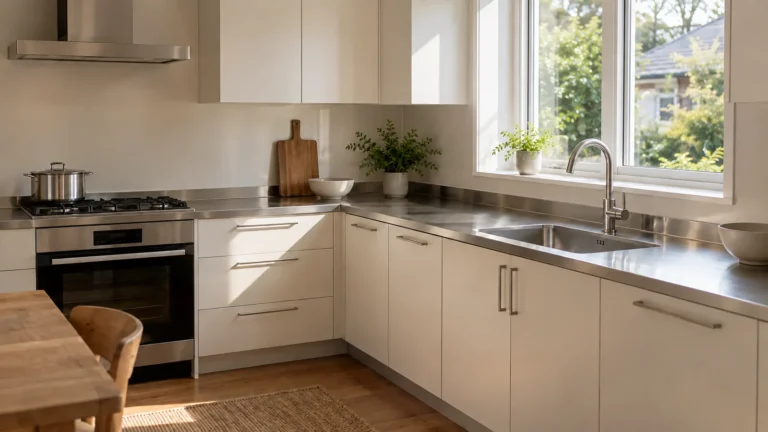
304 is the right specification for most indoor residential kitchens. Choose 316 when salt air, chlorides or severe exterior exposure materially increase corrosion risk.
Compare the environment first.
Both grades can deliver the same refined, durable finish. The meaningful difference is 316’s added resistance in chloride-rich and highly exposed environments.
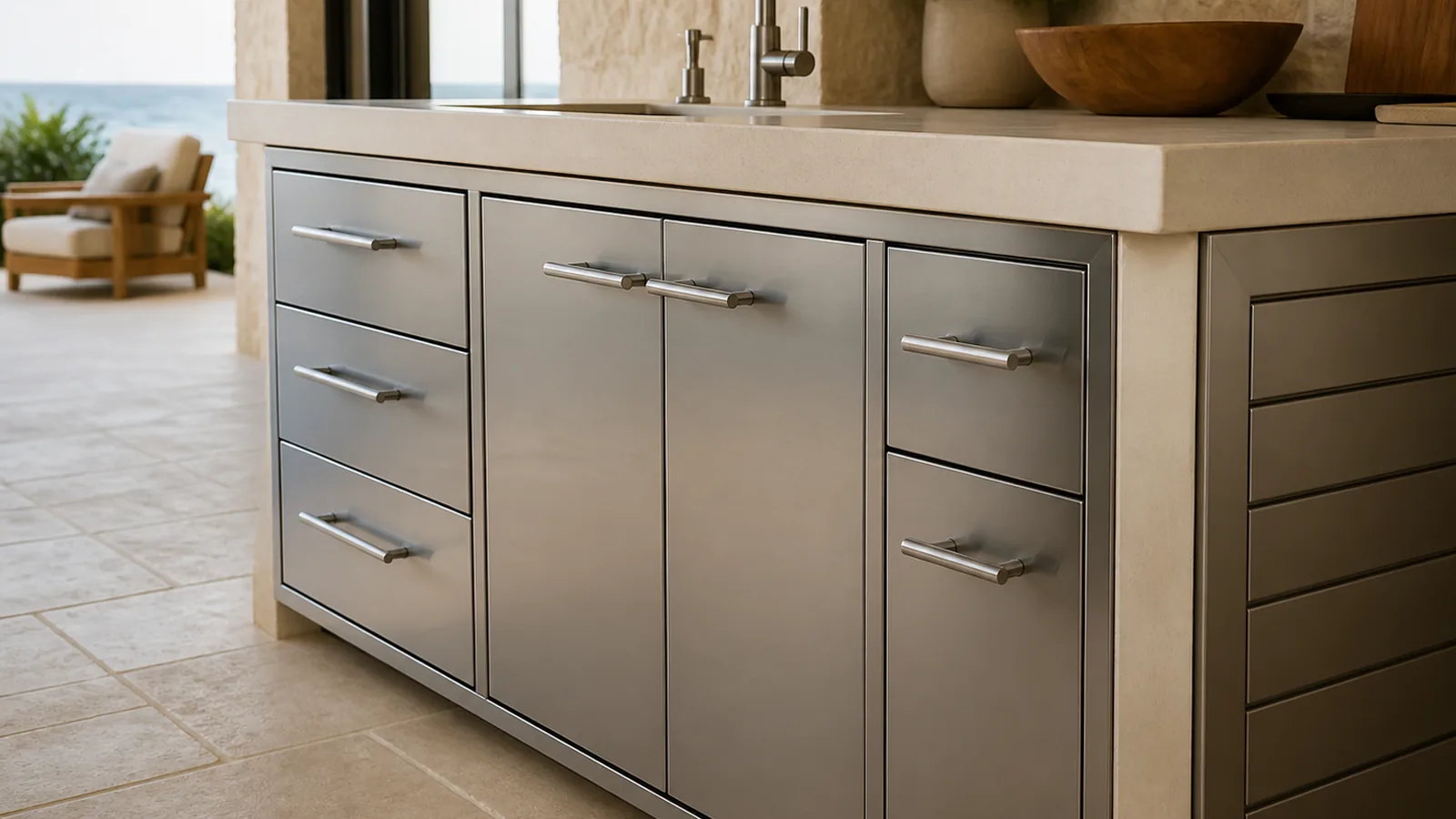
An indoor villa kitchen in a controlled environment and an exposed outdoor kitchen near the coast do not have the same specification conditions.
| Decision factor | 304 | 316 |
|---|---|---|
| Indoor residential use | Recommended | Usually unnecessary |
| Coastal exterior use | Case dependent | Preferred |
| Maintenance discipline | Routine | Routine |
| Project cost | More efficient | Higher material cost |
Grade does not replace good detailing.
Edges, joints, drainage, hardware compatibility, cleaning access and fabrication quality still affect long-term performance.
A higher grade does not correct trapped moisture, unsuitable hardware, poor drainage or neglected maintenance.
Finish is a separate decision.
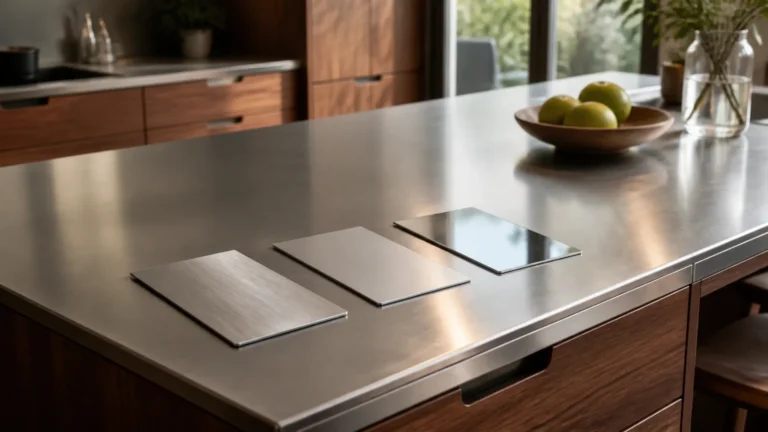
Brushed, satin and custom finishes change appearance and maintenance expectations. Samples should be reviewed with the room lighting, stone and hardware before approval.
Common questions
What clients usually ask.
Will 304 rust?
It is corrosion-resistant, not maintenance-free. Correct fabrication, cleaning and environment remain important.
Does 316 look more premium?
No. Grade and visible finish are separate decisions; either can receive a premium brushed surface.
Should every outdoor kitchen use 316?
Not automatically. Exposure, distance from the sea, cover and cleaning frequency should be reviewed together.
Related reading
Continue the decision.
Have a live project?