Blog / Materials
Materials · Buyer guide
How Do You Remove Hard-Water Spots from a Stainless-Steel Kitchen Worktop?
The short answer
Start with warm water, mild detergent and a soft cloth, rinse, then dry in the direction of the visible grain. If mineral scale remains, use only a cleaner approved for that exact stainless finish and test a hidden area first. Do not use hydrochloric-acid cleaners, steel wool or concentrated bleach.
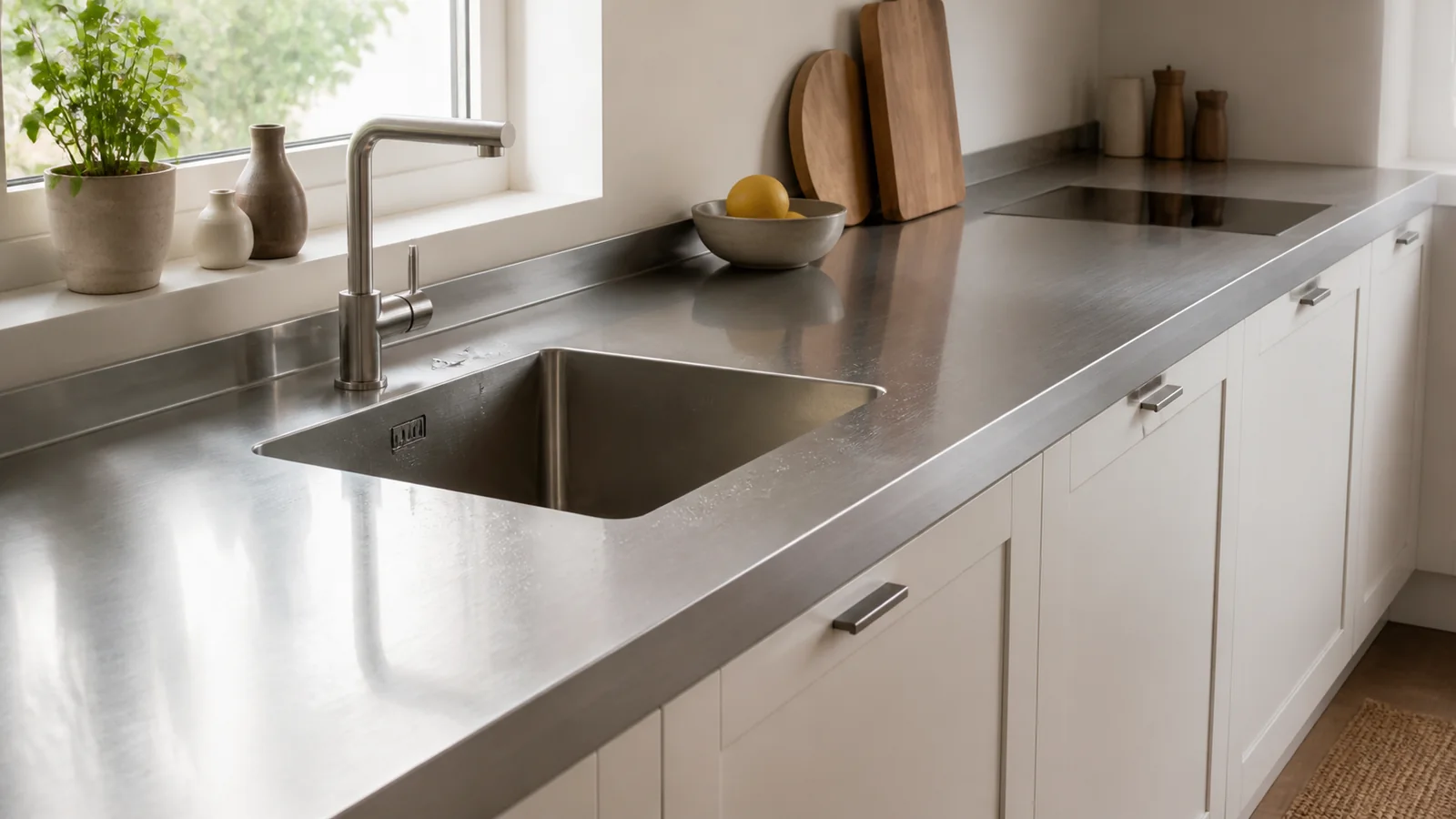
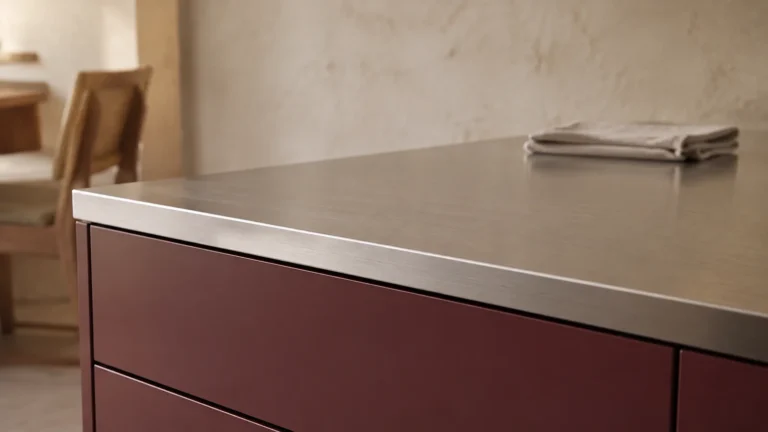
A stainless-steel worktop can be structurally sound and still show rings, droplets or a pale haze after water evaporates. In a residential kitchen, the visible steel is usually the continuous worktop, integrated sink, low upstand and appliance interface; the furniture fronts may be white, wood, grey or another residential finish. The cleaning method therefore has to protect both the directional steel surface and every adjacent seal, coating and front.
Identify the mark before choosing a cleaner
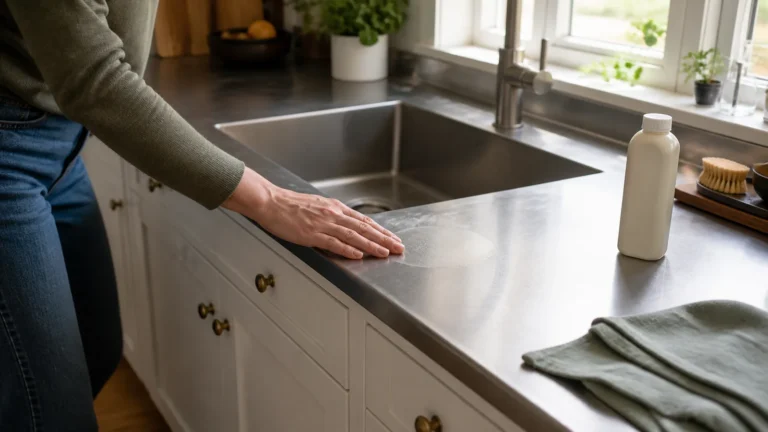
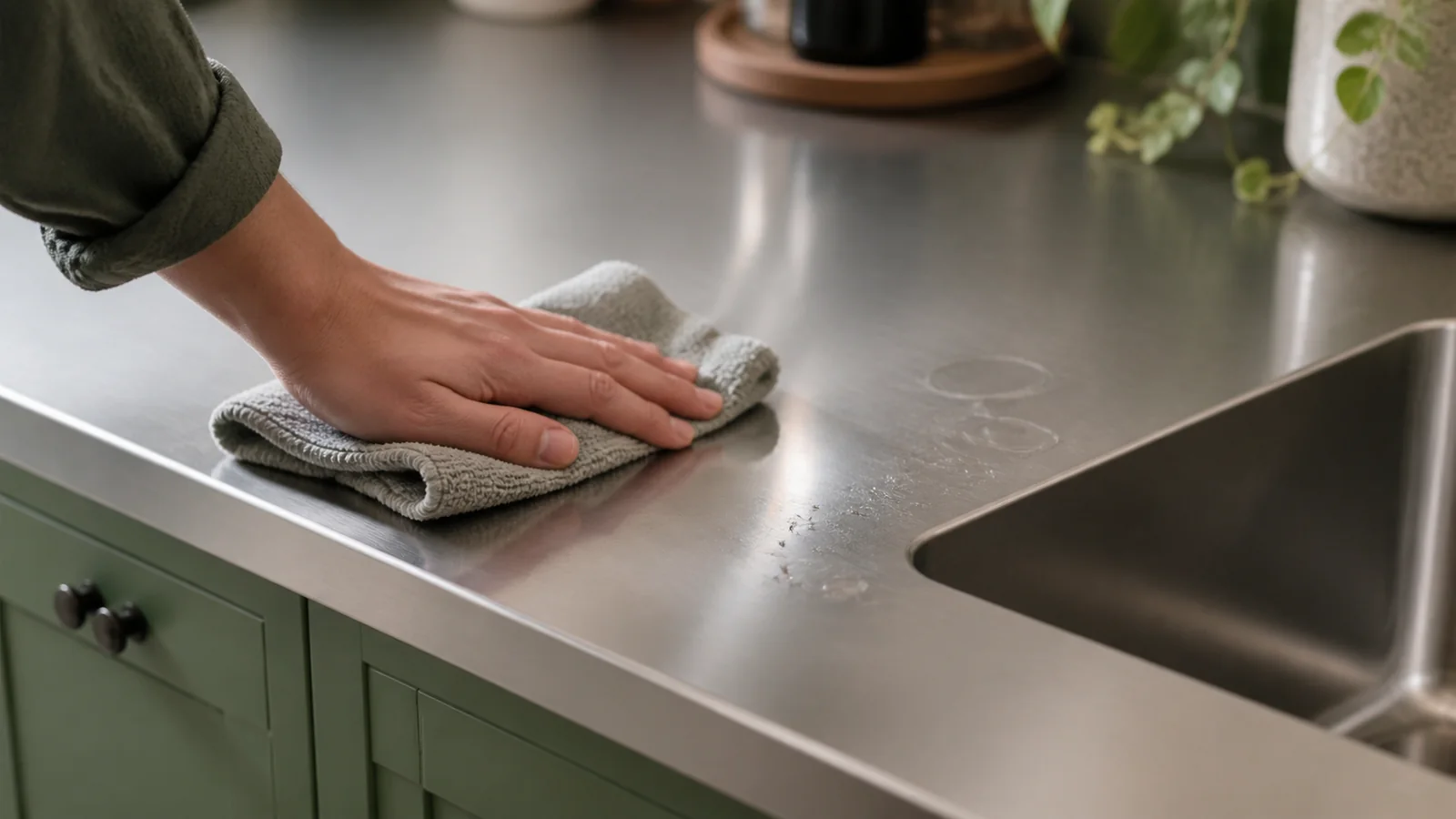
Hard-water spotting is residue left after water evaporates. It may appear as pale rings, a cloudy patch or a rough deposit around the sink and faucet. It is different from a scratch, which changes the surface texture; adhesive residue, which may feel tacky; and corrosion or free-iron contamination, which can appear brown or orange.
The distinction matters because one aggressive “all-purpose” treatment can turn a removable deposit into permanent finish damage. Photograph the mark in normal light, wipe it once with warm water and mild detergent, and observe whether it changes. If the mark disappears while wet and returns after drying, mineral residue is likely. If it remains as a groove, pit or directional mismatch, stop treating it as limescale.
The worldstainless domestic cleaning guide states that stainless is easy to clean but not maintenance-free. It discusses limescale separately from fingerprints, burnt food and other residues. That is the right mindset: diagnose the surface condition, then use the least aggressive method that can solve it.
Use a low-risk cleaning ladder
- Remove loose grit first. Rinse away particles that could be dragged across the grain.
- Wash with warm water and mild detergent. Use a soft clean cloth or non-scratching sponge. Do not start with an abrasive pad.
- Rinse thoroughly. Cleaner residue can create a new haze that looks like the original problem.
- Dry with a clean cloth. Wipe in the direction of the visible finish where the worktop has a directional grain.
- Escalate only if scale remains. Use the fabricator’s approved product and dilution, test a concealed area and protect adjacent materials.
The British Stainless Steel Association cleaning guidance recommends clean rinse water and drying to avoid marks. It also treats adherent hard-water scale as a separate cleaning problem and advises testing any chemical or abrasive method on a hidden or non-critical area before using it on the visible surface.
ASSDA’s indoor stainless cleaning guidance similarly begins with mild detergent and controlled escalation, followed by rinsing and drying. Neither source supports improvising with the strongest product in the cupboard.
Do not assume every acid is equivalent
Some mild acids can dissolve mineral scale, but the product, concentration, contact time, surface finish and adjacent materials all matter. A cleaner that is acceptable for one bare stainless sink may be unsuitable for a coloured or coated metal surface, a bonded joint, a decorative front or a particular sealant. Never infer compatibility from a short social-media cleaning video.
Hydrochloric-acid cleaners must not contact stainless steel. Chloride-containing products and concentrated hypochlorite bleach can cause staining or pitting. If a project requires a stronger treatment, the responsible fabricator should identify the product, dilution, contact time, rinse method and personal-protection requirements in writing.
Avoid these common mistakes
| Mistake | Why it creates risk | Better control |
|---|---|---|
| Steel wool or a carbon-steel scourer | Can scratch the finish and leave iron particles that later rust | Use a clean soft cloth or an approved non-scratching pad |
| Scrubbing across a directional grain | Can create a visible cross-grain patch | Follow the approved finish direction |
| Leaving bleach or cleaner to soak | Prolonged chloride contact can stain or pit stainless | Use only the approved dilution and contact time, then rinse |
| Oiling over dirty scale | May mask residue temporarily while attracting dust | Clean, rinse and dry before any approved protective treatment |
| Polishing one small patch aggressively | May change gloss or grain and create a larger visual defect | Test a hidden area and treat the full affected zone consistently |
Recurring spots may indicate more than cleaning frequency
If the same area develops heavy residue quickly, check the system rather than blaming the housekeeper. Ask whether water is ponding because the worktop or sink is not level, whether a faucet sprays outside the intended wet zone, whether a low upstand traps water, or whether the local supply has unusually high mineral content. A care plan cannot compensate for a drainage defect.
For an integrated sink, use the separate guide on preventing standing water. If the marks are brown, orange or associated with pits, use the rust-coloured spot diagnostic before applying another cleaner.
Write the care method into handover
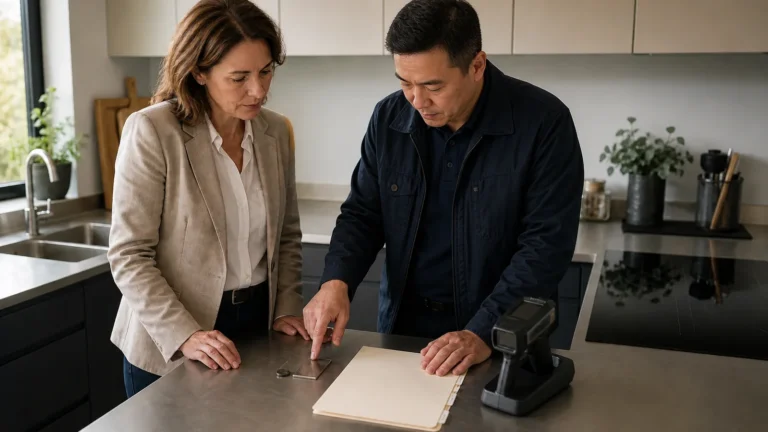
A project should not finish with a generic statement such as “clean with stainless cleaner.” The handover pack should identify which exposed components are bare stainless, which are coated or patterned, the visible grain direction, the approved routine cleaner, the approved scale-removal method, prohibited products and the person who should be contacted if the finish changes.
- Photograph the accepted worktop and sink under normal lighting.
- Record the water quality or known hard-water condition where relevant.
- Provide the exact cleaner name or performance criteria rather than a colour description.
- State dilution, contact time, rinse and drying steps.
- Keep carbon-steel wool, dirty abrasive pads and chloride cleaners off the care list.
- Explain when the user should stop cleaning and request inspection.
Use a handover water-mark test
Before practical completion, clean a representative wet-zone area with the approved method, rinse it with the site’s water and allow it to dry under normal conditions. This does not predict every future mark, but it demonstrates the realistic appearance and care effort. If the project team expects a perfectly uniform, mark-free surface after every use, that expectation must be corrected before acceptance.
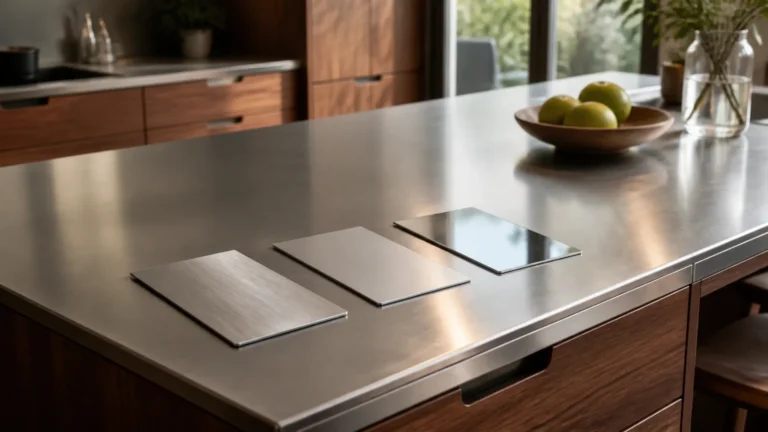
Surface care is also connected to finish selection. A highly reflective or uniformly polished surface may make droplets and wiping variations more visible than a controlled satin finish. Review finish appearance under the actual lighting and use the broader guide to keeping a residential stainless kitchen warm rather than industrial.
Questions to put in the RFQ
- What exposed stainless finish is proposed, and is it directional?
- Which routine cleaner and scale-removal method are approved?
- Which household products are prohibited?
- How will adjacent fronts, sealants and appliances be protected during cleaning?
- What water-mark appearance is normal after drying?
- Who investigates recurring ponding, discoloration or finish mismatch?
- Will the care instructions be included in the project handover pack?
Bottom line
Hard-water spots are usually a deposit-management problem, not automatic evidence of defective stainless steel. Start mild, rinse completely, dry the directional surface and escalate only with an approved method. If marks recur in one area, investigate drainage and water quality; if they are brown or pitted, stop treating them as ordinary limescale.
Review the project before production
Send your floor plan, destination country and project quantity for a preliminary specification review.