Blog / Systems
Systems · Buyer guide
Are Stainless-Steel Kitchen Cabinets Worth the Cost for Villa Projects?
The short answer
Stainless-steel kitchen cabinets can be worth the cost for a villa when moisture, heavy use, coastal exposure, cleanability or replacement risk makes the cabinet structure valuable. They are not automatically the best choice. Compare the complete installed scope and whole-life project cost, not the cabinet material price alone.
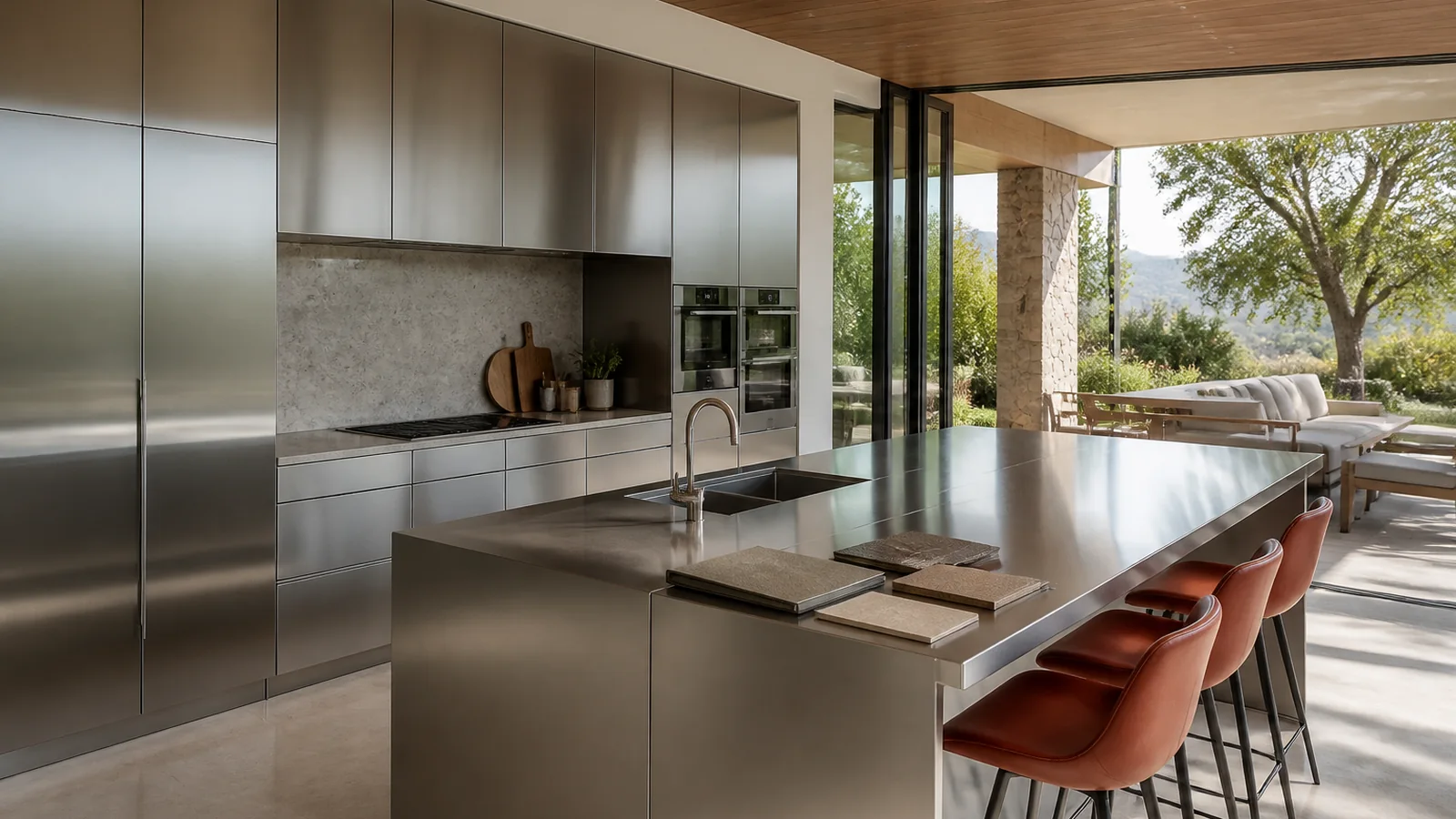
“Worth it” cannot be answered from a material sample or a price per cabinet. It depends on what problem the kitchen must solve, which parts of the system are exposed, how the villa will be used and who will maintain and service it. A higher purchase price may be rational in one zone and unnecessary in another.
First compare the complete installed scope
One quotation may include stainless-steel bodies, doors, drawers, end panels, plinths and internal accessories. Another may use metal only on the visible fronts. Worktops, appliances, freight, duties, unloading, installation and local service may also sit inside or outside the headline number.
Normalize each quotation before comparing cost. The villa kitchen quotation comparison guide provides a line-by-line structure for scope, material, drawings, interfaces, logistics and exclusions.
When stainless steel may justify its cost
- Wet or frequently cleaned zones: sink cabinets, utility rooms and other areas where the structure faces recurring moisture.
- Coastal or outdoor-adjacent exposure: locations where grade, finish, drainage, fabrication and maintenance can be specified for the actual environment.
- High-use villas: rental, multi-family or heavily occupied properties where serviceability and repeated cleaning matter.
- Projects with costly replacement access: islands, integrated stone, complex appliances or remote locations where rework disrupts several trades.
- Design intent: projects that value a precise metal aesthetic and are prepared to manage fingerprints, finish matching and visible wear.
These conditions do not prove that every stainless-steel system is suitable. The World Stainless discussion of tea staining shows why grade, fabrication, finish and maintenance still matter. Stainless steel should not be sold as corrosion-proof.
When it may not be worth the premium
- The room is dry, lightly used and easy to repair or replace.
- The buyer dislikes visible fingerprints or patina but will not approve samples or follow a care routine.
- The quotation does not identify grade, finish, panel construction or interfaces clearly enough to evaluate what the premium buys.
- Local installation and after-sales responsibility are unresolved.
- The budget would produce more value by solving layout, appliances, ventilation, worktop support or site coordination first.
- The project needs only selected wet-zone protection, making a hybrid system more rational than full stainless construction.
Compare whole-life project cost
World Stainless describes life-cycle costing as a framework that can include material, fabrication, installation, operation, maintenance, downtime, replacement and residual value. That framework is useful, but it does not establish a universal kitchen payback. The inputs must come from the project.
| Cost category | Questions for the villa project |
|---|---|
| Acquisition | What exact cabinet bodies, fronts, accessories and finishes are included? |
| Interfaces | Are appliance, worktop, sink, service and filler details resolved? |
| Logistics | Are freight, duties, unloading, storage and final-mile handling included? |
| Installation | Who installs, adjusts, connects, protects and signs off the work? |
| Maintenance | What routine cleaning and finish care are expected? |
| Rework risk | What happens if dimensions, models or site conditions change? |
| Replacement | Can a damaged visible part be identified, remade and finish-matched? |
Use stainless steel selectively when that improves value
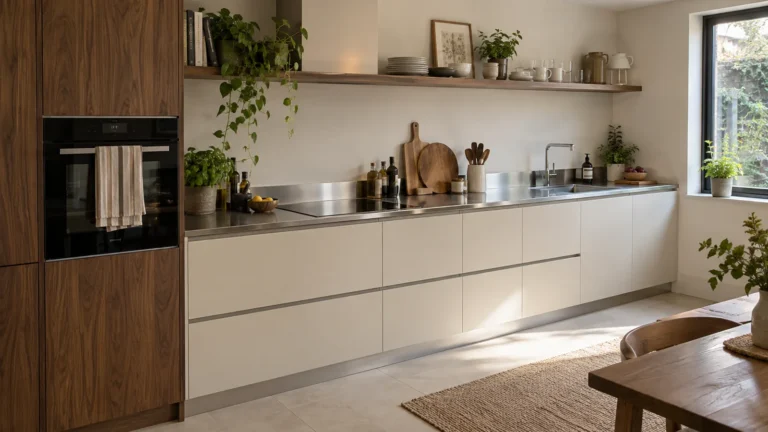
The decision is not limited to all-stainless versus no stainless. A hybrid specification may use stainless-steel structures in sink, utility, outdoor-adjacent or high-cleaning zones while using other approved materials elsewhere. Another project may use stainless bodies with timber or coated fronts to combine structural priorities with a warmer residential appearance.
Selective use only works when the interfaces are detailed. Moisture paths, plinths, fillers, end panels and worktop joints should not create an unreviewed transition between systems.
Do not pay for a vague “premium” label
A useful quotation explains what creates value: material grade by zone, finish reference, panel construction, hardware, internal organization, drawings, inspection, packaging and responsibility. A premium without a specification is difficult to verify.
Ask for the same information from every bidder. If one supplier offers 316 stainless steel everywhere and another recommends 304 indoors with a different specification for exposed areas, compare the environmental reasoning—not only the grade name. Read 304 versus 316 for kitchen projects and the coastal outdoor-kitchen specification guide before deciding.
Include the cost of coordination failure
A cabinet system that reaches site with wrong appliance openings, unresolved service conflicts or missing installation parts can erase an apparent purchase saving. Rework may affect worktops, appliances, transport, labour and programme. The risk is particularly important for imported custom work because replacement parts cross the same distance again.
Review the fit controls in why custom kitchen cabinets fail to fit on site and define receiving procedures using the shipping-damage and missing-parts checklist.
Build a project-specific comparison
- Divide the villa into indoor dry, indoor wet, outdoor-adjacent, outdoor and coastal-exposed zones.
- Record use intensity, cleaning expectations and homeowner finish preferences.
- Define the cabinet construction and finish required in each zone.
- Normalize the complete delivered and installed scope.
- Assess interface, logistics, installation and replacement risks.
- Choose full stainless, selective stainless, hybrid or another system based on those inputs.
Decision summary
| Project condition | Likely decision direction |
|---|---|
| Wet, high-use or difficult-to-replace zone with a controlled specification | Stainless construction may justify additional cost |
| Dry, low-use zone with easy local replacement | Compare alternatives; full stainless may add limited project value |
| Strong residential warmth requirement | Consider mixed fronts, stone and timber with controlled stainless zones |
| Unclear grade, finish, construction or installation scope | Do not decide on price; resolve the specification first |
Bottom line
Stainless-steel kitchen cabinets are worth the cost when their properties solve a defined project risk and the complete system is well specified. They are not automatically the superior choice for every cabinet in every villa. Make the decision zone by zone, compare whole-life project consequences and require the quotation to show exactly what the premium buys.

Review the project before production
Send your floor plan, destination country and project quantity for a preliminary specification review.