Blog / Materials
Materials · Buyer guide
Can You Put Hot Pans on a Stainless Steel Worktop?
The short answer
Some stainless steel worktops allow direct contact with hot pans; others do not. The answer depends on the complete construction and its care instructions. Until the instructions for your exact worktop permit the intended use, place hot cookware on a suitable heat-resistant trivet and keep a clear landing space beside the cooking area.

Two steel worktops with different instructions
A useful comparison appears on English page 53 of Franke’s stainless worktop care manual. The same manufacturer gives different advice for two product ranges:
| Named product | What the manual says about hot pans | Reason given for protection |
|---|---|---|
| Franke PureSteel | Direct placement is permitted, although a suitable protective surface is still recommended. | To keep food residue from burning onto the worktop. |
| Franke FineSteel | Avoid direct placement and use a suitable protective surface. | Heat can loosen the bond between the supporting frame and the surface. |
Both products have a steel surface, yet their care requirements differ. The instructions apply to the named Franke products; they do not establish a heat rating for Anray or an unidentified worktop.
What is below the steel surface?
Some worktops have layers below the steel. Veos describes stainless sheet glued to a plywood core, for example. Its construction description does not specify permission for direct hot-pan contact.
When comparing a new kitchen, keep the worktop section drawing alongside the care guide. The drawing should identify the visible metal and any backing or supporting parts; the care guide should belong to that specified assembly. Wood-look, white or coloured cabinet fronts tell you nothing about the layers inside the worktop.
A deeper front edge is also inconclusive. It may describe the visible profile rather than a solid thickness of steel. Record the construction before using “thicker” as a reason to accept different handling advice.
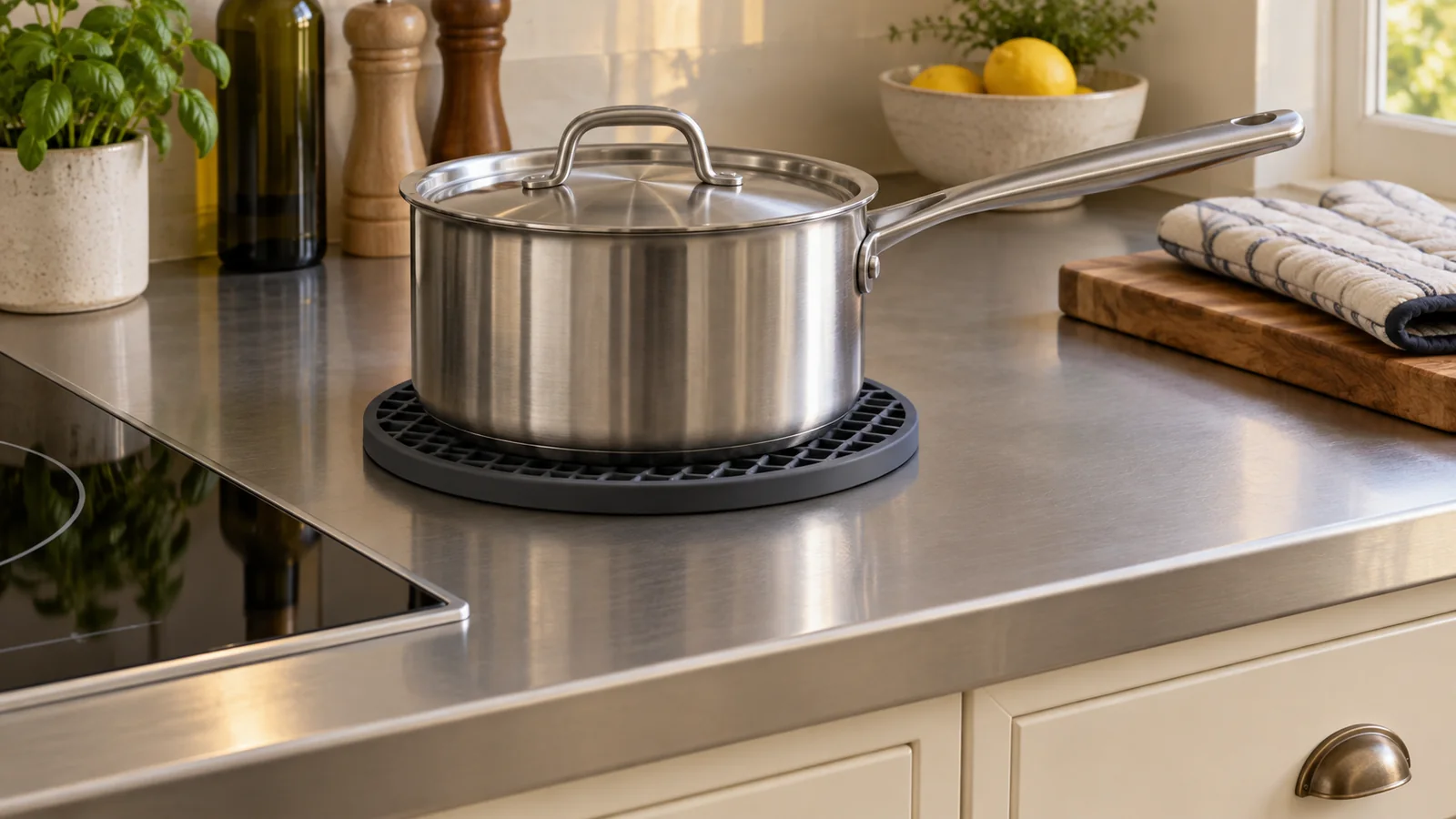
Give hot cookware a place to land
Give the trivet a position that stays clear during cooking. If you have to move the coffee machine or walk across the room to set down a pan, reconsider the layout.
Use cold cookware to rehearse a normal meal before finalising the layout. Open the oven door, hold an unheated tray and check where it would go. Repeat with the widest pan you regularly use. Include the handles and leave the passage clear. This is a layout exercise, not a heat test.
| Cooking situation | Planning check |
|---|---|
| A pan comes off the hob | Place a suitable trivet within the intended working area, without making the pan handle project into a walkway. |
| A wide tray comes out of the oven | Check the tray and oven door together. The tray needs a stable landing position while the door is open. |
| A drying rack shares the same counter | Assign separate positions or decide where the rack goes during cooking. Keep the hot-pan position available. |
| People sit across an island | Keep the cooking landing zone distinct from place settings and the route people use to sit down. |
Choose a trivet whose own instructions cover the intended cookware and which is compatible with the worktop. Do not treat a folded towel, decorative mat or ordinary chopping board as equivalent without suitable instructions.
What about an air fryer or another countertop appliance?
Read the appliance manual for its placement and clearance requirements. An instruction about putting a pan on a worktop does not answer how a powered appliance should be positioned or operated.
Keep two documents with the kitchen plan: the worktop care guide and the manual for the appliance that will stand on it. Mark the intended appliance location so the installer and supplier can review the same arrangement. Where an oven or hob is built into the cabinetry, use the separate guide to cabinet planning beside cooking appliances.
One question to settle before ordering
Send the supplier a specific question, with the quoted worktop identified:
For the complete worktop assembly in this quotation, may I place a pan directly on the surface after cooking? Please attach the applicable care instructions and identify any required protection. I also plan to place the listed countertop appliances in the positions marked on my kitchen plan.
Keep the reply with the order. If it only says “stainless is heat resistant”, the practical question remains unanswered. Continue using a suitable trivet until the supplied product’s instructions establish otherwise.
If a pan has already left a mark
Let the area cool safely, then photograph the mark before attempting treatment. Record which cookware was involved and whether the surface has changed shape or moved. Stop using the affected position if you notice a physical change and ask the supplier to inspect it.
A persistent mark does not tell you whether the issue is residue, the finish or the assembly below it. Aggressive spot polishing can change the appearance further; Franke’s care manual specifically cautions that intensive local polishing can create visible differences.
Check the complete worktop construction
Comparing a new steel worktop? Separate sheet thickness, edge depth and the complete build-up before approving the quotation.