Blog / Systems
Systems · Buyer guide
Does an Integrated Stainless-Steel Kitchen Sink Need an Overflow?
The short answer
Whether your integrated kitchen sink needs an overflow depends on the specified assembly and the requirements confirmed by your local plumber. If included, its opening, channel and waste connection must work together. Confirm the arrangement before fabrication; an overflow is not a guarantee against flooding or a substitute for supervising a filling sink.
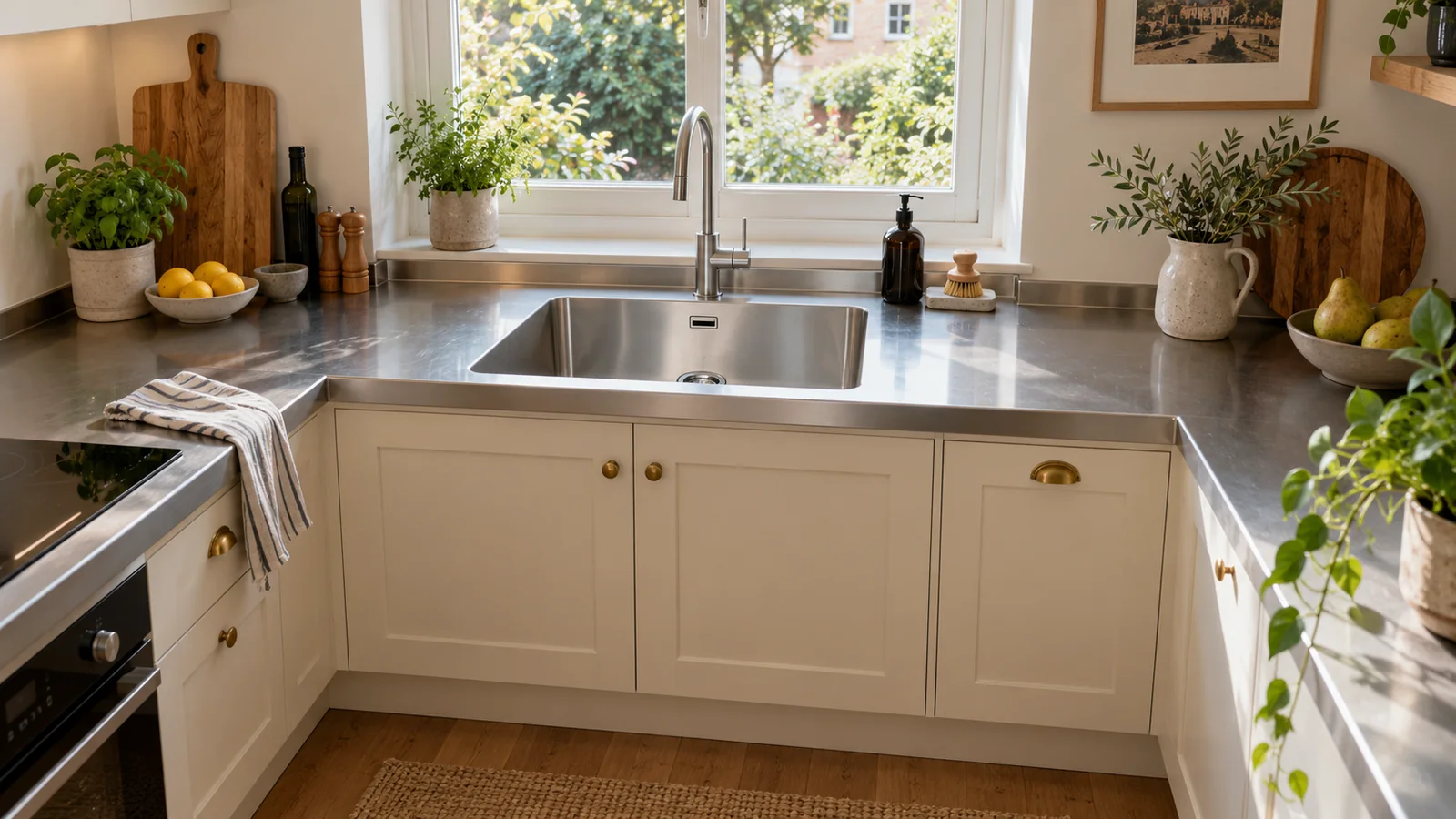
A custom sink drawing may show the bowl dimensions, tap position and waste opening while leaving the overflow unclear. That omission matters: you need to know whether one is included, where it leads and how the assembly can be checked inside the cabinet.
This is a purchase and coordination guide for a residential kitchen with a stainless-steel worktop and integrated bowl. It cannot decide local plumbing requirements or approve a custom drainage design. Use it to prepare the questions for the supplier and your appointed local plumber.
What does an overflow opening connect to?
In a sink designed with an overflow, the upper opening connects to a drainage path. The useful thing to specify is that complete path, including its connection to the selected waste assembly. A visible opening alone does not show that the required parts are present or connected correctly.
Ask for the relevant drawing or component diagram. Have the plumber identify the opening, passage or pipe, connector and waste arrangement. Do not identify an unfamiliar hole from its appearance alone: a tap-deck hole and an opening in the bowl may have different purposes.
If water is appearing inside the cabinet, treat that as a problem requiring inspection. Do not plug an unidentified opening or keep filling the basin to see what happens. Stop using the affected arrangement until the responsible professional advises what is safe.
Is an overflow required for your project?
Ask the local plumber before the bowl design is approved. Give them the destination, intended sink model or fabrication drawing, waste details and any disposer being considered. Ask them to confirm applicable requirements and the assembly they will accept.
Attach the plumber’s answer to the order. A previous sink without an overflow, or a supplier’s usual configuration, does not settle the requirements for this bowl and destination.
If the proposed sink has no overflow, ask the plumber to confirm that configuration explicitly. If it does have one, ask what is included and what remains to be sourced locally. Avoid leaving a gap between the factory’s bowl scope and the installer’s drainage scope.
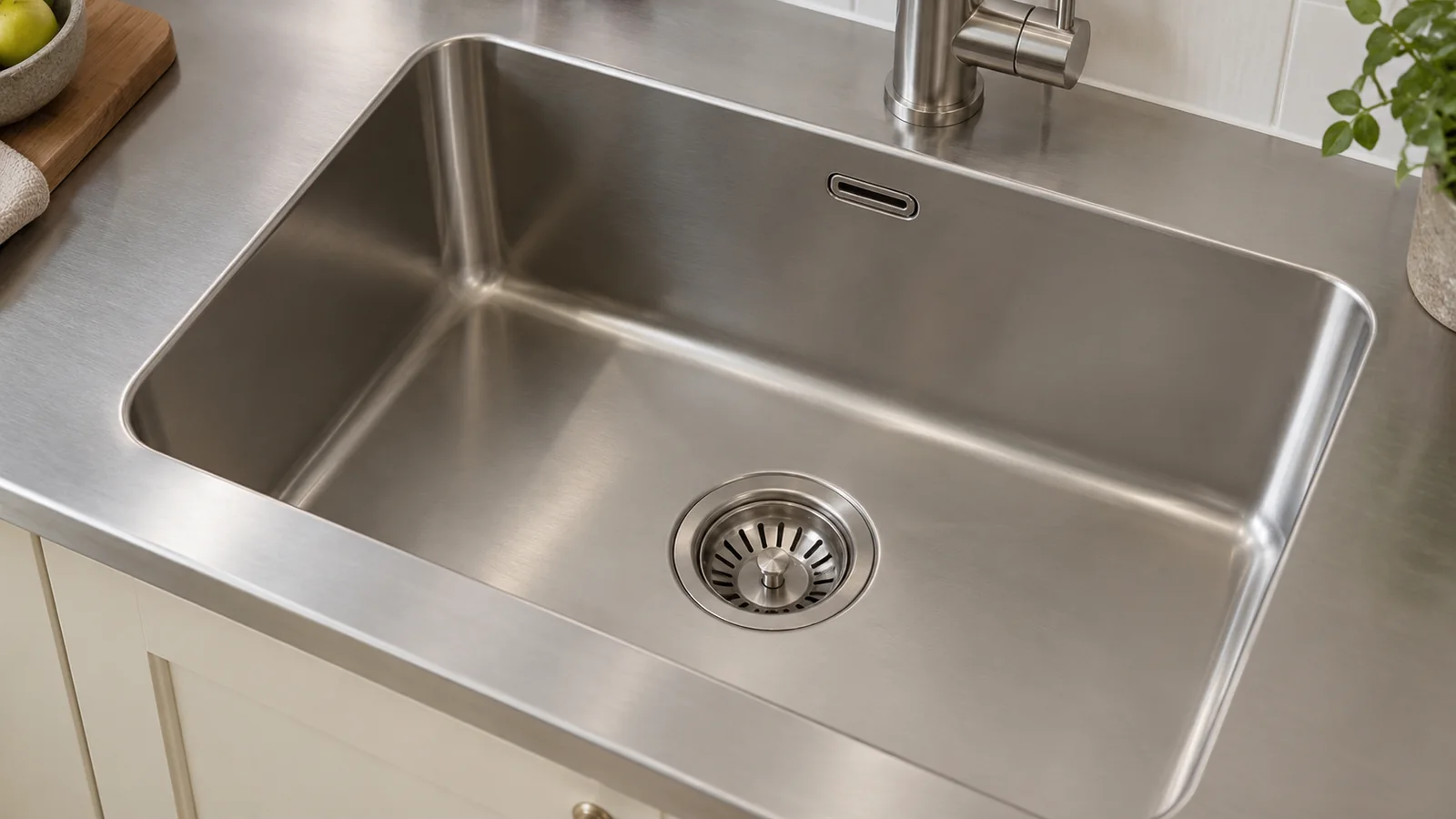
Put the overflow and waste assembly on the order drawing
Manufacturers can specify the feature separately. For example, Franke’s Rapid RPX 621 product sheet lists a rectangular overflow and waste kit. That is a feature of the named model, not evidence that all steel sinks or Anray bowls have the same arrangement. See the Franke specification sheet.
For a custom integrated bowl, request the following information as an order checklist:
- Whether an overflow is included, with its position shown on the bowl drawing.
- The connection arrangement and the identified components supplied with it.
- The selected waste assembly and any required connecting parts.
- The route and access space beneath the bowl, including adjacent storage.
- Who will confirm fit, assemble the local drainage and perform the agreed checks.
Leave unresolved connections marked as pending on the drawing. A dimension copied from another sink is not confirmation that the selected parts fit.
Check the selected waste, trap and disposer together
Identify the actual components before approving compatibility. Matching a headline waste size does not establish that the overflow connector, fittings and cabinet arrangement work as a complete assembly.
Franke’s FAQ notes that an overflow connection to a waste-disposal unit may need an overflow converter. It is a useful reminder to check the connection, not a promise that a particular converter will fit a custom bowl. See Franke’s sink and waste-disposal FAQ.
Ask the plumber to review the exact waste and any disposer instructions against the bowl drawing. Record who supplies each adapter or connector. Our integrated-sink disposer guide covers the wider fit discussion.
Make this review while changes can still be considered by the designer and manufacturer. Do not plan to drill a new overflow into a finished bowl or improvise a connection on installation day.
Can the overflow be inspected and maintained?
Ask the supplier to show how you will clean the selected assembly and how the plumber will reach its connections. If you have seen a removable cover on another sink, check whether yours actually has that feature.
Show the plumber the proposed drawer, bin and storage layout below the bowl. Ask whether any component blocks inspection or makes the required service work impractical. Confirm access in the drawing rather than assuming an installer can move everything later.
At handover, request the exact care instructions and an explanation of what the homeowner may remove or clean. Do not transfer a boiling-water, chemical-cleaner or cover-removal instruction from an unrelated sink. The method must suit the supplied components.
Keep normal drainage and overflow questions distinct. A basin that retains puddles after draining has a different symptom from an upper overflow connection. See our guide to standing water in an integrated sink.
An overflow is not permission to leave the tap running
BLANCO’s model installation and care instructions warn against leaving a plugged basin unattended while filling and call for prompt blockage removal. Those instructions are product-specific, but the caution directly challenges treating an overflow as a flood guarantee. See the BLANCO installation and care document.
Do not deliberately overfill the sink to perform your own capacity test. Ask the plumber to carry out the agreed commissioning checks safely and to show you what normal operation looks like.
Questions to settle before fabrication
Should the opening be at the front or back?
Use the proposed bowl and connection drawing. Discuss visibility, service access and the connection route with the supplier and plumber. There is no universal orientation rule in this guide.
Does a welded-in sink automatically include an overflow?
No configuration should be assumed from the words “integrated” or “welded-in.” Ask whether the overflow is included and have the complete arrangement identified in the order.
Who confirms the local plumbing?
The customer appoints the local plumber and installation team. Anray does not provide a local installation team. Coordinate their requirements with the factory drawing before approving manufacture.
Bring the bowl and local drainage requirements together
Review the project before production
Send your residential kitchen plan for project review with the destination, proposed sink arrangement and local plumber’s component requirements. Mark any overflow or waste connection that still needs confirmation.