Blog / Systems
Systems · Buyer guide
Corner Storage or a Dead Corner in a Stainless-Steel Kitchen?
The short answer
Choose corner storage by what you can reach and retrieve, not by the cabinet’s outside volume. A blind cupboard, a purpose-designed mechanism and a closed dead corner each change the neighboring layout. Compare all three with your cookware, door-opening paths and adjacent drawer sizes before choosing the cabinet arrangement.
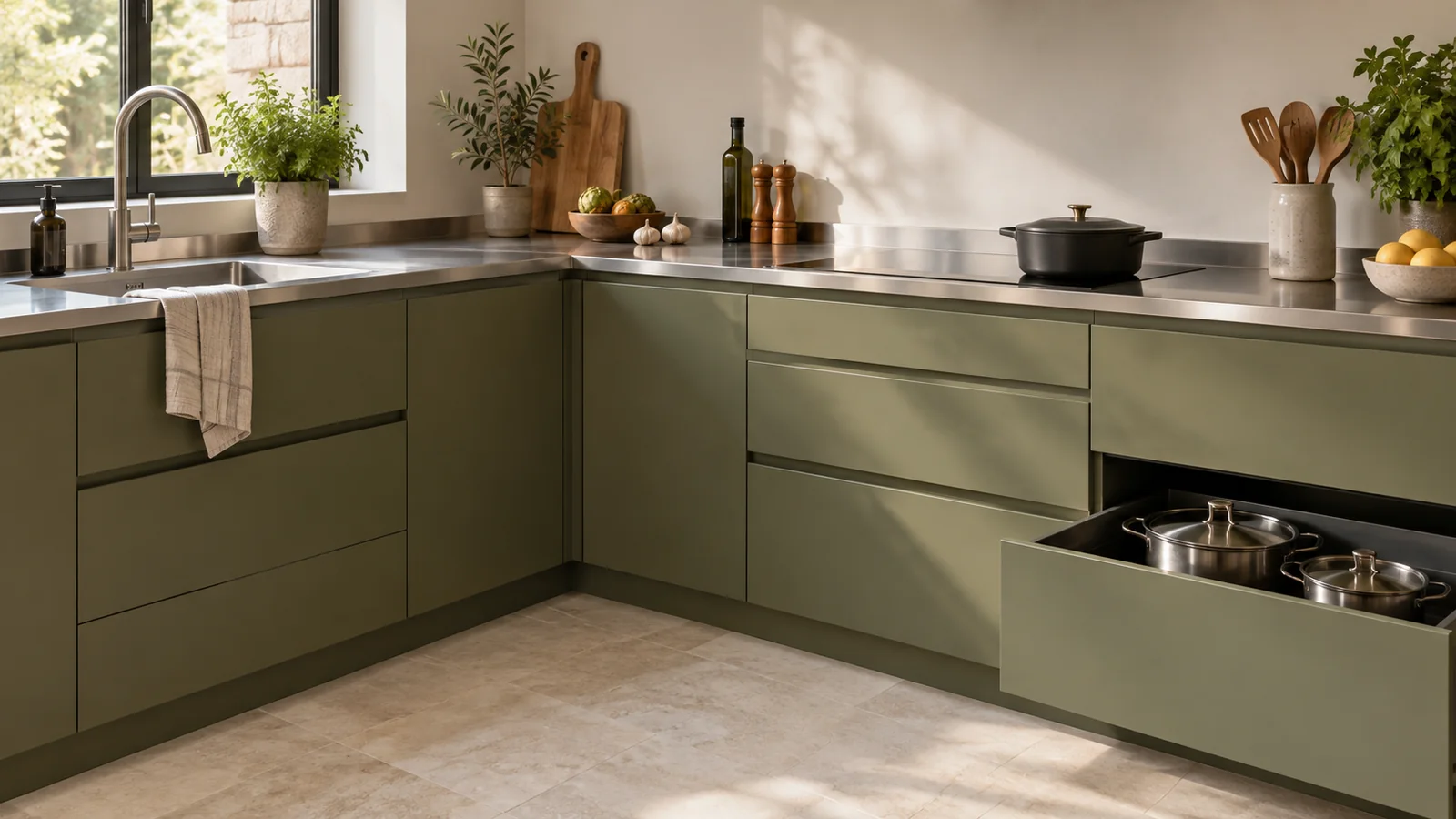
A corner cupboard can hold the big pan you rarely use. It can also become a place where everyday cookware is difficult to reach. Before paying for a mechanism or closing the corner off, list what would actually go there.
What are you trying to store in the corner?
Start with the objects. A large roasting pan used occasionally creates a different requirement from the saucepan used every evening. Measure the bulky items, including handles and lids, and decide which ones must be reachable without removing something else.
Then look at the opening. A deep cabinet with a narrow doorway may hold a lot but still make an awkward home for a heavy appliance. A tray that moves into the opening can improve access, but its usable shape may not suit that appliance either.
Homeowners give different answers in this Houzz discussion of corner storage: some prefer accessible drawers, while others value using the corner itself. That disagreement is a reason to compare the actual contents and layout, not evidence that one option always wins.
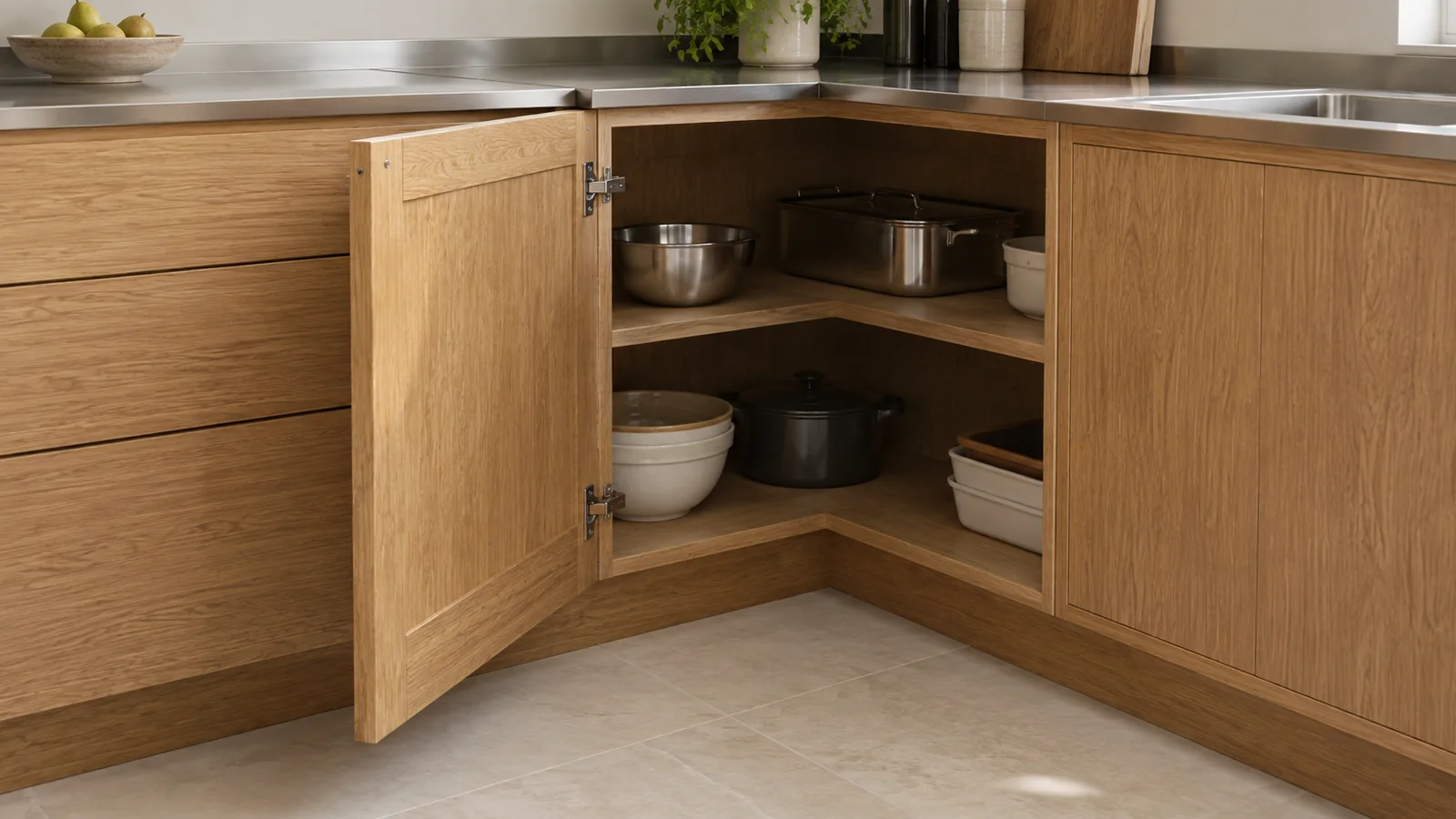
When can a dead corner be a sensible choice?
A dead corner is deliberately closed off rather than fitted with an accessible cupboard. It may let the designer use straightforward drawer banks on the two adjoining runs. The tradeoff is clear: corner volume is surrendered, while the surrounding storage may become easier to organize and use.
Ask the supplier to draw both arrangements. Count the usable drawer interiors and assign your cookware to them. Do not assume that closing the corner automatically creates more drawer space; the room length, appliance positions and required opening clearances determine that.
Keeping the corner as a simple cupboard can still make sense for occasional-use items if you can safely reach them. Before accepting it, try retrieving something of similar size and weight through a comparable opening. A showroom demonstration with an empty shelf tells you little about moving a loaded roasting pan.
What does a corner mechanism change?
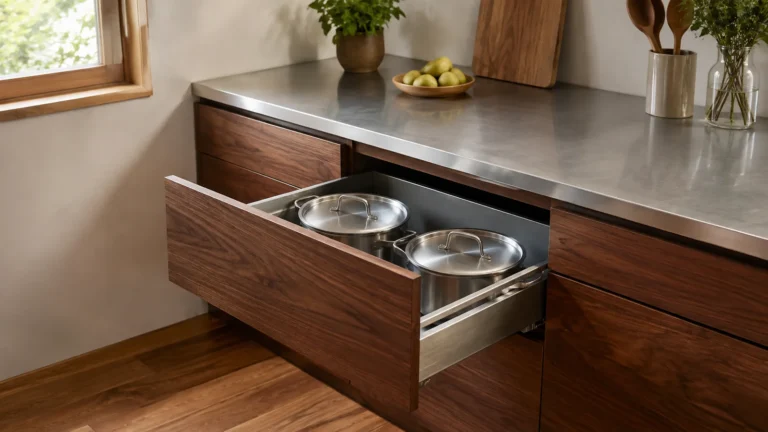
A rotating shelf, a swing-out tray and a corner drawer are different systems. Ask for the actual mechanism name, usable storage dimensions, load rating and installation drawing. Confirm which parts move, the order in which they open, and how they would be removed for service.
For example, Blum SPACE CORNER uses full-extension corner drawers whose fronts fold inward during opening. Its geometry is specific to that system. It is not a generic description of all corner drawers or a claim that the hardware is included in Anray cabinetry.
With a stainless-steel cabinet system, the supplier also needs to confirm how the selected hardware attaches to the actual cabinet construction. A mechanism intended for one cabinet arrangement should not be substituted into another solely because the nominal width looks similar.
Will the neighboring fronts collide?
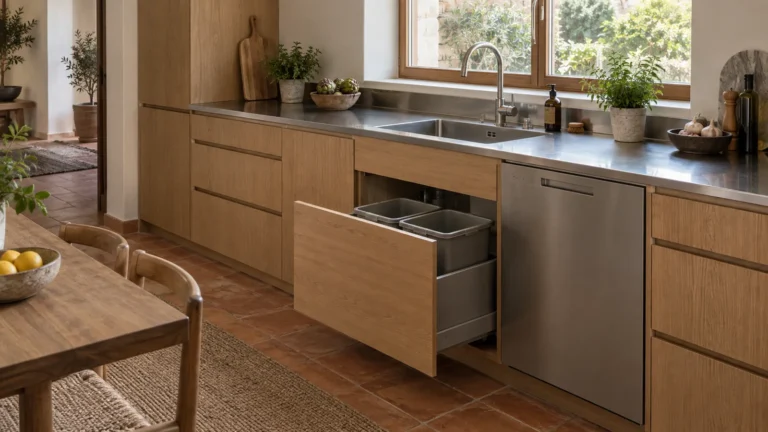
Draw the fronts and handles in their open positions. Include the adjacent oven or dishwasher, not just the two corner cabinets. Check whether a drawer can extend fully with the neighboring front closed, and which combinations cannot be opened together.
IKEA’s filler guidance explains how handles and nearby obstructions affect opening clearance. Its stated dimensions apply to its own guidance, not automatically to a custom stainless-steel kitchen. Your filler widths must follow the selected fronts, handles and mechanism.
What should the supplier compare on the drawings?
Ask for two drawings: one using the corner, and one closing it off. Place the same cookware in both layouts. Compare the openings, neighboring drawer interiors and access for servicing the hardware. Have the quote identify the mechanism separately so you can see what the alternative changes.
Use the drawer-versus-pullout guide for the adjoining storage and the site-fit guide for measurement responsibilities. The customer arranges final site measurement and local installation. Resolve the corner before approving the cabinet order.
Review the project before production
Send your floor plan, destination country and project quantity for a preliminary specification review.