
Blog / Delivery
Delivery · Buyer guide
How to Prevent Shipping Damage and Missing Parts in Imported Kitchen Cabinets
The short answer
Prevent shipping damage and missing parts by designing the packing system around the cabinet set and delivery route. Protect finished faces and edges, separate hardware, label every package against drawings, issue a detailed packing list, photograph loading, and inspect the shipment immediately on arrival before installation disperses the evidence.
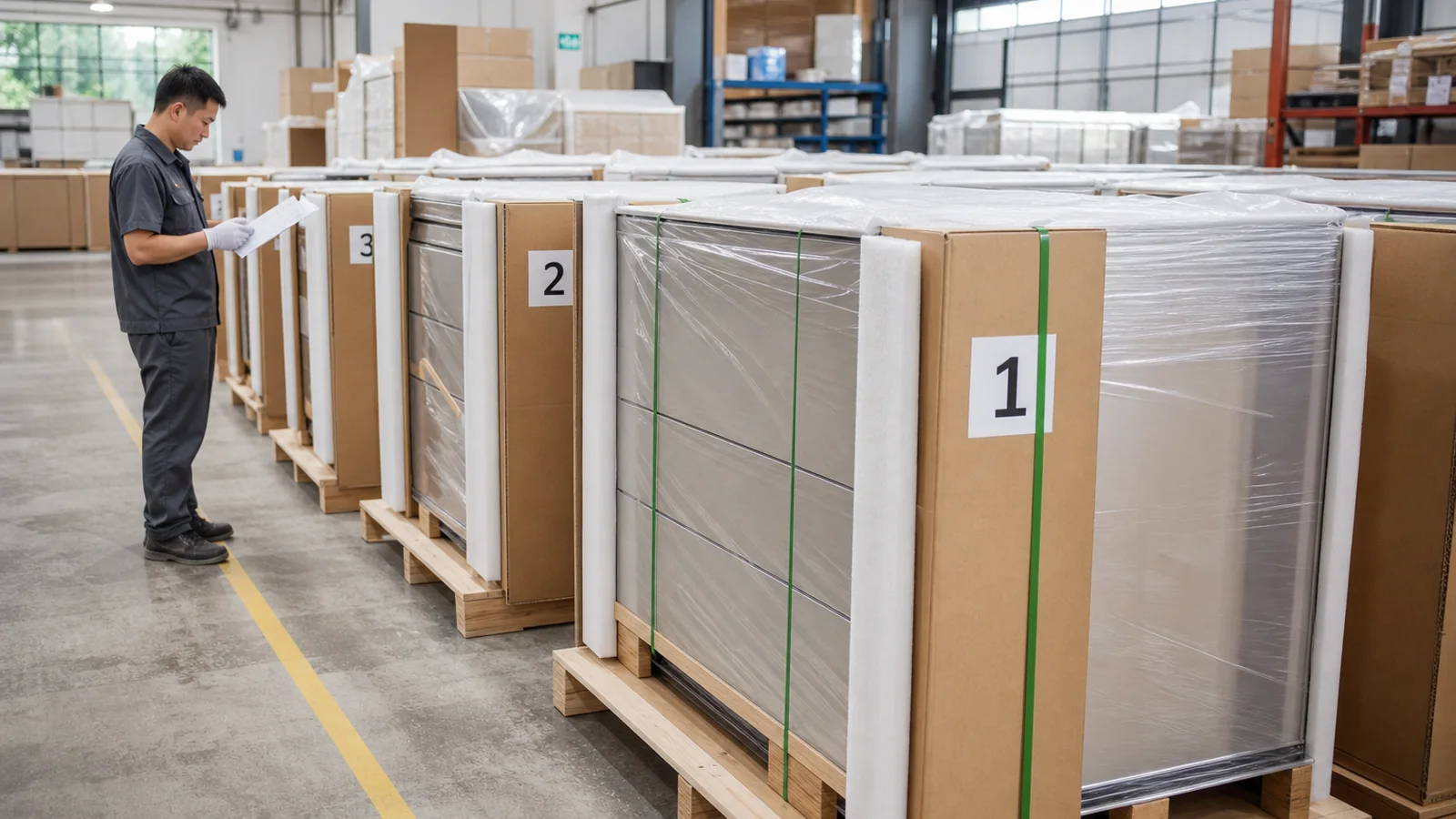
Export packaging is part of the kitchen system. A cabinet can leave production in good condition and still arrive unusable if finished faces rub, corners carry impact, hardware travels loose, packages cannot be traced to the drawings or the receiving team removes everything before recording condition.
Match packaging to the route and risk
A shipment may pass through factory handling, truck transport, port or airport handling, consolidation, customs inspection, local warehousing and final site delivery. The packing method should consider module size and weight, finish sensitivity, number of transfers, climate exposure, stacking, lifting equipment and the final unloading environment.
ISTA publishes packaged-product test procedures, including procedures relevant to furniture packages. A reference to those procedures does not mean a shipment has been tested. If performance testing is required, specify the exact procedure, sample, laboratory or facility, acceptance criteria and report before order confirmation.
Protect faces, corners and movement points
- Keep approved protective film on finished metal surfaces through packing and the agreed installation stage.
- Use clean interleaf material so adjacent finished parts cannot rub in transit.
- Protect corners and projecting edges where impacts concentrate.
- Immobilize doors, drawers and internal accessories so they cannot open or vibrate.
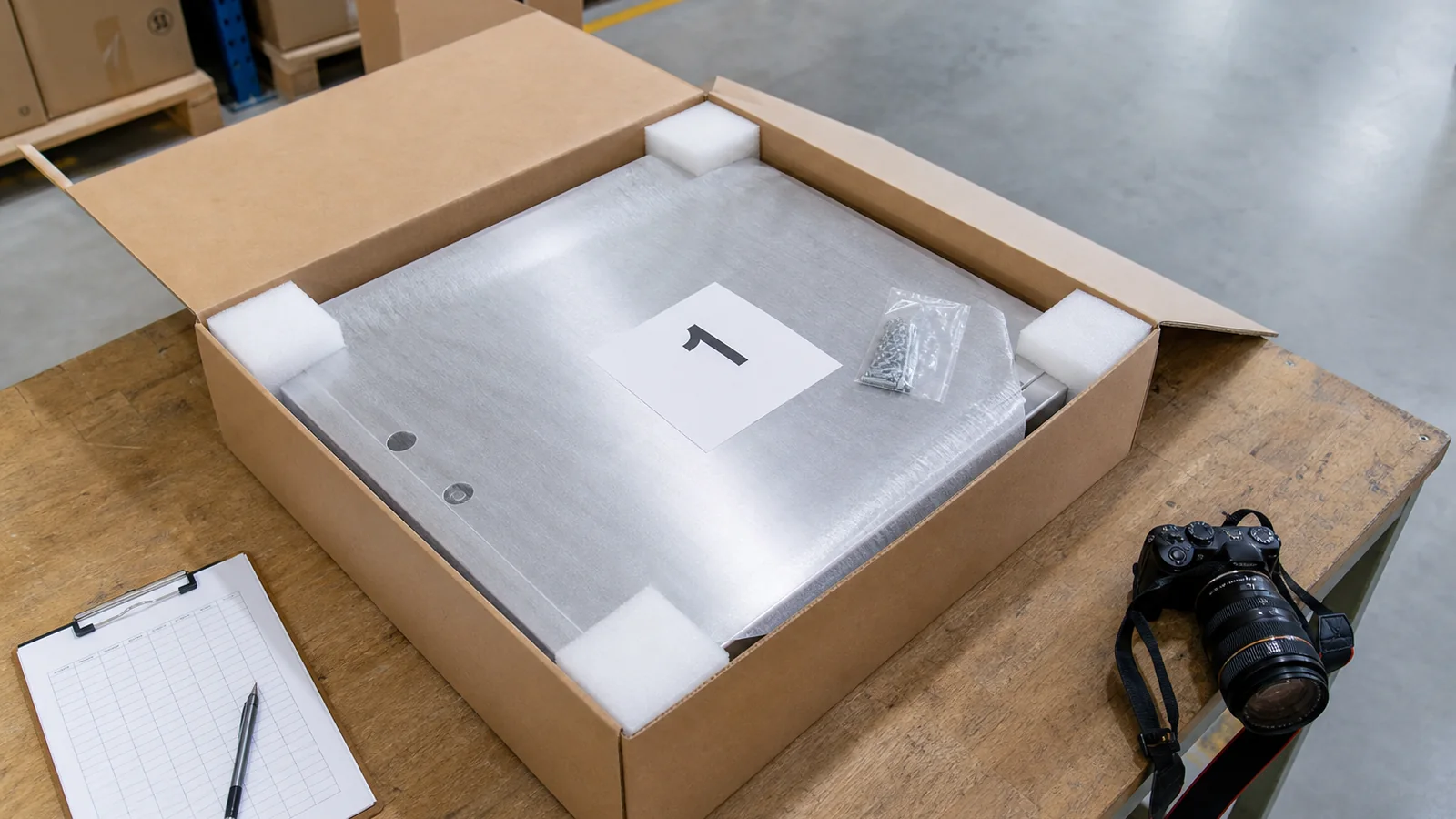
- Separate metal hardware from visible panels and contain it in sealed, labeled bags or boxes.
- Use moisture protection appropriate to the route without trapping wet material against finished surfaces.
Packaging should also allow safe lifting. A heavy package that has no clear fork, sling or handhold strategy invites damage during the final metre of movement.
Make handling instructions visible
ISO 780 specifies graphical symbols for package handling and storage. The exact markings required depend on the package and handling plan, but the principle is simple: orientation, fragility, moisture protection and lifting information should be visible to the people who move the package.
Do not rely on a packing list inside a closed crate as the only instruction. Put durable external identification on more than one face where practical, and avoid placing critical labels where straps or wrapping will hide them.
Number packages against the drawings
A useful label connects the physical package to a room, elevation, cabinet or accessory group. For example, a project may use a structure such as villa–room–elevation–module–package. The exact code matters less than consistent use across shop drawings, packing lists, package labels and receiving records.
| Label field | Purpose |
|---|---|
| Project and room | Prevents packages being dispersed to the wrong area |
| Elevation or run | Connects the package to the installation drawing |
| Module or item code | Identifies the cabinet, panel or accessory group |
| Package number and total | Supports a fast package-count check |
| Gross size and weight where needed | Supports handling and access planning |
| Handling marks | Communicates orientation and protection requirements |
Control hardware and small parts separately
Small parts disappear when they are distributed across unmarked packages. Create a hardware schedule that identifies the content, quantity and destination of each bag or box. Critical installation items should be counted before packing and again at receipt.
If spare fasteners or touch-up items are supplied, label them as spares. Otherwise the installer may use a spare early and later report a shortage against the wrong cabinet.
Create a loading record
Before the shipment leaves, retain a dated record of package count, label visibility, container or vehicle condition, loading sequence and restraint. Photographs should show the package identification as well as the overall load. A close-up of an undamaged panel without its package number is weak evidence.
The packing list should state packages and their contents, not merely a total cubic volume. If multiple rooms or phases share one shipment, group and subtotal them clearly.
Inspect immediately at receipt
- Check the vehicle, container seal where applicable and visible external damage before unloading.
- Count packages against the packing list and record shortages immediately.
- Photograph dents, punctures, wet areas, broken pallets or shifted loads before moving affected packages.
- Move packages using the stated orientation and lifting method.
- Open selected or damaged packages under a controlled process, preserving labels and protective materials.
- Check visible faces, corners, hardware bags and item codes.
- Create an issue log with package number, item, condition, quantity, photographs and action owner.
Do not wait until installation to discover what arrived. Once packages are dispersed across rooms and the protective materials are discarded, it becomes much harder to separate transit damage, site handling damage and installation damage.
Define the responsibility and claim path before shipment
Packaging cannot resolve an unclear contract. Record the Incoterm or agreed logistics basis, importer of record, insurance party, delivery point, unloading party, warehouse responsibility, final-mile handler and installer. Also define the notice period and evidence required for visible and concealed damage.
The guide to China-to-UAE kitchen delivery responsibilities explains why a destination country does not by itself define every handoff. Apply the same discipline to any import route.
Receiving checklist to issue to the site team
- Latest packing list and package-location plan.
- Contact for shortages and damage reports.
- Camera or phone with date and package-number capture.
- Protected, dry staging area.
- Correct lifting equipment and trained handlers.
- Instruction not to remove protective film prematurely.
- Issue-log template and agreed escalation deadline.
Bottom line
The best protection is a traceable chain from drawing to package to room. Physical protection reduces impact and abrasion; labels and records reduce confusion; immediate inspection preserves evidence. All three are required if an imported custom kitchen is to move from factory to installation without avoidable loss.
Review the project before production
Send your floor plan, destination country and project quantity for a preliminary specification review.