Blog / Systems
Systems · Buyer guide
Handleless or Handled Fronts for a Stainless-Steel Kitchen?
The short answer
Choose the opening method before approving the cabinet fronts. Handles give you a separate grip; recessed channels let you pull behind the front; push-to-open uses a release mechanism. For a residential stainless-steel kitchen, test the proposed front finish, opening effort and hardware together rather than choosing from a photograph.
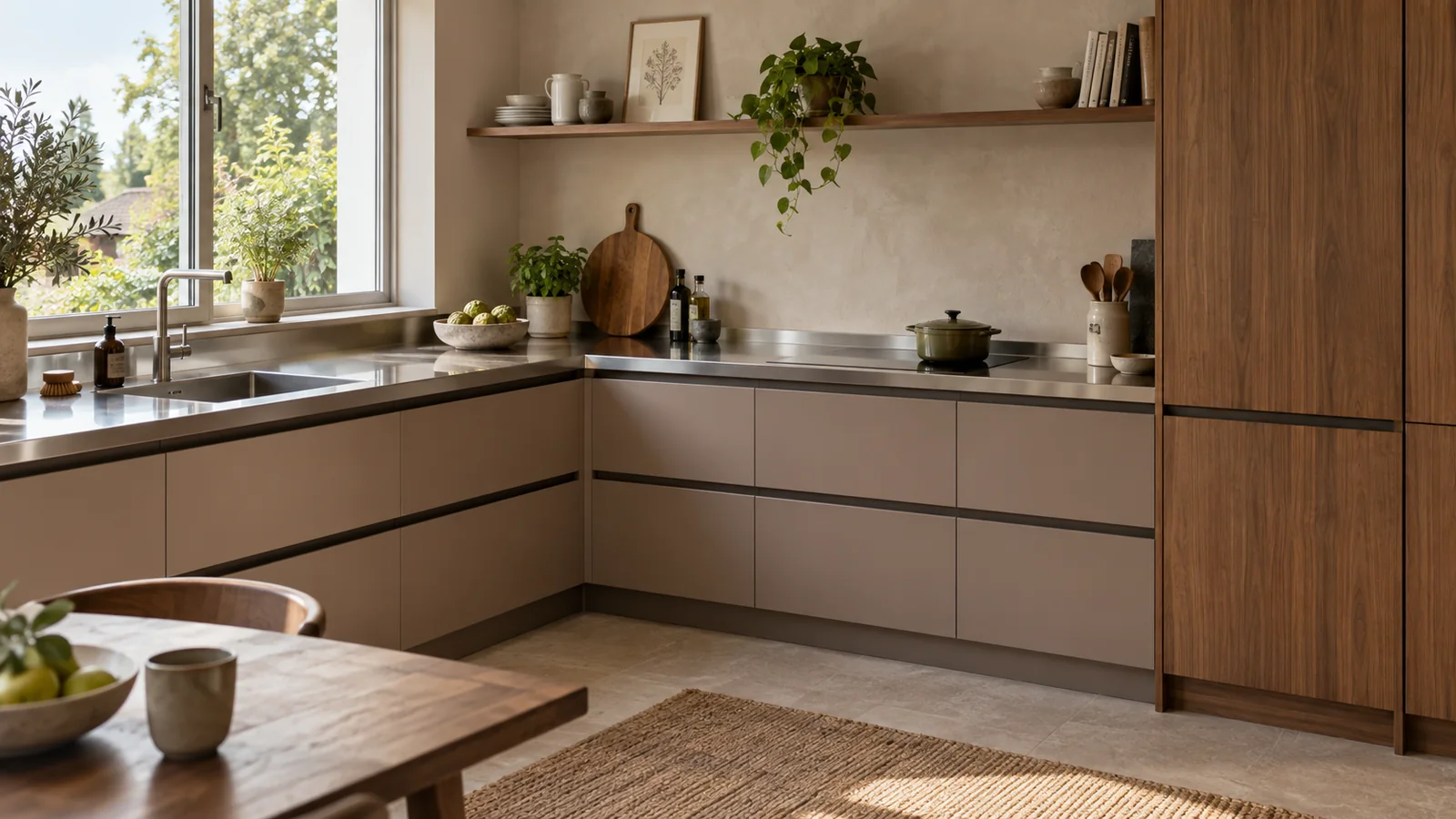
A thin stainless-steel worktop can sit above wood-look, cream or coloured fronts with either handles or concealed grips. Choose the opening method around the cupboards and drawers your household uses most.
What does handleless actually mean?
Ask the supplier to show the opening detail. Three kitchens with similar flat fronts can work differently:
- A separate handle or edge pull gives your fingers a dedicated place to grip. Its projection and fixing method belong on the drawing.
- A recessed rail or shaped grip provides access behind or along the edge of the front. It needs usable finger space; a dark line in a rendering does not prove that space exists.
- A push-to-open front releases when pressed. The mechanism, hinges or runners and the required clearances must work as a system.
For example, Blum describes TIP-ON for doors as a mechanical push-opening system with different versions and adjustment options. That is a named hardware system, not evidence that any generic latch will suit every front.
The material inside a stainless-steel cabinet and the decorative surface you touch are separate specifications. Confirm the front construction and finish instead of assuming that a wood-look front is solid timber or that every visible surface is bare steel.
Which option is easier to live with?
Start with the drawers you open repeatedly: cutlery, cooking utensils, waste and everyday crockery. A handle may be a straightforward choice if you want an obvious grip and opening action. Check whether its ends catch clothing and whether you can clean around the fixings.
For a recessed grip, try opening the lowest drawer and wiping the recess with your usual cloth. Check the actual shape and finish; suppliers use the word “handleless” for several different details.
For push-to-open, consider where you normally stand. Test whether leaning against the front releases it, how far it moves when triggered and whether closing it feels predictable. These are checks to perform on the proposed assembly, not a prediction that every push-opening system has the same problems.
The questions are visible in a homeowner discussion about handleless cabinets: participants distinguish grip channels from push latches and raise cleaning and unintended opening concerns. Those experiences concern different kitchens and generations of hardware. They are useful test prompts, not a failure-rate survey.

What should you test on a working sample?
Ask for a working front or drawer that is representative of your proposed size and hardware. A tiny display door cannot settle how a wide loaded drawer will feel.
- Open it from the positions you will actually use, including near the edges of a wide drawer.
- With the supplier’s permission, try a representative contents load within the hardware’s rating. Check closing as well as opening.
- Inspect the finger clearance, front spacing and contact points. Make sure the opening does not depend on dragging a fingernail against a finished edge.
- Wipe the touch area using the finish supplier’s approved care method. Do not test abrasives on an unapproved sample.
- Ask who will make final adjustments after the cabinets are fixed and levelled on site.
Blum’s TIP-ON BLUMOTION adjustment guidance explains why a consistent front gap affects triggering. Its published setting belongs to the specified system. The installer should use the instructions for the hardware actually ordered, rather than applying that number to unrelated latches or decorative gaps.
Can handles and handleless fronts be mixed?
You can mix opening methods if each assembly is compatible. For example, you might prefer a grip on heavily used base drawers and plain fronts on wall cupboards. Have the supplier show both on the elevation before approving the appearance.
Check appliance fronts separately. A refrigerator door, dishwasher panel and ordinary cabinet door do not necessarily accept the same opening mechanism. Start with the selected appliance’s requirements; our integrated-fridge planning guide covers the cabinet and panel interfaces.
What belongs in the order?
Record the opening method for each cabinet, the front finish, the handle or hardware model, its fixing arrangement and the visible gaps. Include a working sample approval where practical and identify any excluded hardware.
Agree whether handles arrive fitted or whether the local installer drills and fits them. Confirm access for future adjustment or replacement. A later change from a recessed grip to a surface pull may alter the front detail; do not assume it is just a hardware swap.
Anray’s residential stainless-steel kitchens are made to an agreed project specification. Your local installer should review these opening details before production. Compare the front treatment alongside the wider residential finish palette, then keep the approved choice in the drawings.
Review the project before production
Send your kitchen plan, destination country and local installation arrangements for a preliminary specification review.