Blog / Systems
Systems · Buyer guide
Why Does My Stainless Steel Worktop Look Wavy? Checks Before Sign-Off
The short answer
Wavy reflections alone cannot tell you whether a stainless steel worktop is defective. Record the appearance under normal lighting, note any functional problems and ask the fabricator and installer to inspect the assembly against agreed requirements. Avoid pressing, polishing or refixing the surface before the cause and remedy have been assessed.

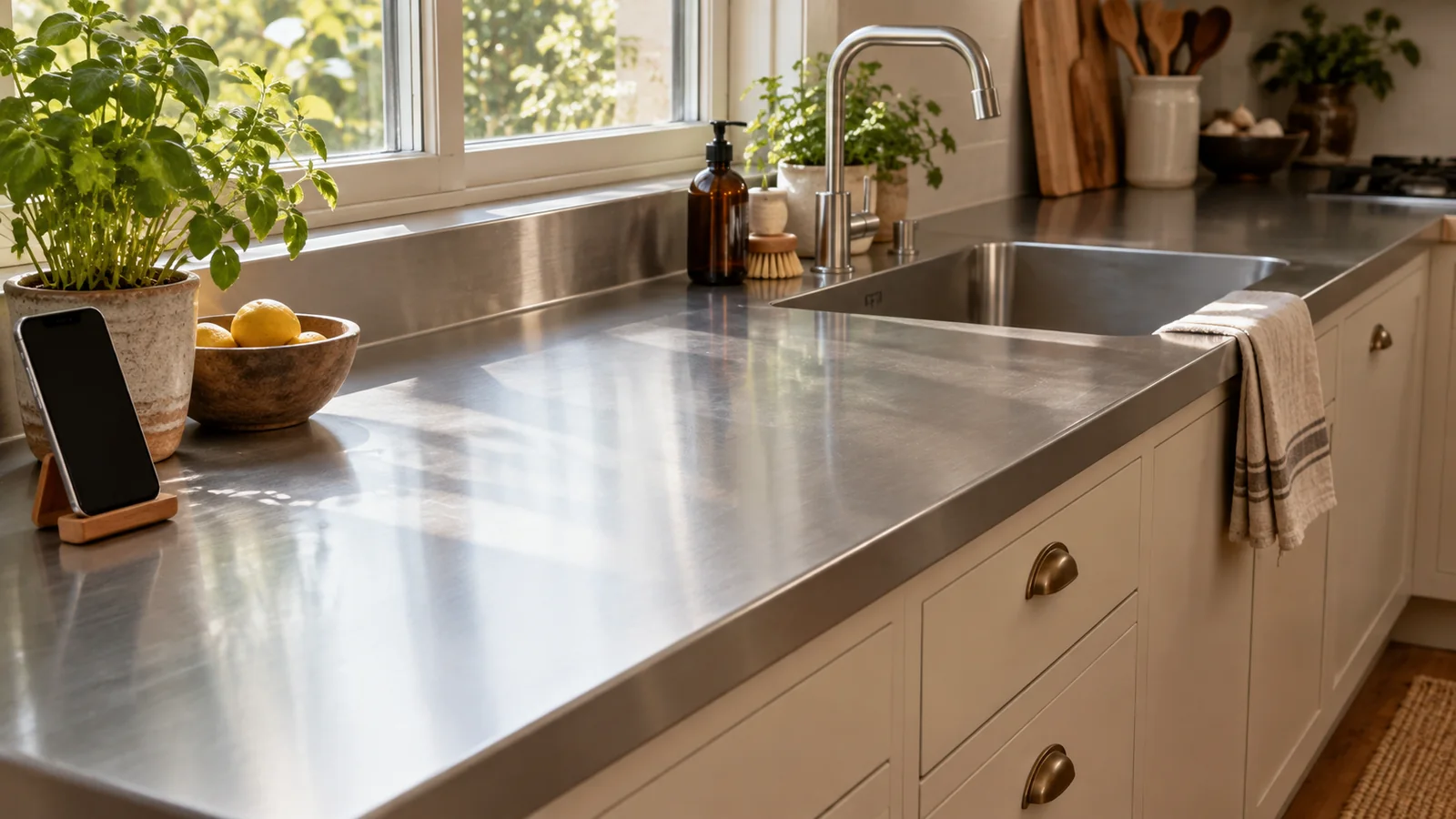
You may notice a bent-looking reflection of a window frame on an otherwise clean worktop. It can be difficult to describe, and a close-up phone photograph may look different from the view across the kitchen. Before anyone dismisses the concern or proposes a repair, establish exactly what you are seeing.
Record what you can see, then note whether anything has changed in use. A photograph of an uneven reflection does not measure the shape of the worktop. If a joint has risen or an appliance no longer fits, describe that separately so the inspector can assess the functional problem as well.
What “oil canning” can tell you
The Metal Construction Association discusses oil canning as visible waviness in flat metal roof and wall panels, with visibility influenced by lighting. Its guidance is about those building products. It is not a kitchen worktop acceptance standard and cannot establish that a particular countertop is acceptable or exempt from repair.
There is also an appearance preference to resolve. In a Houzz kitchen splashback discussion, the author noticed slight waviness in reflections but did not find it troublesome. That is one person’s experience of a vertical splashback. It provides no measurement or diagnosis for a horizontal worktop in your kitchen.
If a supplier uses the term oil canning, ask them to identify the affected area and explain what they checked. Their assessment should refer to the agreed drawing, sample or inspection criterion so you can understand why they consider the result acceptable or in need of work.
Create a record that both parties can use
Photograph the whole worktop first, including the sink, adjoining cabinets and the location of the affected area. Then take closer photographs without altering the surface. Identify the area on a simple plan so the installer does not have to interpret a collection of similar-looking steel close-ups.
Record a normal standing view in daylight and under the installed kitchen lighting. Note which lights are on and whether sunlight is direct. A short video from a normal viewing position can help show how the reflection changes as you move. Keep the original files rather than sending only compressed, annotated screenshots.
These are documentation suggestions, not a prescribed technical test. Agree the inspection conditions with the supplier. If the room is unfinished, explain which lighting and protective coverings are still temporary. Do not remove a covering against the supplier’s instructions simply to obtain a more dramatic photograph.
Describe function separately from appearance
Tell the inspector whether you have observed an actual problem during ordinary use. Useful details include when it first appeared, whether it changed after installation and whether it is confined to one location. Avoid repeatedly loading the surface to reproduce a fault.
- A joint has opened or one edge appears higher than the adjoining section.
- The surface has moved, clicked or rocked during normal use.
- Water collects in a location that was intended to drain.
- A sink, hob or adjacent door no longer sits or operates as expected.
- A sharp or damaged edge is exposed.
These observations warrant assessment; they do not establish a cause. Stop using an area that appears unstable or presents a sharp-edge or appliance hazard, and contact the appropriate local professional. Standing water has its own questions, covered in our integrated sink drainage guide.
Ask for an assembly inspection
A quotation giving only steel thickness does not describe the whole installed worktop. For example, GEC Anderson explains that backing forms part of its worktop system. That is a manufacturer-specific example. Your order needs its own construction details rather than assumptions copied from another product.
Ask the fabricator and installer to review the approved section, backing or support arrangement, cabinet setting-out, fixing requirements and any site changes. Their findings should identify what was inspected and how. If dimensional measurements are needed, agree the method and reference points before comparing results.
Do not adopt an unrelated online tolerance as a pass/fail rule. A general fabrication dimension, a cabinet level requirement and a visible-finish acceptance criterion address different things. Our sheet thickness and edge thickness guide can help you describe the construction without confusing those dimensions.
Agree appearance expectations before production
For a new order, request a representative finish sample and ask what it can demonstrate. A small coupon is useful for colour, grain and surface texture; it does not demonstrate the full installed appearance of a long worktop. Ask whether a larger representative assembly or a documented inspection view is available.
Put the viewing conditions and acceptance process in writing. Identify the surfaces to be inspected, when protective film is removed, how concerns are recorded and who decides the next step. If an appearance is essential to your design, record it explicitly rather than relying on a heavily lit brochure image.
Discuss the lighting at the same time. Our steel worktop lighting guide addresses glare and placement. Adjusting a lighting scheme may change what is visible, but it does not substitute for investigating an unresolved fabrication or installation concern.
If the kitchen is already installed
Send the supplier and installer your order reference, marked plan and original photographs together. Describe the appearance concern separately from any functional fault. Request a written assessment that explains the proposed remedy and its likely effect on the finish and warranty, then arrange the follow-up inspection.
Do not press out a ripple, add screws or start sanding on the strength of a forum reply. Those actions change the condition being assessed. If the parties disagree, a suitably qualified independent local inspection may be more useful than exchanging increasingly close photographs.
Review the project before production
For a new Anray Works kitchen, include your worktop layout and appearance requirements in a project review. Share the proposed lighting and your local installer’s details so inspection and installation responsibilities can be discussed before production. The customer arranges final site measurement and local installation.