Blog / Materials
Materials · Buyer guide
Stainless Steel vs Quartz Worktops: Which Fits Your Home Kitchen?
The short answer
Choose between stainless steel and quartz by the wear you can live with, the sink arrangement you want and the installed scope you can verify. Compare actual samples and complete quotations. For an Australian project, check material eligibility first: the engineered stone ban changes which products can be supplied and installed.
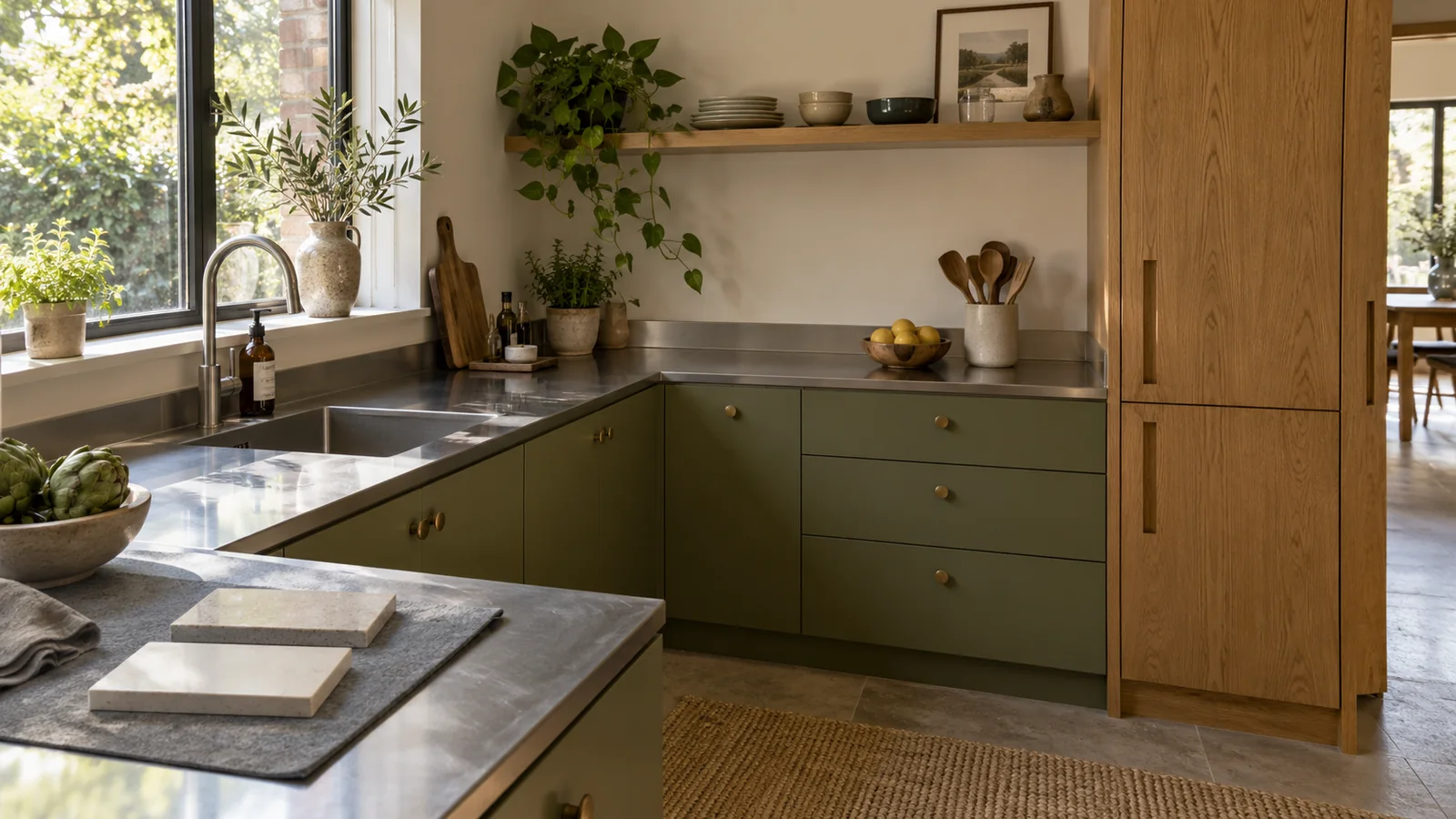
One person wants a steel preparation surface; another pictures a pale, stone-patterned island. Both will use the same kitchen. Start by looking at how each person cooks and what each expects the surface to look like after use. Then compare the products available for that layout.
In a homeowner discussion on Houzz, a couple preferred different materials and wanted to understand upkeep. Their question may sound familiar. Decide which changes in appearance and which care tasks would bother you; another household’s preference cannot settle that.
Check which materials are permitted at your destination
In Australia, the manufacture, supply, processing and installation of specified engineered stone benchtops, panels and slabs have been banned since 1 July 2024. The Safe Work Australia guidance explains the scope and exclusions. Do not order a product described simply as “quartz” without checking its composition and eligibility with the relevant local regulator and supplier.
For an Australian kitchen, the appropriate comparison may therefore be steel against a permitted alternative, rather than conventional engineered quartz. Marketing names are not enough to make that decision. Elsewhere, confirm destination requirements and the exact product before comparing its care instructions. A stone-look photograph does not identify the material.
Judge the finish after use
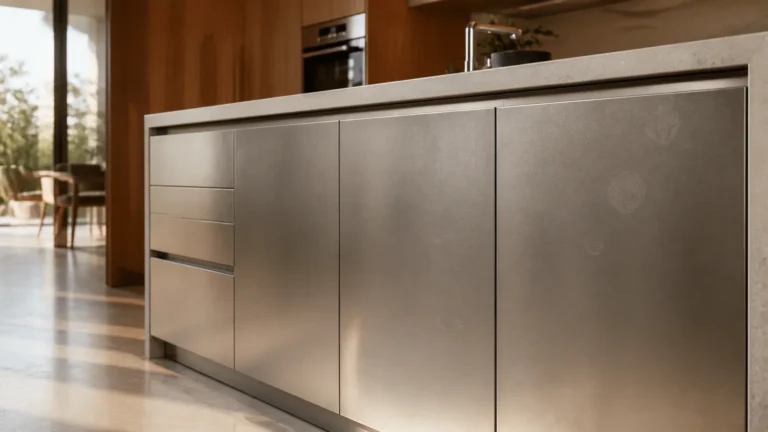
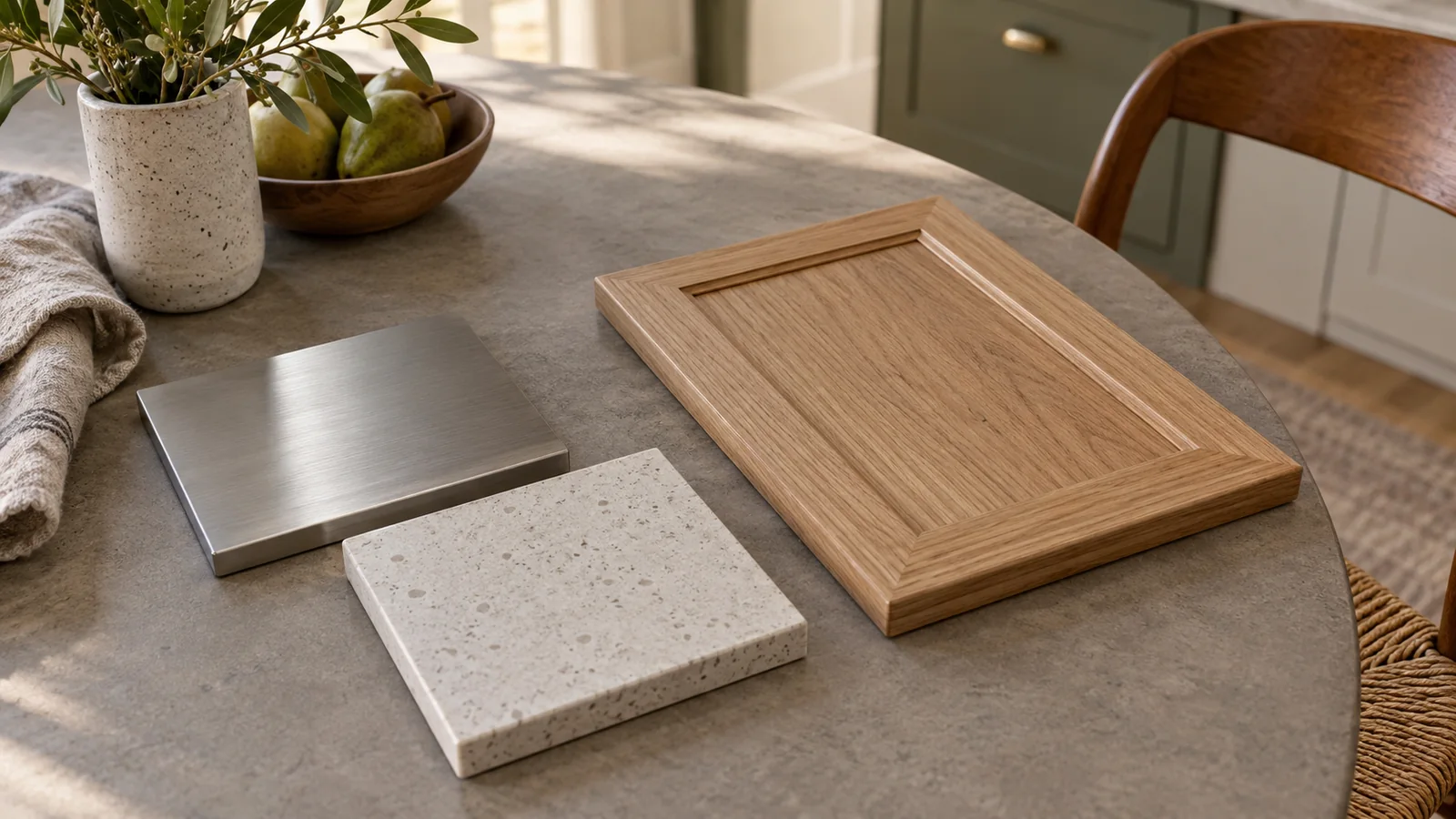
New showroom samples hide the hardest part of this choice: how you feel about the surface once it has been used. Steel can acquire visible scratches. GEC Anderson describes superficial scratching and the development of a patina on its stainless surfaces. That explanation is not a promise that every mark on every steel worktop will become invisible.
Ask to see a used sample of the proposed finish as well as a new one. Look at it beside the cabinet-door colour and under lighting similar to your kitchen. If you dislike the used appearance, take that reaction seriously. A sales description of “character” will not make a scratch acceptable to someone who wants a consistently pristine surface.
For quartz, compare the exact colour, pattern and finish you intend to order. Do not assume that a polished sample predicts the cleaning experience of a textured finish. Obtain the care guide for that product and ask how visible damage would be assessed and repaired locally.
What happens during dinner preparation?
List the actions that happen repeatedly: unloading a hot tray, chopping vegetables, rinsing a large pot and clearing the worktop. Then decide where each action will happen in the proposed layout.
Caesarstone’s quartz care guidance calls for a trivet or heat pad for hot cookware and a cutting board for food preparation. It also distinguishes routine cleaning from exposure to harsh chemicals. These are instructions for its products, not evidence that every quartz product performs identically.
For steel, ask for the limits of the finished worktop assembly, including its backing and adjacent joints. Do not treat the visible metal as permission to put any hot pan anywhere. Our guide to hot pans on steel worktops explains the questions to resolve. Plan a suitable landing place for hot cookware whichever surface you choose.
| Your priority | What to compare before ordering |
|---|---|
| A surface you enjoy looking at every day | Used finish samples under your lighting, including marks you personally consider unacceptable. |
| An integrated sink area | The proposed sink-to-worktop connection, cleaning access and future repair method. |
| Predictable care | The exact product’s cleaning instructions and the supplies you will realistically use. |
| A manageable renovation | Who measures, fabricates, delivers, installs and handles a fit problem. |
| A controlled budget | Comparable installed quotations with the same drawings and exclusions. |
Compare the sink detail, not just the large surface
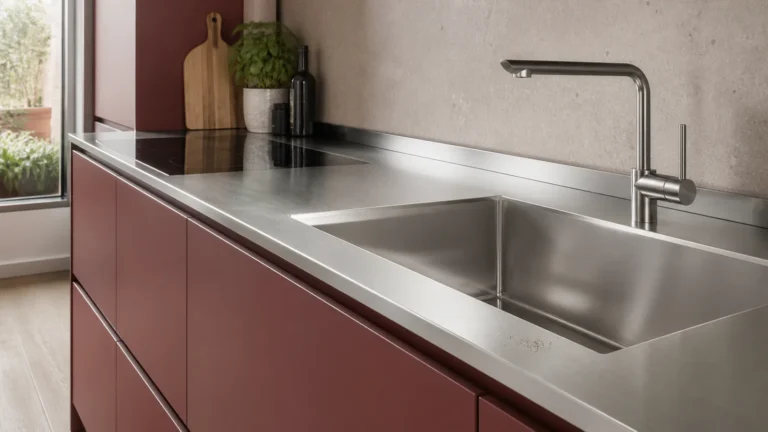
A welded-in steel bowl and a separate undermount bowl involve different interfaces. Ask for a section drawing through the actual sink connection. Check what will be exposed when you stand at the sink, how the junction is cleaned and who would assess a future leak.
A continuous-looking steel sink area may appeal if you want that visual connection. A separate bowl may suit another combination of material and repair preferences. Neither label tells you everything about replacement work. The welded-in versus undermount comparison covers that narrower decision.
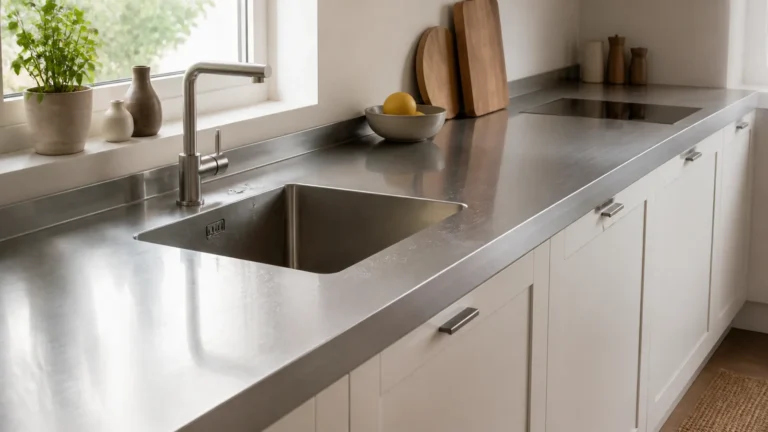
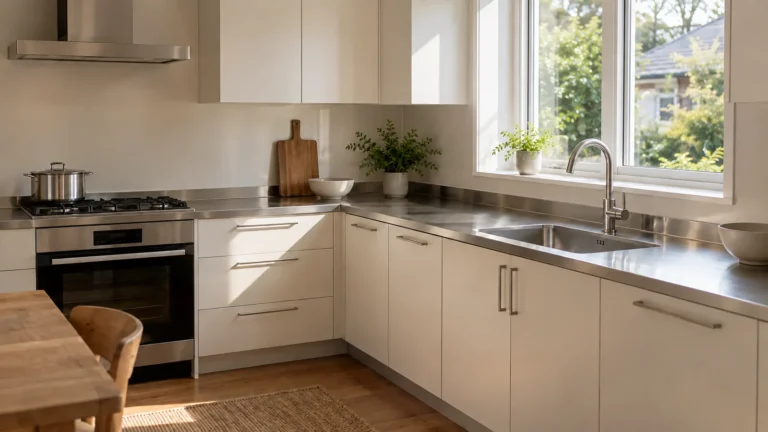
Also separate the worktop choice from the cabinet appearance. A residential steel worktop can be considered alongside timber-look, white, grey or coloured fronts. You do not need to design the room around an all-metal commercial-kitchen image to assess whether the work surface suits you.
Request quotations for the same kitchen
A price per metre leaves too much unresolved. Give each supplier the same plan, sink requirements, exposed ends and appliance information. Ask them to identify seams, edge details, site work and delivery assumptions. Keep the cabinet quotation separate enough to see what changing the worktop actually changes.
Use a scope sheet with a responsible party beside each item: final site measurement, templates if required, fabrication, transport, access equipment, removal of the old top, plumbing reconnection and installation. Mark exclusions explicitly. A lower supply-only figure cannot be compared directly with an installed local quotation.
For an imported kitchen, ask your chosen local installer to review the interface drawings before production. This is particularly important if cabinets and worktops come from different suppliers. Agree who resolves a mismatch and what information each party must approve. Do not assume either supplier has accepted the other party’s dimensions.
Make the decision with a sample and a plan
Each household member can write down one appearance concern and one daily-use concern. Take those questions to the samples and layout. If the steel finish is unacceptable after wear, that matters more than its appeal in a photograph. If the sink arrangement is your main reason for choosing steel, inspect that detail rather than spending the whole appointment comparing colours.
You could also discuss different surfaces for different zones, where the materials are permitted. Have the junction drawn and priced, with responsibility for fitting each surface clearly assigned. This gives you a concrete mixed-material proposal to compare with the single-material quotations.
Review the project before production
Planning a residential kitchen with a stainless steel worktop? Send Anray Works your layout for a project review, with the destination, material shortlist and proposed local installation arrangement. Final measurement and on-site installation are arranged by the customer; supply details are confirmed against the agreed drawings and scope.