Blog / Systems
Systems · Buyer guide
Stainless Steel Sink Waste Leaking: Putty, Silicone or a New Seal?
The short answer
A leaking sink waste needs a fitting-specific assessment before you choose putty, silicone or a replacement seal. Identify where water first appears and find the sink and waste assembly instructions. The correct material depends on that assembly; a stainless steel bowl does not mean every part of its drain fitting is stainless steel.
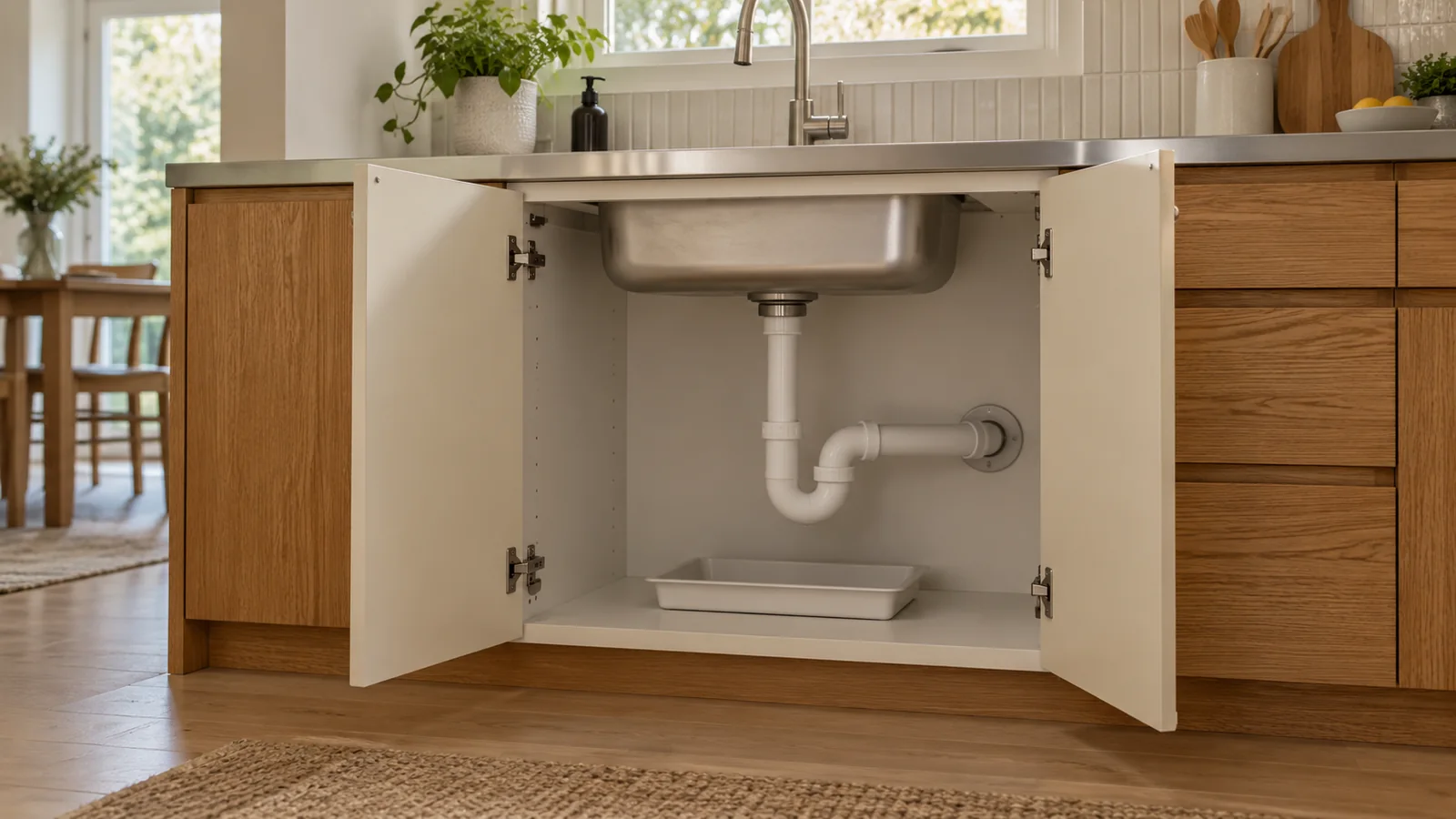
A drip under a new kitchen is easy to misinterpret. Water may be visible on the bottom of the waste fitting, but that does not establish where it started. Nor does a wet cabinet prove that a welded-in sink needs replacing. Begin with a clear record and the right component information.
One DIYnot homeowner reported recurring leakage around a basket seal and asked whether a different sealing material would solve it. Before making that change in your own kitchen, identify the assembly and obtain its instructions. The forum post cannot establish the cause of your leak.
Limit damage before investigating
Stop using a sink that is actively leaking into the cabinet. Remove stored items only if the area is safe to access and contact your local plumber. Do not deliberately fill the bowl to reproduce a leak you cannot contain. If water is near electrical equipment, plugs or sockets, keep clear of the wet electrical area and obtain qualified help.
A bucket can help contain a small accessible drip while you arrange assistance, but it is not a repair or a reason to keep using the sink. Avoid reaching around a connected waste disposer or other appliance. Follow the appliance manufacturer’s isolation instructions and use a professional where safe isolation is uncertain.
Take photographs before dismantling or applying anything. Include the bowl outlet from above and the visible waste arrangement below. Keep your purchase record, model numbers and any installation sheet. These details are often more useful to a plumber than the general description “stainless steel sink leaking.”
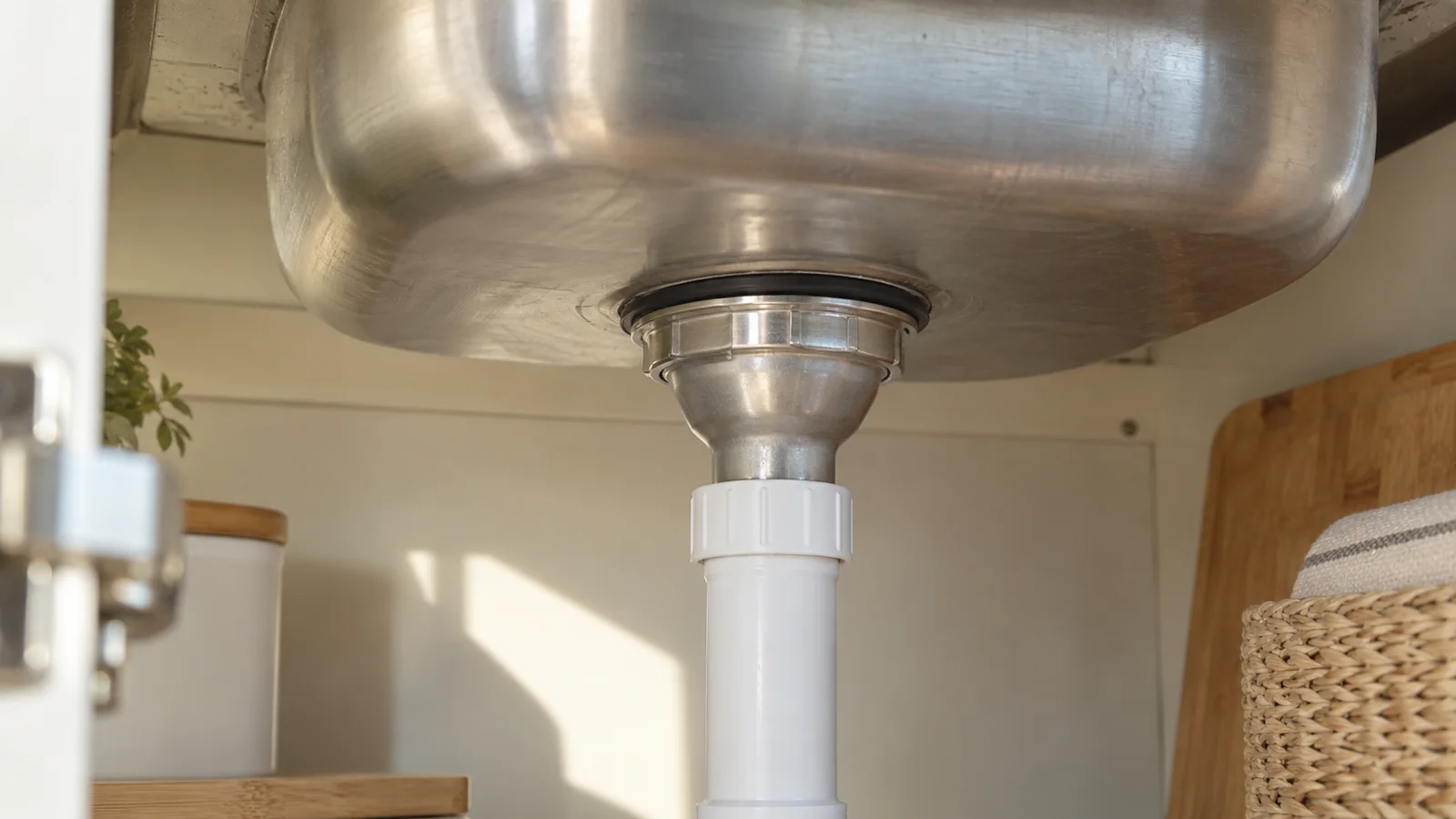
Locate the wet joint without assuming its cause
Describe what you observed during normal use: whether the drip appeared while the bowl held water, while it drained, or after the tap had been running. If you have not observed the sequence, say so. The plumber can decide how to test safely rather than relying on a guess presented as fact.
| Visible observation | Information to give the plumber |
|---|---|
| Moisture around the bowl outlet | Sink model, waste model, photographs above and below, and when the area first became wet. |
| A wet connection lower in the pipework | The first wet location you could see, without assuming the highest visible drop is the source. |
| Moisture after heavy splashing | Whether the tap base, overflow opening or surrounding worktop was also wet. |
| Widespread moisture on the bowl exterior | Whether there was an identifiable drip point; ask for leakage and condensation to be distinguished. |
This is an observation list, not a diagnosis chart. Our sink condensation guide addresses the last situation in more detail. Do not dismiss a leak as condensation simply because the bowl feels cold.
Why putty versus silicone has no universal answer
Oatey’s basket strainer guidance says both silicone and plumber’s putty are compatible with its brass and stainless steel components, subject to the sink manufacturer’s recommendations. It specifies silicone for its plastic strainers and warns against putty for those products. That distinction is specific to Oatey’s components; it is not a universal rule for every waste fitting.
Check the parts list even if the visible flange is metal; the rest of the assembly may use other materials. Where the instructions specify a gasket, confirm whether additional compound is required or permitted. Keep the specified gasket arrangement unless the manufacturer approves a change.
Give the plumber both sets of instructions where the sink and waste fitting come from different suppliers. If they conflict, request clarification before installation or repair. “Suitable for stainless steel” on a tube or tub does not confirm that it is appropriate for every surface and seal in the assembly.
If the leak returns after resealing
For a recurring leak, give the plumber the previous repair details. Request a check of the replacement parts and their order in the assembly, including compatibility with the sink outlet. Have the findings recorded before choosing another repair.
Other useful questions concern the condition of the sealing surfaces, the waste assembly and the connected pipework. Has any component been damaged? Does the connection sit as intended without being forced into alignment? Are there unrecorded alterations? These are inspection questions, not claims about what caused your leak.
Do not keep tightening a fitting without its instructions, and do not add a layer of sealant over a wet joint as a substitute for assessment. Ask for the proposed repair, required curing conditions if applicable and a controlled leak check to be recorded. Keep the removed-part details or photographs if the supplier needs them for a warranty review.
Specify serviceable details in a new kitchen
When ordering an integrated steel sink, request the waste fitting model and installation information before the kitchen reaches site. Ask which party supplies the waste, overflow components and connections to the local plumbing. Include any waste disposer in that review because it changes the assembly the installer must coordinate.
Save the parts list with the kitchen drawings. Ask where replacement seals and complete waste assemblies can be obtained in your destination market. If a component is only available as a complete assembly, knowing that before purchase gives you a clearer maintenance plan.
Keep access in mind when arranging drawers, bins or equipment under the bowl. Ask your local installer to confirm how the fitting will be reached for inspection and service. The integrated sink overflow guide covers another connection that needs its own specification.
Separate a drain repair from a sink-body repair
If the professional assessment identifies a waste connection fault, record the remedy at that connection. If it identifies damage to the bowl or its welded junction, refer that finding to the sink fabricator. These are different repair scopes; neither should be inferred from a photograph of water on the cabinet floor.
Our welded-in sink repair guide explains the larger fabrication question. Before accepting a repair, retain the diagnosis, replaced-part details and the installer’s check results. Remote advice cannot replace the local inspection of an active leak.
Review the project before production
For a new residential kitchen, send Anray Works the sink layout and proposed waste components for project review. Identify your local plumber or installer and the destination requirements early. Anray’s agreed supply scope and the customer’s locally arranged plumbing and installation responsibilities must be confirmed separately.