Blog / Systems
Systems · Buyer guide
Why Does a Kitchen Tap Wobble on a Stainless-Steel Sink or Worktop?
The short answer
A wobbling tap can come from a loose fitting, an uneven mounting surface or movement in the stainless deck itself. Identify which part moves before tightening anything. The appropriate remedy depends on the tap hardware and worktop construction; a compatible support detail and accessible mounting area should be agreed before manufacture.

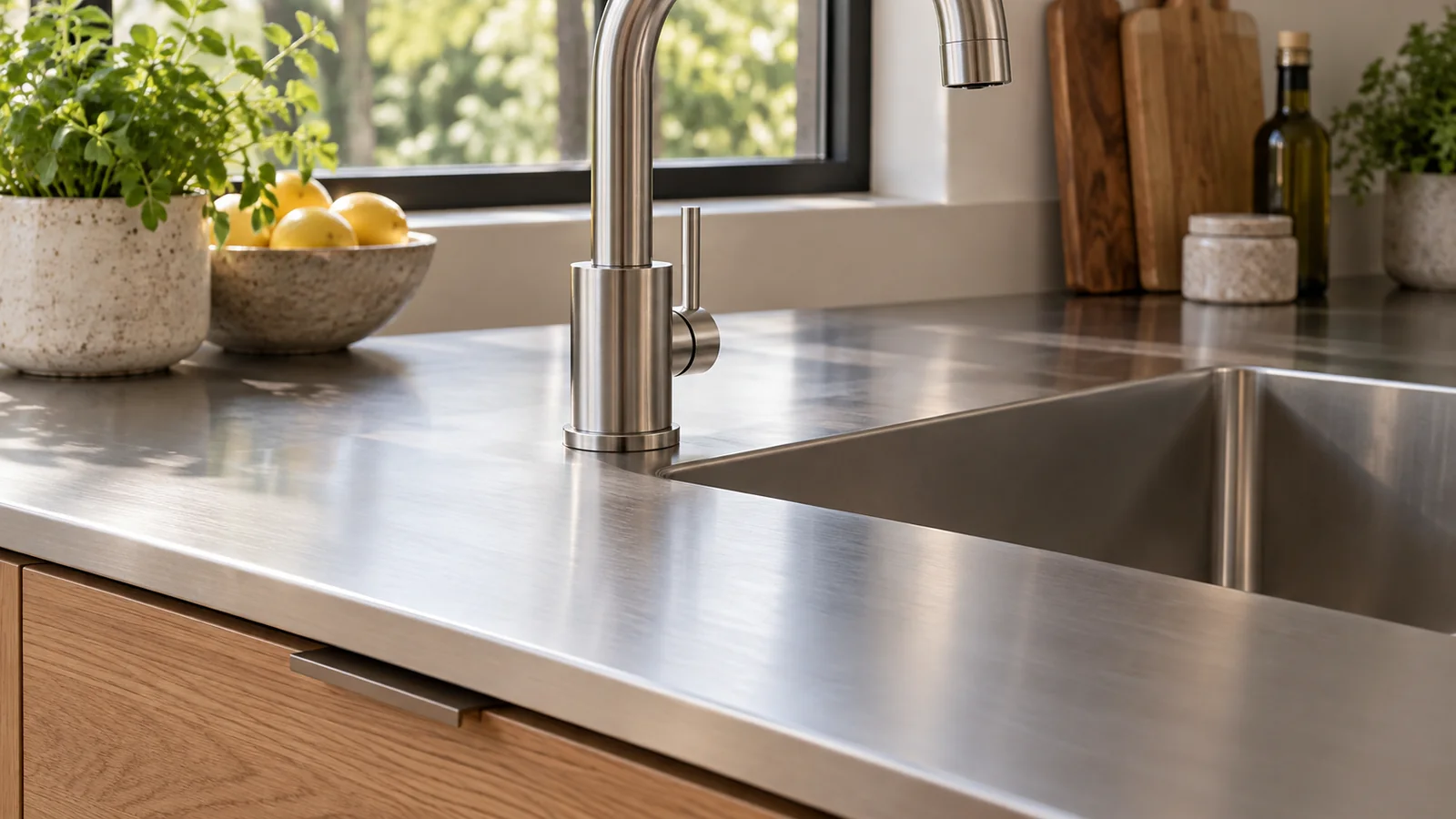
A new tap can look correct and still feel unsettled when you turn the handle or pull out the spray head. Before replacing the sink or ordering a thicker worktop, establish what actually moves. The tap body, its mounting hardware, the steel deck and the surrounding assembly are separate inspection points.
This guide concerns domestic kitchens with decorative cabinet fronts and a stainless-steel worktop or sink deck. A photograph cannot identify the hidden support arrangement. If the fitting leaks, the surface is damaged or the movement is increasing, ask your appointed installer to inspect it before further use or adjustment.
Separate a loose tap from a moving deck
Observe ordinary operation without deliberately forcing the tap sideways. Does the base move relative to the steel, or do the base and surrounding metal move together? Does movement occur when operating the lever, rotating the spout or pulling the hose? Record a short video that includes the base, nearby bowl and worktop edge, rather than filming only the top of the spout.
These observations help describe the complaint; they are not a remote diagnosis. A loose internal component can also feel like a mounting problem. The installer should identify the model, examine the supplied fixing arrangement and check the supporting surface. More tightening is not an acceptance method when the movement has not been located.
- Base shifts against an apparently stationary deck: ask for a mounting-hardware inspection.
- Deck moves with the base: ask for a review of the local support and complete assembly.
- Only the spout or handle moves unexpectedly: ask the tap supplier about the component and its intended motion.
- Water appears around or below the fitting: report the leakage separately and avoid further DIY adjustment.
When is a stabilisation plate appropriate?
Some tap manufacturers provide specific thin-deck accessories. Delta describes its RP37490 stabilisation plate as a component installed beneath the deck. Its 63235 installation sheet also identifies a thin-deck aid for improving stability on thin-gauge metal sinks.
That is an example of a manufacturer-supported detail, not proof that the same plate fits every tap or that every steel deck needs one. Ask the tap supplier to confirm compatibility with the exact model and fixing arrangement. Then ask the worktop manufacturer to confirm whether the proposed support can be accommodated without interfering with the sink, worktop construction or service access.
Check whether the remedy addresses the observed movement. A plate that cannot sit correctly beneath the deck is not an agreed support detail. Avoid copying a forum’s improvised wood block, adhesive or modified washer into a new custom order without an installer and manufacturer review.
Review the mounting space before ordering
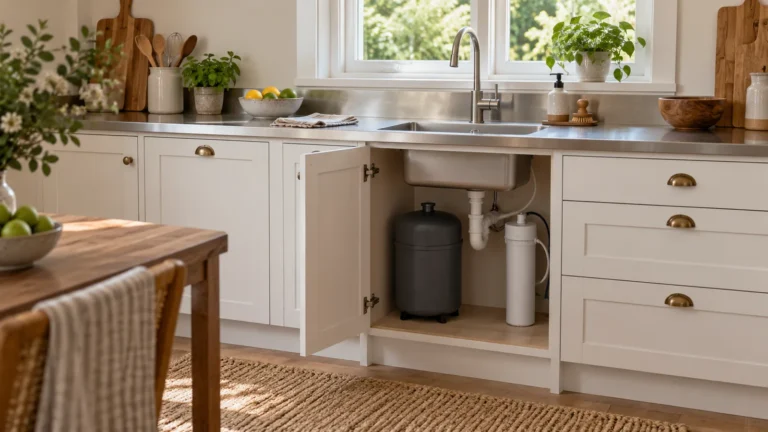
The tap position affects the space available below the worktop. Put the bowl outline, tap centre and underside fixing area on the same drawing. Include the actual mounting hardware and any proposed reinforcement, with access for installation and later removal.
The area may also contain a pull-out hose, its weight, a filter, a waste fitting or an overflow connection. A top-view drawing can make the tap seem clear while hiding a collision below it. Ask for a section through the tap and bowl, plus an underside view when the arrangement is crowded.
- Confirm the tap model and mounting-hole requirement from its current instructions.
- Identify the steel deck and its agreed local support, without inferring a hidden core from appearance.
- Show the fixing hardware seated against the intended surface.
- Leave access for the installer to reach and remove the mounting components.
- Keep the pull-out hose’s movement area separate from storage and other equipment.
Hole planning is covered separately in our tap and accessory opening guide. For a tap near an opening window, also check window and backsplash clearance.
Ask for a representative check, not a sheet-thickness promise
A nominal metal thickness does not show how a particular tap behaves on the finished worktop assembly. For a new project, propose an ordinary-use check with the selected tap or a confirmed representative setup. Agree who will provide the tap, which part of the worktop the check represents and what evidence will be retained.
The purpose is to observe the intended installation, not to invent a load test. There is no universal movement limit supplied by this article. If the buyer needs a quantified acceptance criterion, the responsible parties should define it before manufacture and identify the basis for it.
For an existing kitchen, request the original worktop drawing where possible. A repairer needs to know what is underneath the visible steel and which changes the supplier permits. The sheet, edge and assembly thickness guide explains why those terms should remain separate.
Keep the handover record useful for a later complaint
Retain the tap model reference, current installation instructions, underside photographs and the agreed mounting drawing. At handover, have the installer demonstrate normal handle operation, spout movement and hose return. Record any unresolved movement or leakage before signing off that interface.
If movement develops later, send the original record and a new video to the appropriate supplier or installer. Describe when it began and which action produces it. Do not assume that a different fitting will correct a deck-support problem, or that the cabinet manufacturer is responsible for a local mounting change it did not approve.
Questions buyers commonly ask
Will a thicker steel sheet always solve wobble?
This cannot be decided from sheet thickness alone. Identify the moving component and examine the tap, fixing surface and support as a complete interface. Confirm any revised construction in the drawing before ordering it.
Can I simply tighten the nut again?
Ask the installer to inspect the cause and follow the model’s instructions. Repeated tightening without checking the seating surface, support and hardware can leave the original problem unresolved.
Who should coordinate a new imported kitchen?
You appoint the local measurement and installation team. Give that team the tap information and have it review the worktop manufacturer’s proposed detail before production. Anray does not provide a local installation team; manufacturing interfaces remain subject to the agreed scope.
Review the project before production
Send your floor plan, destination and the exact equipment drawings for a preliminary kitchen-interface review. You appoint the local measurement and installation team; any manufacturing detail remains subject to the agreed drawings and scope.