Blog / Systems
Systems · Buyer guide
What Is the Black Coating Under a Stainless-Steel Sink?
The short answer
A black layer beneath a stainless-steel sink may be a factory-applied coating or a separate sound-damping pad, but colour alone cannot identify it. Check the sink model and specification before removing it. If the material is loose, wet or unfamiliar, document its condition and ask the manufacturer for the appropriate assessment or repair method.
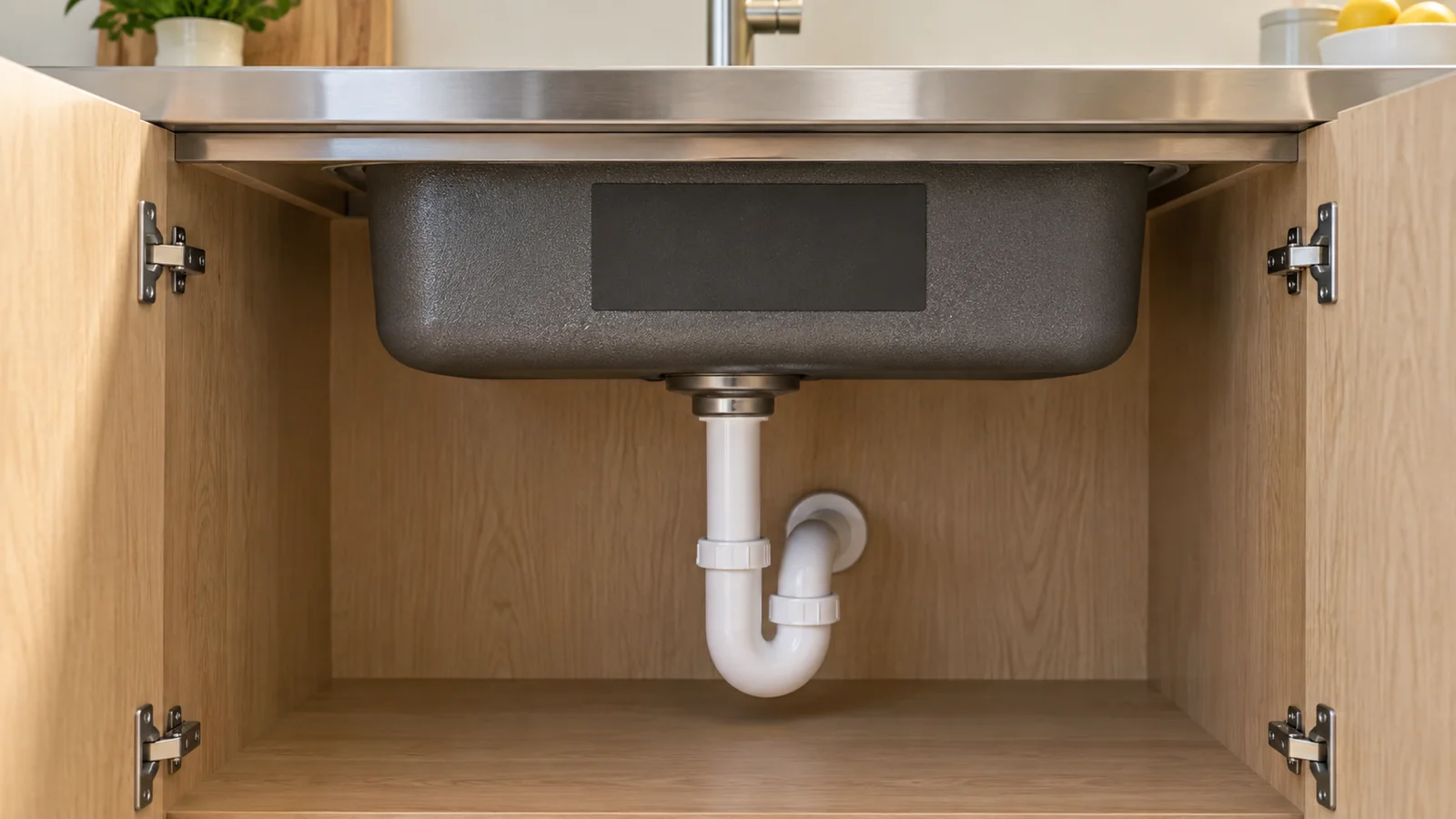
The rough black layer below a sink can look nothing like the smooth steel inside the bowl. On some sinks it is an underside treatment applied during manufacture. Identify it before trying to scrub it off.
First distinguish a coating from a separate pad
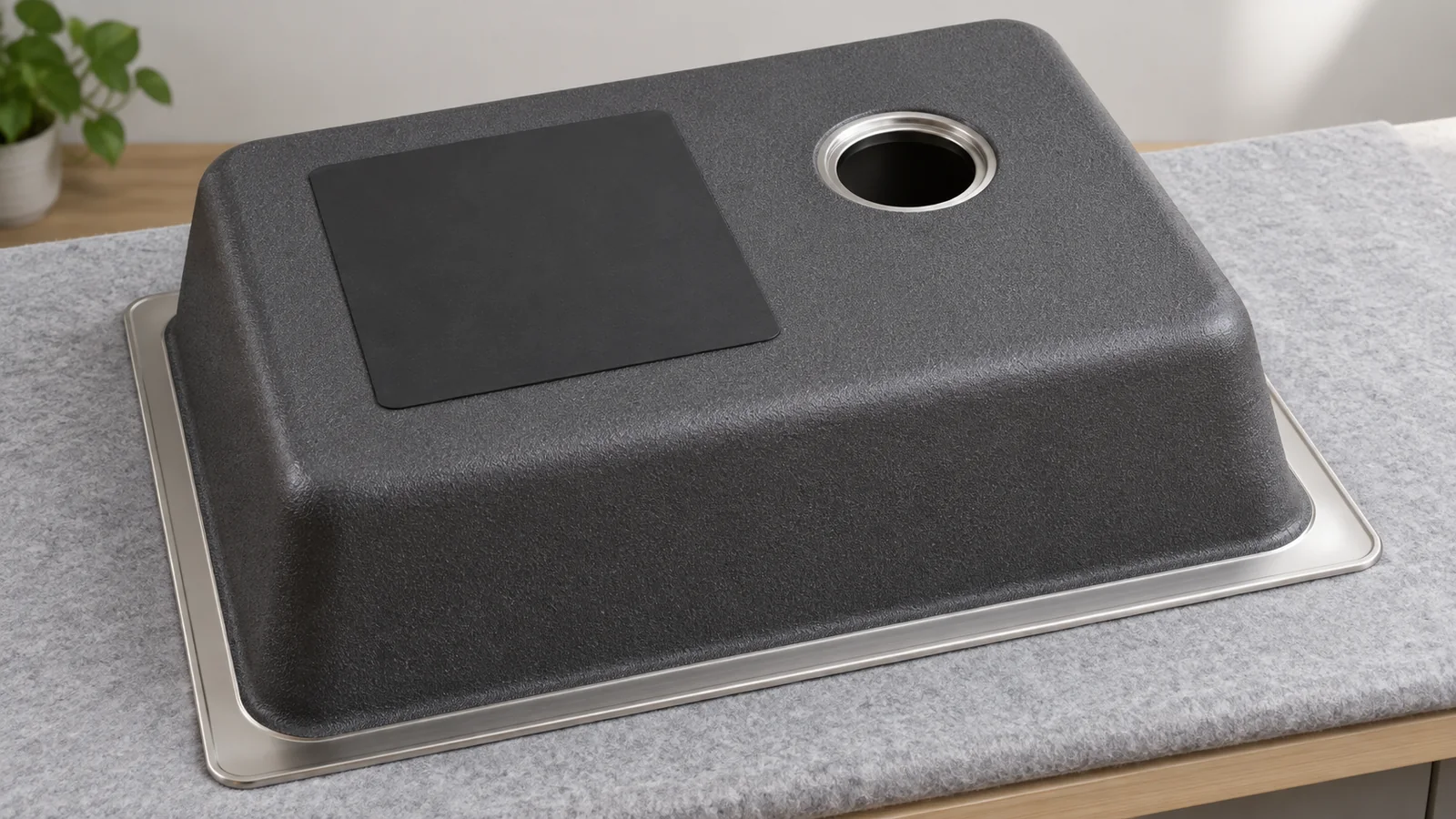
A coating is applied over a surface; a pad is a separate piece attached to it. A sink may have one, both or another specified arrangement. Look for the product information before deciding what you are seeing.
For example, Kraus lists both undercoating and sound-damping pads in its KWU110-27 specification. Franke lists sound pads in the RGX160 technical sheet. These examples show why the underside should be identified by model and construction, not by expecting every stainless sink to look alike. Kraus specification; Franke specification.
For a custom integrated bowl without a retail model number, use the kitchen component ID and request the fabrication record. The visible cabinet door might be wood-look, white or another residential finish; that does not identify the material attached to the bowl behind it.
What is the treatment intended to do?
Franke describes its sink undercoating as serving sound, condensation and water-temperature functions. That is a manufacturer statement about its treatment, not a measured performance rating for every black layer. Franke underside-treatment FAQ.
Do not infer that a small acoustic pad covers the same requirement as a specified thermal treatment. Equally, do not assume that a bare area is a manufacturing omission until the supplier has explained the intended coverage. Ask which function is claimed, where the treatment is applied and how the supplied assembly is checked.
The confusion appears in real household discussions: one renovator expected insulation but found separate pads; an apartment occupant asked what the black material below the sink was. The replies suggest several explanations, but cannot identify another reader’s sink. Renovator’s insulation question; Apartment sink-material question.
Should you remove a black layer that is still attached?
Leave an unfamiliar, attached layer undisturbed while you identify it. A specified factory treatment can remain in place; the underside does not need to look like polished steel.
Use this non-destructive sequence:
- Photograph the entire bowl underside and a closer view of the area in question, without pulling at it.
- Locate the model label, purchase record or custom component drawing. Note when the sink was installed if known.
- Describe the observation plainly: continuous coating, separate rectangular piece, loose edge, detached piece or unidentified residue.
- Tell the supplier whether water is present and whether any recent plumbing, cleaning or appliance work occurred.
- Ask for written confirmation of the material and the appropriate next action for that specific assembly.
A photograph alone does not establish that an unknown material is safe, hazardous, mould or a factory coating. Avoid making any of those claims from its colour. For an old or undocumented installation, obtain a suitable assessment before abrasive removal or chemical treatment.
What if a pad comes loose or coating flakes off?
Do not automatically replace the whole sink, and do not select glue by appearance. A pad coming away raises a service question: can the manufacturer supply an approved replacement part or procedure, and is the underlying area suitable for it?
Send the record above and ask whether the loose material should remain in place until inspection. Request the specified preparation method, compatible replacement material, application conditions, cure requirements and any limits on use while the work is carried out. Those instructions should come from the responsible supplier; this article does not supply a universal adhesive or recoating recipe.
Do not use a coating as an improvised repair for water escaping from a fitting or metal defect. If water is appearing inside the cabinet, follow the separate under-sink moisture guide and have the source assessed. Keep that investigation separate from the cosmetic appearance of the underside.
What should an importer or kitchen dealer record?
A brief underside record can prevent the next owner or installer from mistaking an intended feature for contamination. Add the following to the handover file:
- The bowl ID, supplier and applicable specification revision.
- A photograph of the accepted underside before it is concealed.
- The named treatment, intended coverage and stated function.
- Cleaning restrictions and the supplier’s service contact.
- The route for inspecting fittings without removing or damaging the treatment.
These are documentation recommendations, not a claim that Anray supplies a particular pad or coating as standard. For a new residential kitchen, confirm the actual underside specification with the project quotation. Cabinet sound is a wider topic covered in the stainless-kitchen noise guide.
Record the supplier’s service decision
Keep the supplier’s identification and service instructions with the sink records. An intact specified coating can remain in place. For loose or unidentified material, obtain instructions for that assembly before scraping, painting or gluing it.
Review the project before production
Send your floor plan, destination country and project quantity for a preliminary specification review.