Blog / Materials
Materials · Buyer guide
Which Stainless-Steel Worktop Finish Best Hides Scratches and Fingerprints?
The short answer
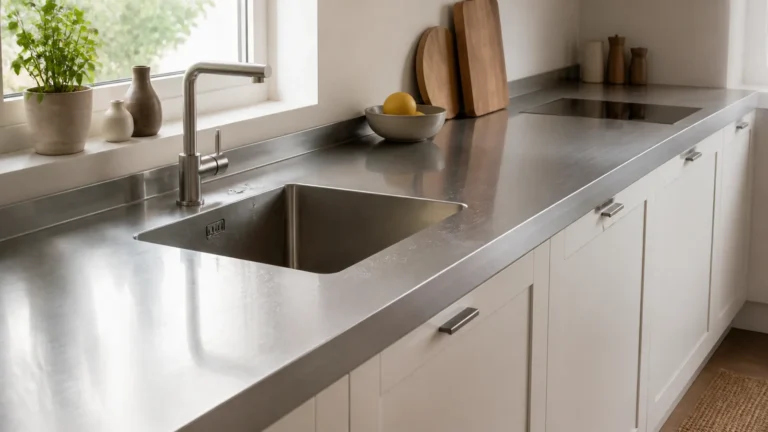
A low-gloss directional brushed or satin finish is usually the more forgiving residential worktop choice because it reduces mirror-like reflection and gives maintenance a defined grain direction. It does not prevent scratches or fingerprints. Approve a physical sample under project lighting and specify finish reference, grain direction and acceptance limits.
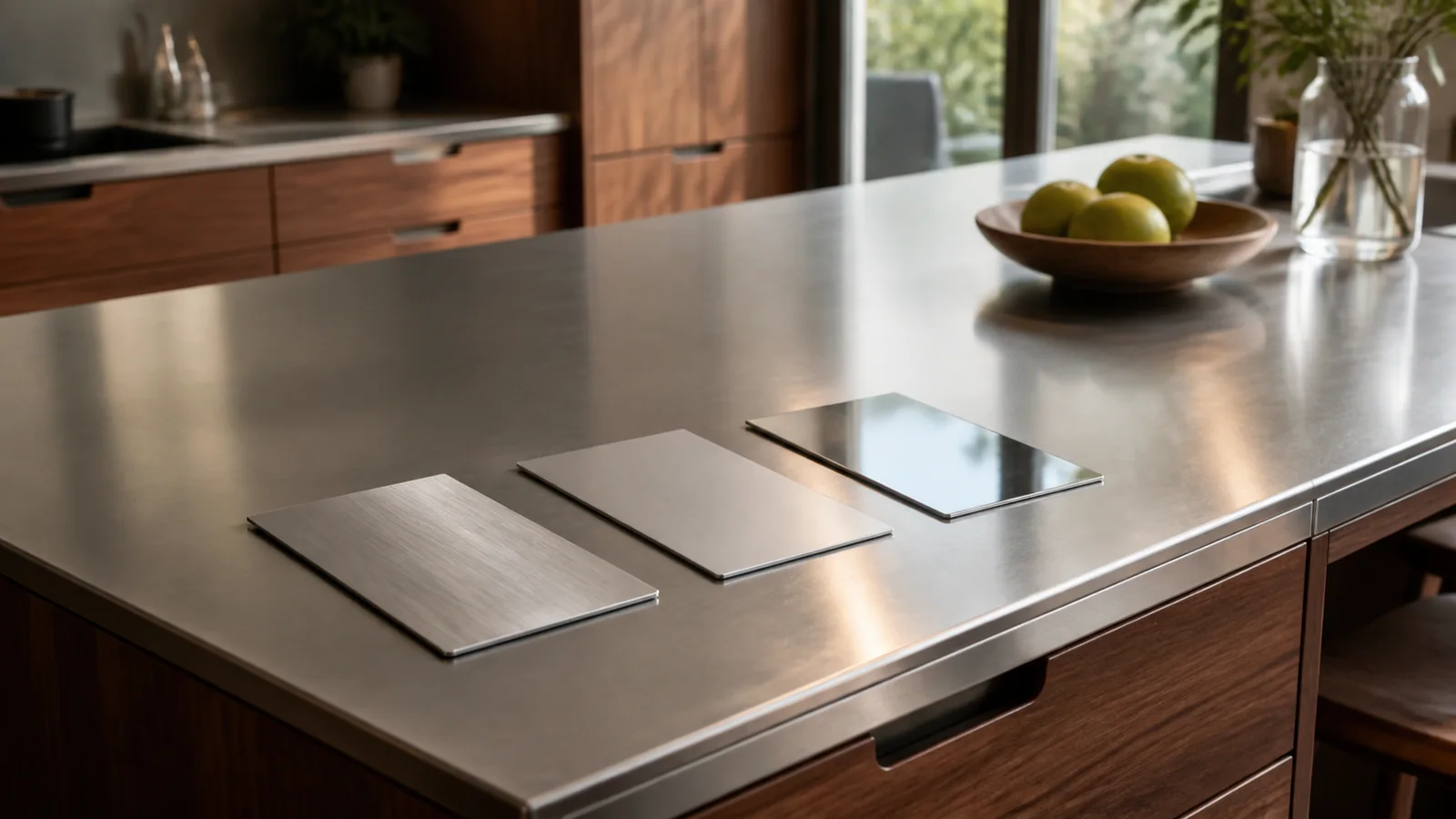
The finish controls how a stainless-steel worktop reflects light, reveals grain, shows handling marks and accepts later blending. It does not change a soft metal surface into a scratch-proof one. For a residential kitchen, the best result usually comes from a controlled low-gloss finish approved beside the actual fronts, floor, window and lighting—not from choosing the word “matte” in a quotation.
No finish hides every mark
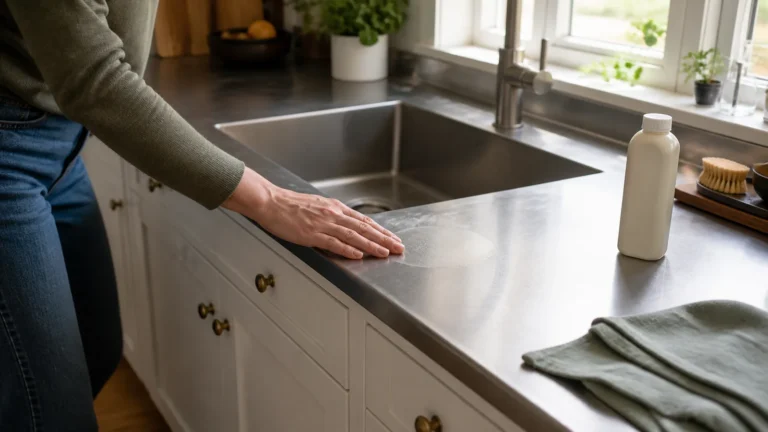
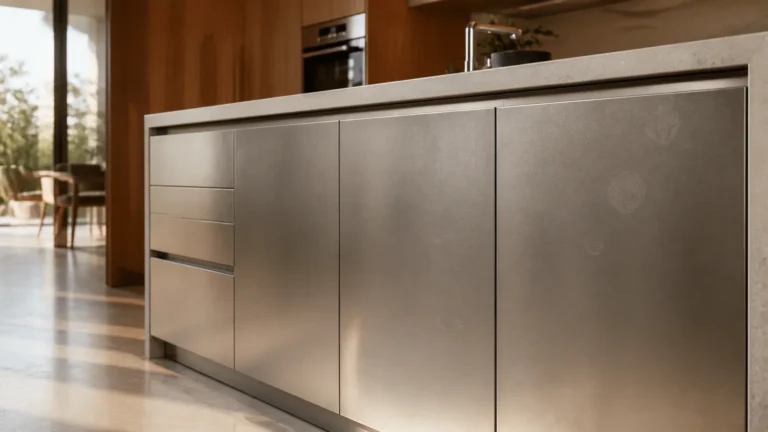
Fingerprints are deposits of oil and moisture. Scratches are physical changes to the surface. A finish can make either more or less noticeable depending on reflection, direction, contrast and viewing angle, but it cannot eliminate them. Bright polished stainless may show fingerprints and wiping streaks clearly because reflections are sharp. A coarse directional finish can break up reflection but may make cross-grain scratches obvious. A very uniform satin finish can look calm until one local patch is blended differently.
This is why the correct question is not “Which finish never marks?” It is “Which finish gives an acceptable pattern of use, cleaning and repair under this kitchen’s lighting?”
Compare finish families, not marketing adjectives
The worldstainless surface-finishes module distinguishes directional brushed finishes, smoother satin finishes and reflective polished finishes. It also shows that standard designations describe ranges and production routes rather than one guaranteed visual texture.
| Finish family | Typical visual behavior | Residential specification issue |
|---|---|---|
| Directional brushed | Visible linear grain and reduced mirror reflection | Grain direction, consistency across sections and cross-grain damage must be controlled |
| Smoother satin | Lower texture with softer, more even reflection | Local blending can create a visible gloss or grain mismatch |
| Bright or mirror polished | High reflection and strong visual precision | Fingerprints, waviness and site handling may be more apparent |
| Patterned or specialty finish | Texture can distribute marks visually | Availability, forming, weld repair and cleaning method are finish-specific |
Supplier names such as “hairline,” “satin,” “brushed” and “matte” are not enough on their own. A buyer needs a physical reference tied to the proposed material and fabrication route.
Why No. 4 or a similar brushed finish is common
ASSDA describes No. 4 as a low-gloss directional finish widely used for visible stainless. Its directional character gives cleaning and maintenance a defined path, and the finish can be maintained or repaired by appropriate methods. However, ASSDA also warns that appearance varies with abrasive, machinery and supplier, and that weld zones require careful blending.
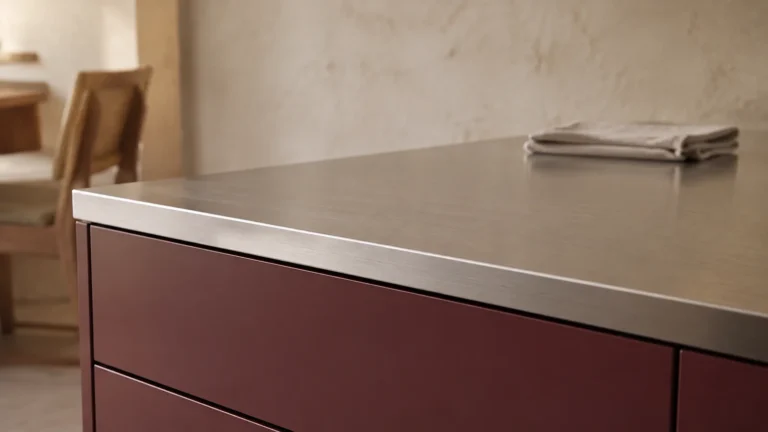
That makes a controlled brushed finish a practical starting point for many worktops, particularly beside wood, cream or coloured fronts. It is not an invisible-damage finish. A knife dragged across the grain, a carbon-steel scourer or aggressive spot polishing can still create a prominent patch.
Grain direction is a design decision
On a straight run, the grain is commonly aligned with the dominant worktop length. On an island, L-shaped return or integrated sink, the decision becomes more complex. The grain may need to turn at a welded corner, continue across a drainage area or meet a vertical edge return. If the direction is not shown on the fabrication drawing, sections can be individually correct yet visually inconsistent after assembly.
- Show grain arrows on each visible plane.
- Define how the grain meets at L-corners and welded joints.
- Approve the finish around sink welds and cooktop cutouts.
- Keep removable panels and adjacent metal parts visually coordinated.
- Include cleaning direction in the handover instructions.
Lighting can reverse the sample decision
A small coupon viewed flat under showroom lighting may look darker and calmer than the same finish across a long worktop beside a window. Raking daylight can expose waviness, grain transitions and local polishing. Point lights can create repeated bright spots. Dark fronts increase contrast; warm wood can soften it.
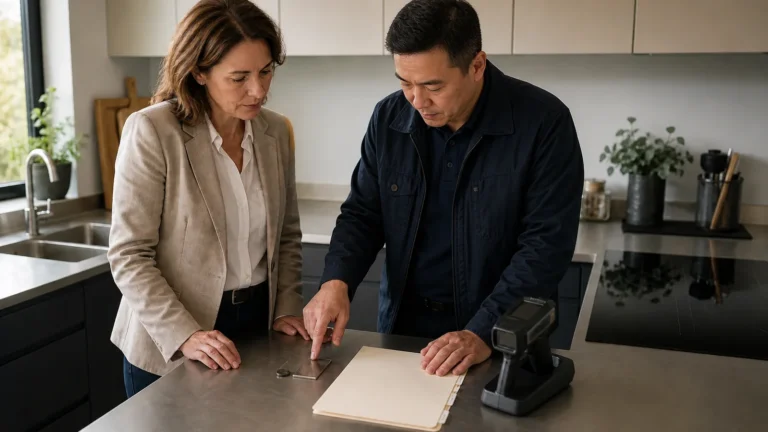
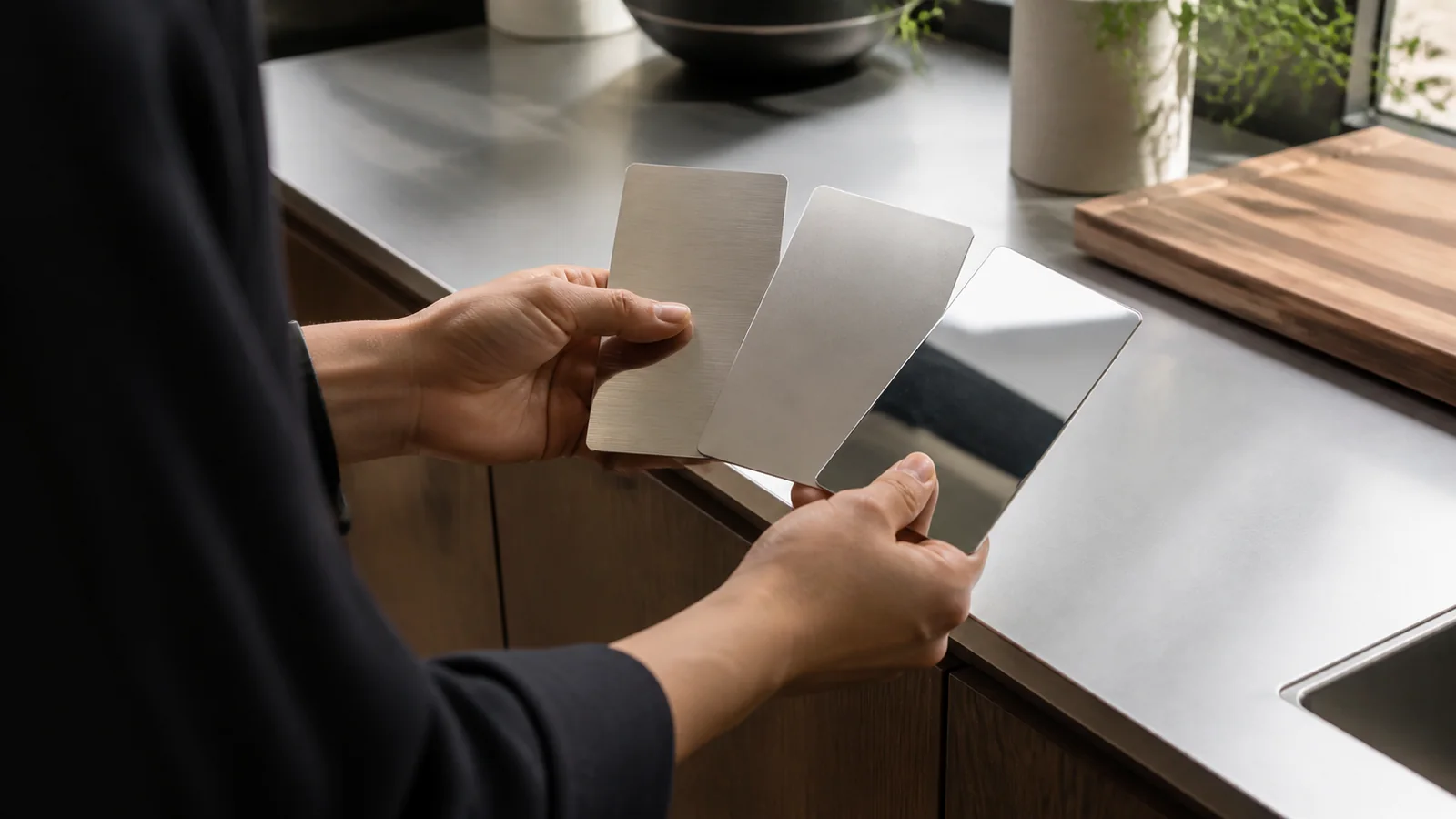
Review a representative sample horizontally, vertically and at the expected viewing angle. Place it beside the selected fronts and backsplash. Look at it in daylight and under the project’s task lighting. If the worktop contains a welded sink, corner or long seam, request a fabricated sample that includes the relevant finishing operation rather than relying only on untouched sheet.
Why finish names are insufficient for procurement
The BSSA guidance on specifying flat-product finishes explains why process, standard designation and measurable surface characteristics matter. Two suppliers can use similar descriptive language while delivering visibly different grain, gloss or roughness.
A useful finish approval records the alloy and product form, finish designation, supplier reference, grain direction, protected side, acceptable sample and any agreed range for gloss or roughness where the project needs it. The approved sample should travel through procurement, fabrication and handover. Otherwise, the site team may compare the finished worktop against a memory or a marketing image.
Plan for scratches as part of the lifecycle
Normal use will develop a pattern of fine marks. Some owners accept this as a patina; others expect the initial directional appearance to remain controlled. Both positions are valid if agreed before purchase. The mistake is promising “scratch-proof” performance or waiting until handover to discuss the first marks.
For the broader distinction between normal use, dents, scratches and fingerprints, see the residential stainless cabinet surface guide. For cleaning, use the least aggressive method and follow the grain; do not use ordinary steel wool. If a chemical has changed the finish, see the bleach-contact response before attempting mechanical blending.
Repairability must be demonstrated, not assumed
A directional finish can often be reworked by a skilled stainless finisher, but the result depends on access, geometry, original abrasive sequence and the size of the affected zone. A welded sink corner, narrow strip beside a cooktop or coated surface may not accept the same repair as an open flat sheet. “Can be polished” is not a sufficient service commitment.
Ask the supplier to show a representative repair or weld-blending sample. Define whether the acceptance criterion is invisible at all angles, visually consistent under normal viewing, or simply free of sharp edges and contamination. An absolute promise of invisibility is rarely a sound procurement basis.
Build a finish approval board
- Select at least two plausible stainless finish samples.
- Place them beside the actual front, handle, floor and backsplash samples.
- Review them under daylight and the proposed artificial lighting.
- Mark the intended grain direction and visible side.
- Include a corner, folded edge or welded sample where those operations matter.
- Sign and date the accepted reference; keep one protected sample for comparison.
Finish is also part of the room’s residential character. Use the principles in the warm residential stainless-kitchen guide to balance metal with furniture-style fronts and lighting.
Questions to put in the RFQ
- What standard designation and supplier finish reference are proposed?
- Is the finish directional, and where are grain arrows shown?
- Will all visible sections come from a coordinated material and finishing route?
- Can a fabricated sample include the sink weld, corner and edge return?
- What cleaning method is approved for fingerprints and routine soil?
- How are local scratches or weld zones blended, and what defines acceptance?
- Which sample remains the contractual visual reference?
Bottom line
A directional brushed or satin finish is usually more forgiving than a highly reflective surface, but it cannot prevent scratches or fingerprints. The defensible specification is a physical sample reviewed under project lighting, with finish reference, grain direction, fabricated details, cleaning method and repair acceptance recorded before production.
Review the project before production
Send your floor plan, destination country and project quantity for a preliminary specification review.