Blog / Systems
Systems · Buyer guide
Single or Double Bowl for an Integrated Stainless-Steel Sink?
The short answer
Choose a single bowl when uninterrupted space for large cookware matters most. Consider two bowls when your routine genuinely needs separate washing and rinsing areas. Test a low-divider option if you want separation without a full-height partition. Approve the actual internal bowl geometry and below-counter arrangement before the sink is integrated into a stainless worktop.
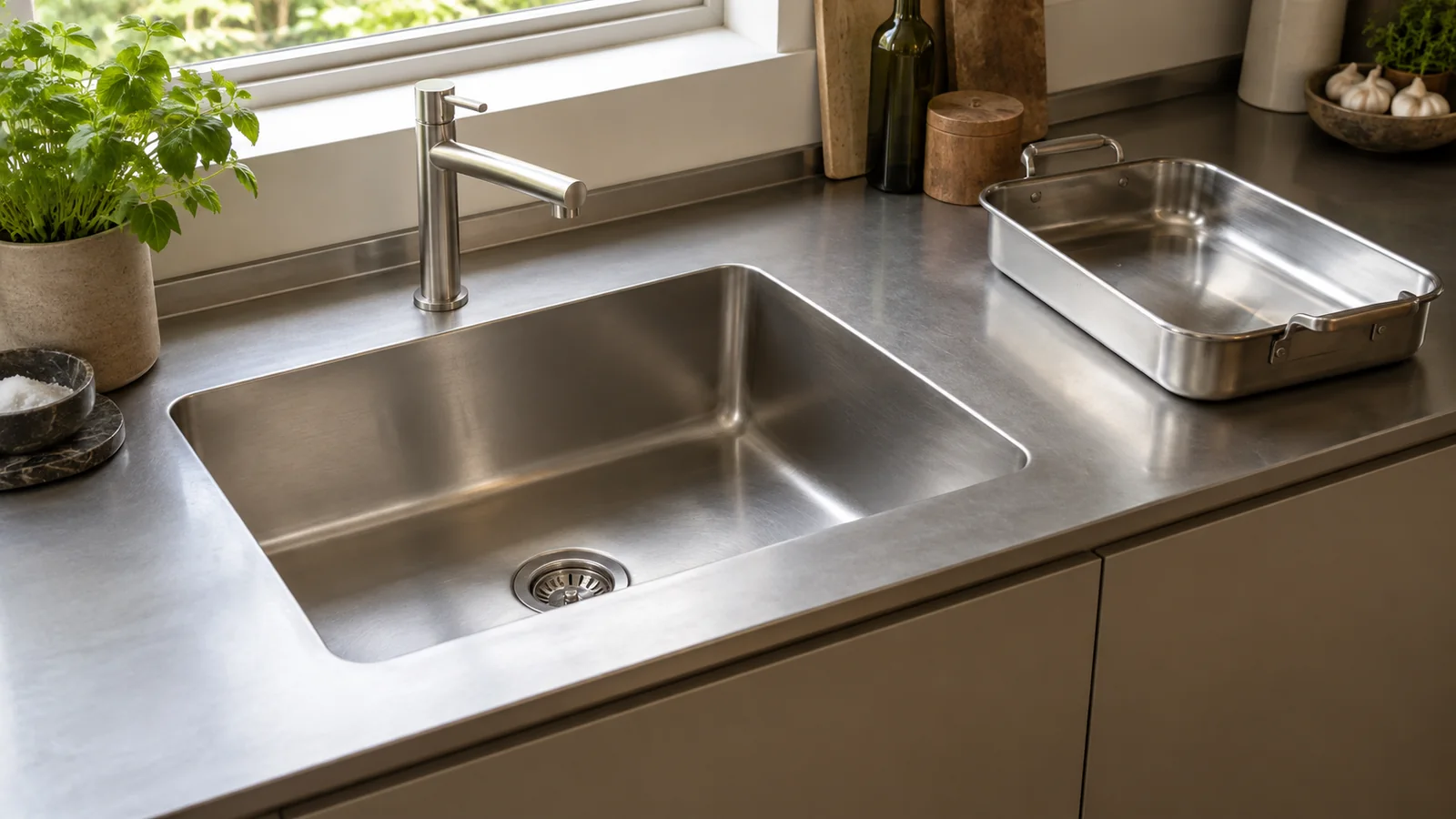
People disagree about bowl count because they wash up differently. Someone who soaks dishes and rinses them separately has a different brief from someone who mainly hand-washes large pans. Compare the dishes and washing sequence in your own kitchen before choosing a configuration.
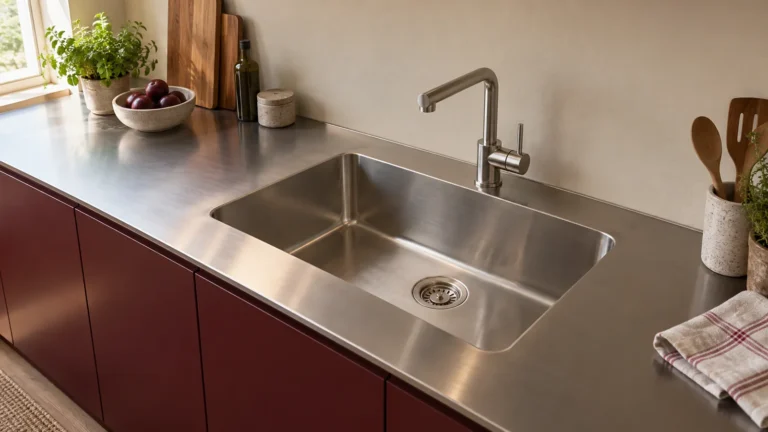
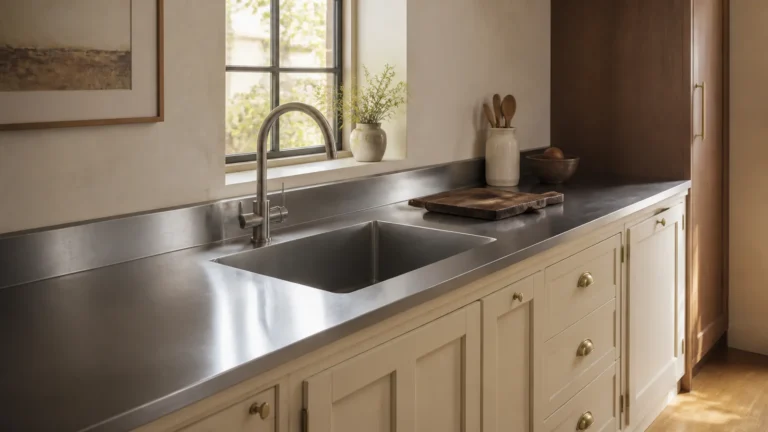
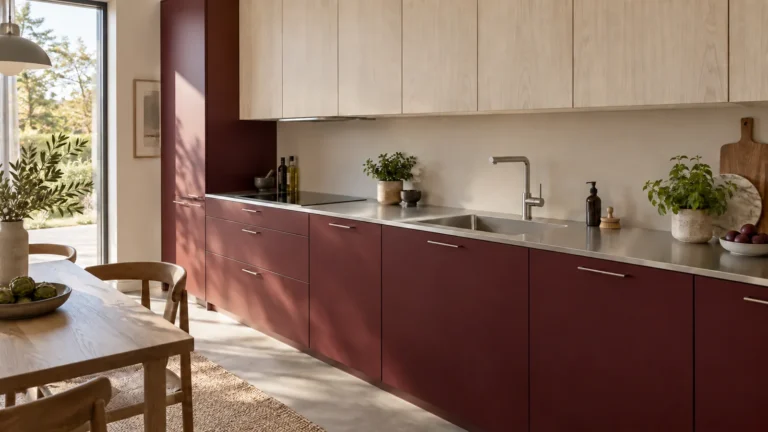
This guide concerns a residential kitchen with an integrated stainless-steel sink and worktop, paired with decorative cabinet fronts. It is about the number and arrangement of bowls. For the separate questions of reach, depth and overall size, use our sink size and depth guide alongside it.
Which washing routine are you designing around?
List what is washed by hand in a normal week. A household using a dishwasher for most dishes may still hand-wash roasting trays, knives, chopping boards or delicate glasses. Another household may regularly wash a whole meal’s dishes in standing water and want a separate rinse area.
Watch the sequence rather than estimating it from memory. Where do dirty items wait? Where do washed items drain? Do you need to wash produce while another item is soaking? Is there usually one person at the sink, or does a second person help?
Then separate a necessary function from a habit that could be accommodated differently. A removable washing tub may reproduce part of a two-bowl routine inside a larger sink. It is only useful if it fits securely, is comfortable to lift when used as intended, and has somewhere to go when removed. It is not automatically a substitute for a fixed second bowl.
What does each bowl arrangement give up?
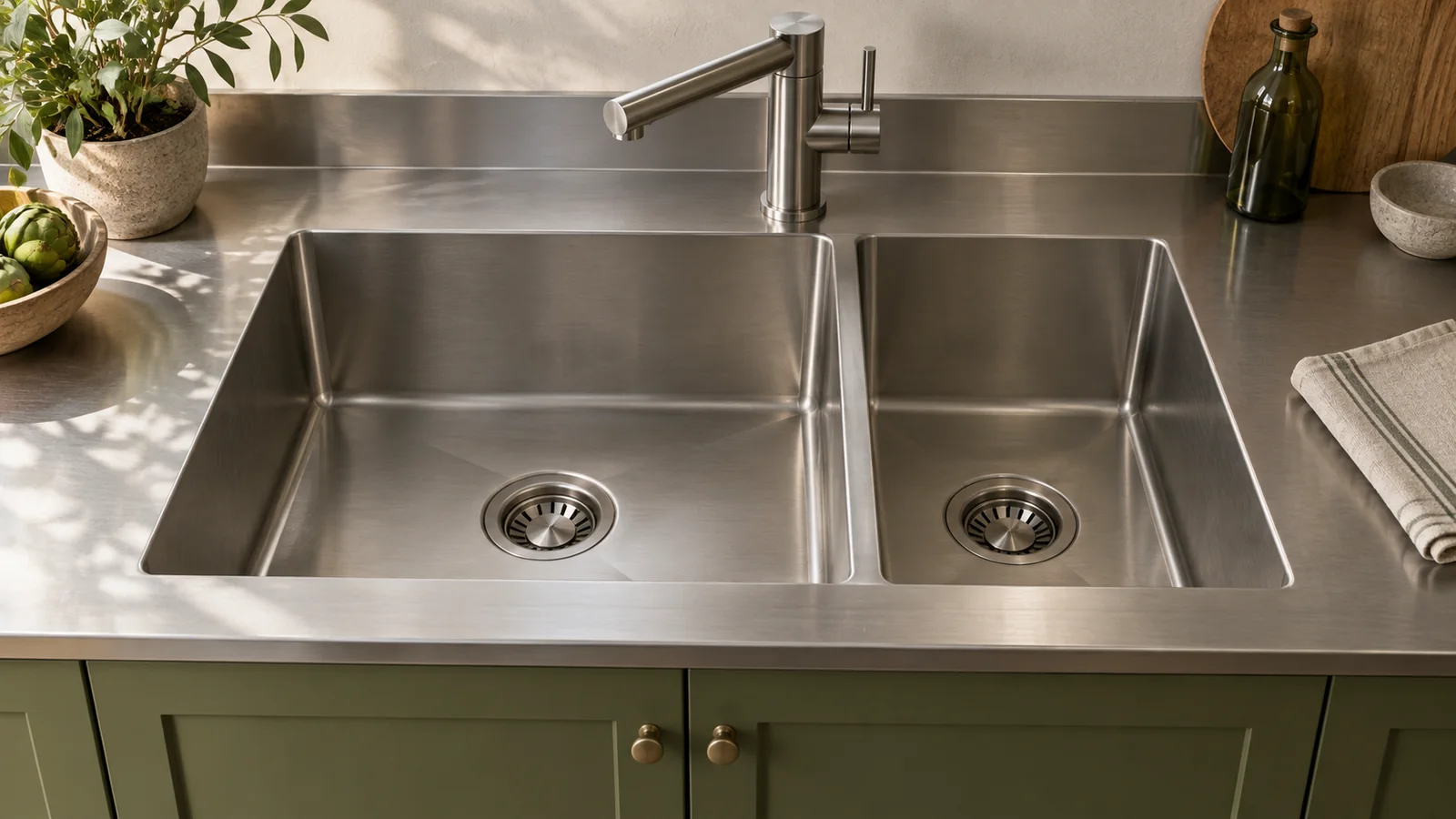
Kohler’s bowl-configuration guide distinguishes a single bowl, equal double bowls and offset double bowls. It also describes Smart Divide as a lower-divider option. These are useful categories for comparison, not dimensions or features that should be assumed for an Anray order.
With one bowl, ask what happens when a large pan occupies it. Can you still reach the drain, use the tap and complete the next task? A generous opening does not help much if the household frequently needs a separate clean area at the same time.
With two equal bowls, test the largest item in one actual bowl. The total sink width includes both bowls and the divider; it does not describe the usable space on either side. If a tray only fits diagonally above the divider, decide whether that is acceptable in everyday use.
An offset arrangement deserves its own test. A small second bowl might be enough for your particular rinsing task, or it might be too small to do what justified choosing two bowls. Decide which side the larger bowl belongs on by following the route from dirty dishes to washing and drying.
For a low-divider design, check the proposed divider height and the tasks it separates. Do not assume it performs like either two fully independent bowls or one unobstructed basin. If a showroom sample is unavailable, request a dimensioned section rather than judging the divider from a photograph.
How should you test the actual cookware?
Bring the largest frequently washed items to a representative sink sample where possible. A roasting pan used every week deserves more weight than a very large item brought out once a year. Include a baking tray, chopping board and tall pot if they create different movements.
A paper outline is a useful first check, but it does not show sloping sides, internal corner curves, depth or the tap’s reach. Ask for internal dimensions at the relevant levels and distinguish them from the overall rim or worktop opening.
- Lower each item into the proposed bowl without forcing it against a divider.
- Turn it as you would when cleaning, allowing room for your hand and cleaning tool.
- Check whether the tap can reach the surfaces you normally rinse, using the actual tap specification.
- Check the movement from the sink to the proposed drying area.
- Repeat with any rack, tub or accessory you intend to keep in place.
Record exactly what fitted. “The weekly roasting pan can be turned inside the left bowl” is useful information for an approval. If you checked only a drawing, record that too; it leaves the physical movement untested.
Where will clean and dirty items go?
Two bowls do not remove the need for a drying position, and one bowl does not necessarily force dishes onto the preparation area. Draw the adjacent counter as it is used, including the rack, soap, chopping board and any appliance normally kept there.
Consider a hypothetical household that mostly uses a dishwasher but hand-washes a large pan after dinner. A single bowl may suit that routine if the pan fits and the drying area remains available. In a different household that hand-washes batches of dishes in soapy water, a second bowl may be worth the space it takes. Neither example establishes what your family should choose.
Do the same comparison when two tasks overlap. If one person rinses vegetables while another clears dishes, ask whether both actually have room to stand and work. A second basin alone does not create a second comfortable workstation.
Keep accessories in the drawing. Our drainboard versus removable rack guide covers the drying choice without assuming that either bowl arrangement requires a particular accessory.
What belongs below the bowls?
Ask for the underside arrangement before approving the cabinet. Identify each bowl’s external envelope, waste fitting, trap arrangement and any selected accessory. Have the local plumber confirm the required connections and access for the actual installation.
Review this drawing with the intended bin, storage shelf or pull-out. Do not approve a useful-looking cabinet front and assume the desired storage will fit behind it. Where a pull-out is proposed, show its travel and the space needed to remove or maintain the plumbing components.
A second bowl may introduce additional connections or a different arrangement, but the exact result depends on the specified sink and local installation. Avoid a blanket claim that every double bowl wastes a particular amount of storage. The under-sink bin planning guide explains how to review the competing components together.
What should be fixed before fabrication?
For an integrated arrangement, record the chosen configuration as part of the worktop approval, not as a note to decide during installation. Confirm whether the bowl is welded into the worktop or joined by another specified method. Appearance alone does not establish construction.
- Number of bowls, relative size and left/right orientation.
- Internal geometry, divider height where relevant, and the external space below.
- Tap, waste fittings and intended accessories, with exact models where applicable.
- Worktop preparation area and drying position retained beside the sink.
- Cabinet storage, plumbing access and responsibility for local connection.
- The cookware test completed, any limitation and the compromise accepted.
Also ask what repair or replacement would involve for the proposed construction. A fixed divider or welded bowl is not a feature to treat as easily reversible. Our welded-in sink repair and replacement guide sets out the questions without promising a particular repair outcome.
Send the kitchen plan, preferred bowl arrangement, the cookware or tasks driving the choice, and the selected tap and accessories. The customer arranges site measurement and local installation. Resolve the bowl drawing with those local trades before releasing the worktop for production.
Review the project before production
Send your kitchen plan, destination country and local installation arrangements for a preliminary specification review.