Blog / Systems
Systems · Buyer guide
Can a Welded-In Stainless-Steel Sink Be Repaired or Replaced?
The short answer
Sometimes. A specialist may repair a localized weld defect, dent or finish problem, but a welded-in bowl is part of the worktop assembly. Replacement normally requires cutting, refitting, welding, heat control and finish blending. The safest decision follows an on-site assessment of damage depth, access, surrounding support and the required appearance.
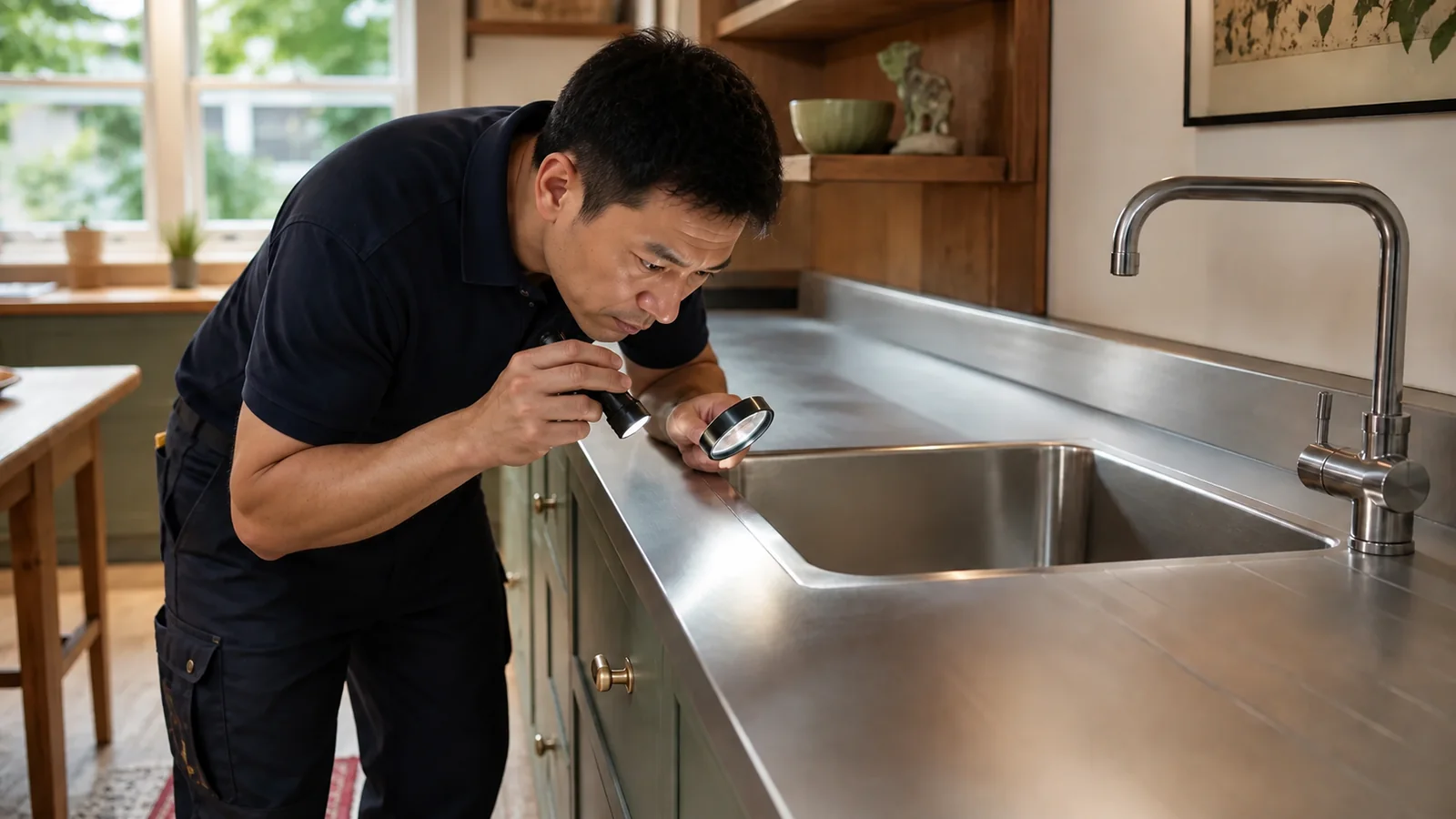
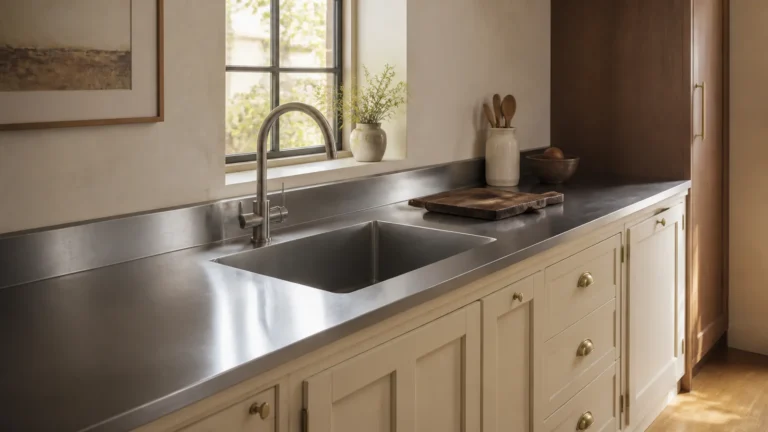
A welded-in sink is joined to the stainless worktop and finished so the bowl and top read as one assembly. That continuity can simplify wiping and create a precise residential wet zone, but it also changes serviceability. Replacing the bowl is not the same operation as releasing clips on an undermount sink.
First identify what is actually damaged
Do not begin with the assumption that the bowl must be cut out. A complaint may concern mineral residue, cleaner damage, free-iron staining, a local dent, a leaking weld, a crack, poor drainage, noise or a finish mismatch. Each condition has a different test and repair boundary.
- Clean and dry the area with the approved mild method.
- Photograph the defect under normal and raking light.
- Mark whether it changes when wet.
- Perform a controlled leak test if water appears below the sink.
- Inspect plumbing, faucet penetrations and adjacent sealant separately.
- Record whether the defect is in sheet metal, weld, finish or supporting structure.
Brown spotting alone does not prove that the bowl has failed. Use the rust-coloured spot diagnostic before specifying replacement. Water below the cabinet also requires separating a leak from under-sink condensation.
Which defects may be locally repairable?
A qualified stainless specialist may be able to address a small accessible weld defect, localized dent, limited scratch zone or finish mismatch. Feasibility depends on sheet thickness, damage depth, access from both sides, bowl geometry, backing material, nearby sealants, appliances and the finish that must be restored.
Repair is not automatically the least disruptive option. Heating a small zone can distort a broad visible surface. Grinding a weld can thin an already stressed corner. Blending one patch can create a gloss halo larger than the original defect. The proposed repair should therefore identify the structural operation and the decorative finishing operation separately.
When replacement becomes more likely
Replacement is more likely when cracking is extensive or recurrent, corrosion has penetrated a significant area, the bowl geometry itself is unacceptable, previous repairs have removed too much material, or access makes a reliable local repair impossible. A replacement may involve only the bowl, a larger sink deck section, or the complete worktop run.
| Condition | Possible route | Decision evidence |
|---|---|---|
| Surface residue or light staining | Controlled cleaning or contamination treatment | Clean test, magnified inspection and finish assessment |
| Localized cosmetic scratch or dent | Blend, reform or accept | Representative repair sample and thickness/access review |
| Small accessible weld leak | Specialist local weld repair | Leak location, weld procedure, heat and finish plan |
| Broad crack, severe distortion or penetrated damage | Cut out bowl or replace larger worktop section | Structural assessment, access and replacement drawing |
| Persistent drainage complaint | Survey level and bowl geometry before replacement | Controlled water test and installation check |
Why bowl replacement is specialist work
The BSSA mechanical-finishing guide illustrates the precision involved in welding a bowl into a decorative worktop: accurate forming and fit-up, controlled tacking and welding, heat management, removal of heat tint and skilled blending. Replacement reverses part of that process in an installed kitchen and then repeats it around a surface that must remain flat and visually consistent.
Site conditions add constraints. Adjacent fronts, wall finishes and appliances require protection. Combustible backing, adhesives and sealants may be close to the weld zone. Ventilation, electrical isolation, fire controls and access below the bowl must be evaluated by the responsible contractor. This is not a normal handyman repair.
Post-weld cleaning is not optional
Heat tint and contamination around a stainless weld are not merely cosmetic. The BSSA guidance on post-weld cleaning explains that heat-tinted layers should be removed and the surface properly finished so corrosion resistance is restored. The appropriate mechanical or chemical process depends on the work and requires controlled handling.
A repair quotation should state who owns weld preparation, post-weld cleaning, residue removal, neutralization where relevant, final rinse, finish blending and leak testing. “Weld and polish” is not a complete scope.
Finish matching may be harder than stopping the leak
A watertight repair can still be visually unacceptable on a directional residential worktop. Grain may fan around the bowl, a blended zone may become brighter than the surrounding patina, or local grinding may reveal distortion. The ASSDA fabrication and special-finishing guidance notes that visible No. 4 weld zones require careful blending and that samples can define the expected appearance.
Set two acceptance criteria: functional and visual. Functional checks include leak testing, drainage, edge safety and support. Visual checks include grain continuity, gloss, flatness and the appearance under agreed lighting and viewing distance. Do not allow the phrase “like new” to replace a sample.
Serviceability should be designed before purchase
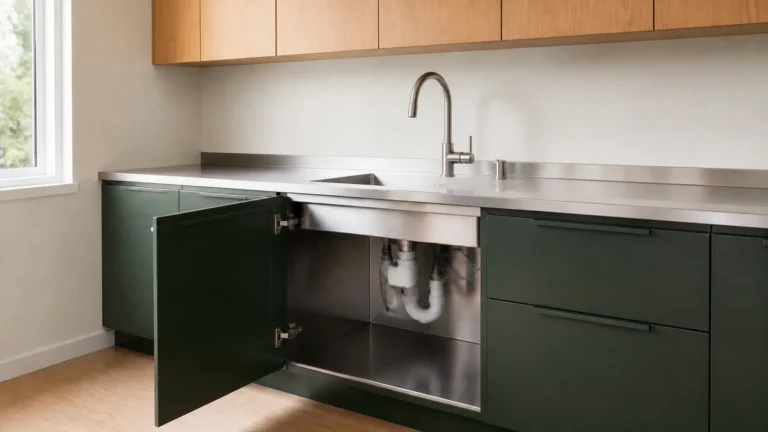
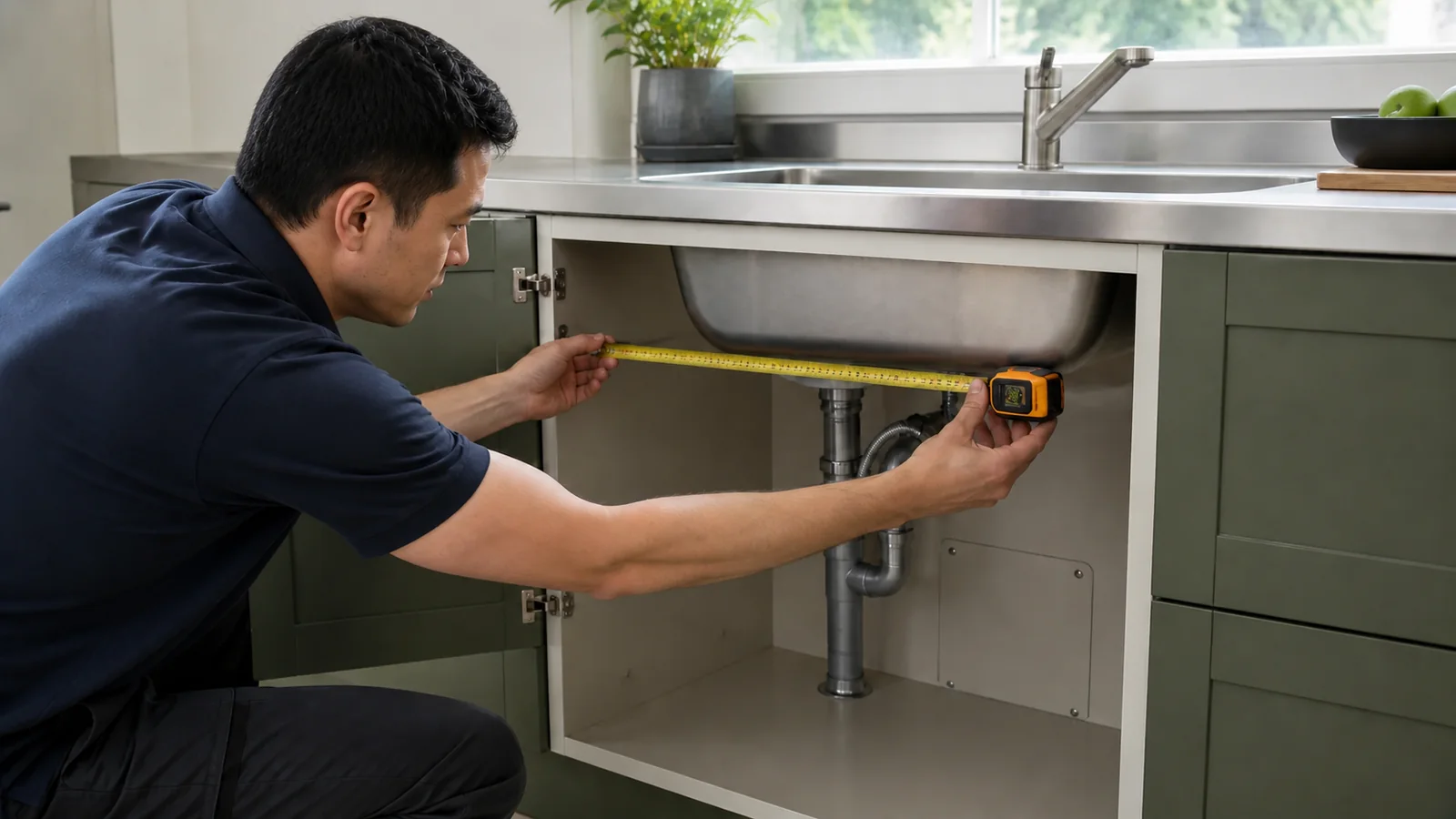
An integrated sink can be designed with inspection access, removable under-sink components, documented backing and enough clearance around plumbing. The project record should preserve the bowl geometry, sheet grade and thickness, finish reference, weld locations and as-built photographs. These records reduce destructive investigation years later.
- Keep valves, traps and faucet connections accessible.
- Avoid permanently trapping the bowl underside behind unrelated fixed services.
- Record sound-deadening pads, coatings, backing and adhesives.
- Provide a route for removing a damaged worktop section if replacement becomes necessary.
- Retain an approved finish sample for future blending comparison.
Compare integrated and replaceable sink strategies honestly
An integrated welded bowl offers a continuous metal junction and can be tailored to the worktop. A separately mounted sink is generally easier to exchange if clips, sealant and access remain available. The tradeoff is not “premium versus cheap”; it is continuity and customization versus simpler component replacement.
For projects where downtime, distant service coverage or future appliance changes are important, ask whether a partially modular sink deck can preserve the integrated appearance while limiting the replacement area. The answer must come from the actual fabricator and drawing, not a generic product image.
Use a staged assessment before authorizing work
- Document the symptom and maintenance history.
- Separate plumbing, condensation, drainage, contamination and metal defects.
- Confirm grade, thickness, finish, backing and access from project records or inspection.
- Request repair, bowl-replacement and larger-section options where feasible.
- Review heat control, site protection and post-weld cleaning.
- Approve a finish sample and functional test plan.
- Record the completed repair for future service.
Questions to put in the RFQ
- Is the bowl welded directly to the worktop, and where are the welds located?
- What sheet grade, thickness, finish and backing are used?
- Can the underside and perimeter be accessed for diagnosis and repair?
- Which defects can be repaired locally, and which require section replacement?
- Who controls welding, heat, post-weld cleaning and finish blending?
- What leak, drainage, flatness and visual tests define acceptance?
- Which drawings, samples and as-built records remain with the owner?
Bottom line
A welded-in stainless sink can sometimes be repaired and can sometimes be replaced, but neither outcome should be promised before inspection. Diagnose the defect, verify access and construction, separate functional repair from finish matching, and require a qualified welding, post-weld cleaning and test plan. Design service access and documentation into the original kitchen so a future problem does not force unnecessary worktop replacement.
Review the project before production
Send your floor plan, destination country and project quantity for a preliminary specification review.