Blog / Project Process
Project Process · Buyer guide
Kitchen Trial Assembly Before Shipping: What Should You Check?
The short answer
A pre-shipment kitchen trial assembly should show whether the agreed cabinet components fit and operate together before packing. Match each check to a module number, an approved drawing and a recorded result. It does not prove that the kitchen fits the actual building or replace final site measurement and installation checks.

Start with the order drawing, then look at the assembled kitchen
Match the assembled cabinet run to the drawing number, revision date and module list for your order. Keep those references visible in the photographs and inspection records.
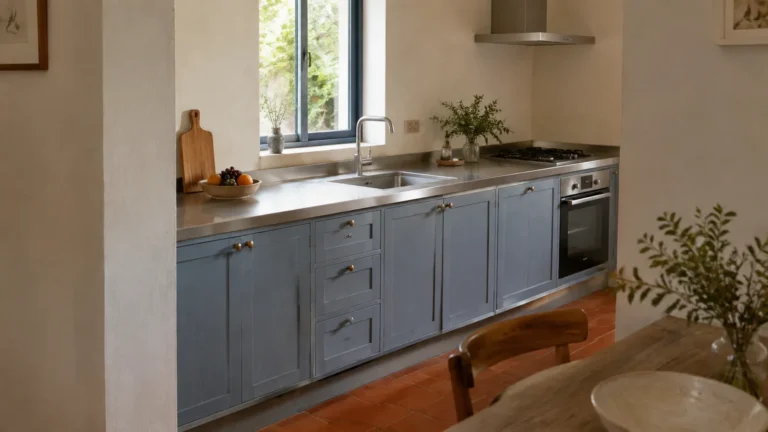
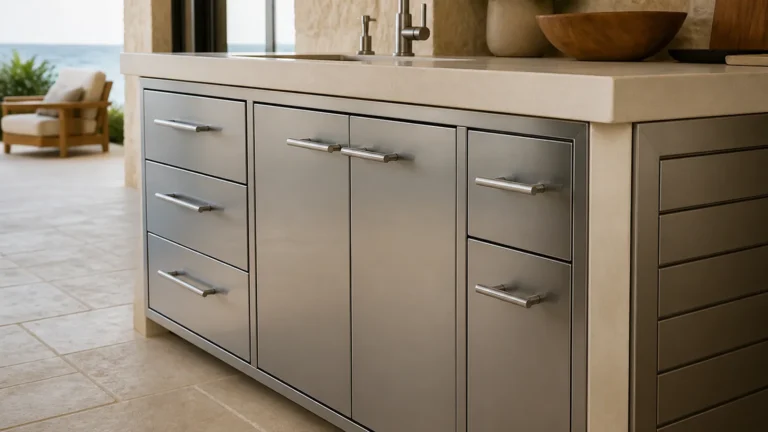
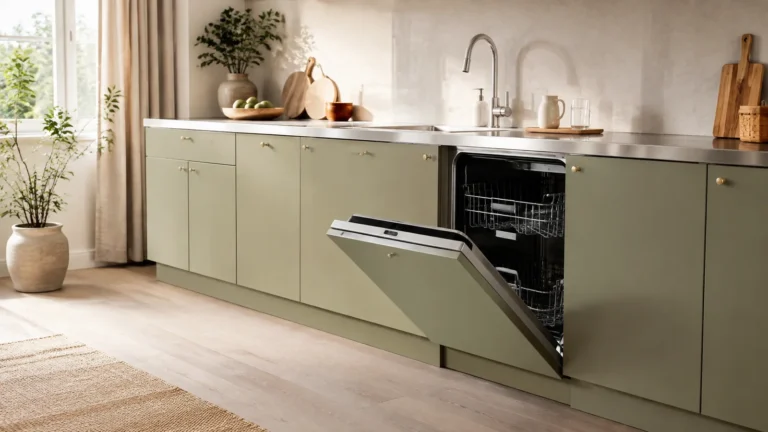
For a custom residential kitchen, the review may include cabinets with wood-look or coloured fronts, a steel worktop, an integrated sink and spaces for separately supplied appliances. Decide which of these will actually be present. An empty appliance opening and a fitted appliance demonstrate different things.
At Anray, pre-shipment cabinet trial assembly is available. Every panel and every module carries a numbered label to help the customer’s locally appointed installer identify and assemble the components. The extent of the trial assembly, the checks and the records need to be agreed for the order; full assembly is not automatically included in every project.
Agree what the trial will cover
Use the following as a starting worksheet for the buyer, factory and local installer. The acceptance dimensions, tolerances and operation requirements should come from the approved order documents. The table does not set universal cabinet tolerances.
| Review item | Evidence to request | Question it helps resolve |
|---|---|---|
| Order identity | Drawing revision, module list and dated overview | Is this the configuration being purchased? |
| Module arrangement | Label visible beside the matching plan reference | Is each shown cabinet in its intended position? |
| Agreed dimensions | Measurement record with start and end points identified | Does the checked dimension match the approved drawing? |
| Doors and drawers | Opening and closing sequence, including adjacent fronts | Do the installed parts move through the agreed range without the observed interference? |
| Finish and visible junctions | Overview and detail views linked to the approved sample | Can the buyer review appearance against the agreed reference? |
| Worktop and sink interfaces | Relevant sections, fitted condition and accessible underside views | Are the specified interfaces present and reviewable? |
| Parts not fitted during the trial | Explicit list of absent appliances, fittings or site-made items | Which questions remain for later checks? |
| Corrections | Issue number, affected module and repeat-check evidence | Was an identified problem resolved before packing? |
Keep one line for each agreed check, with a status such as accepted, correction required or not checked. If only selected modules are assembled, name them and keep the rest outside the acceptance statement.
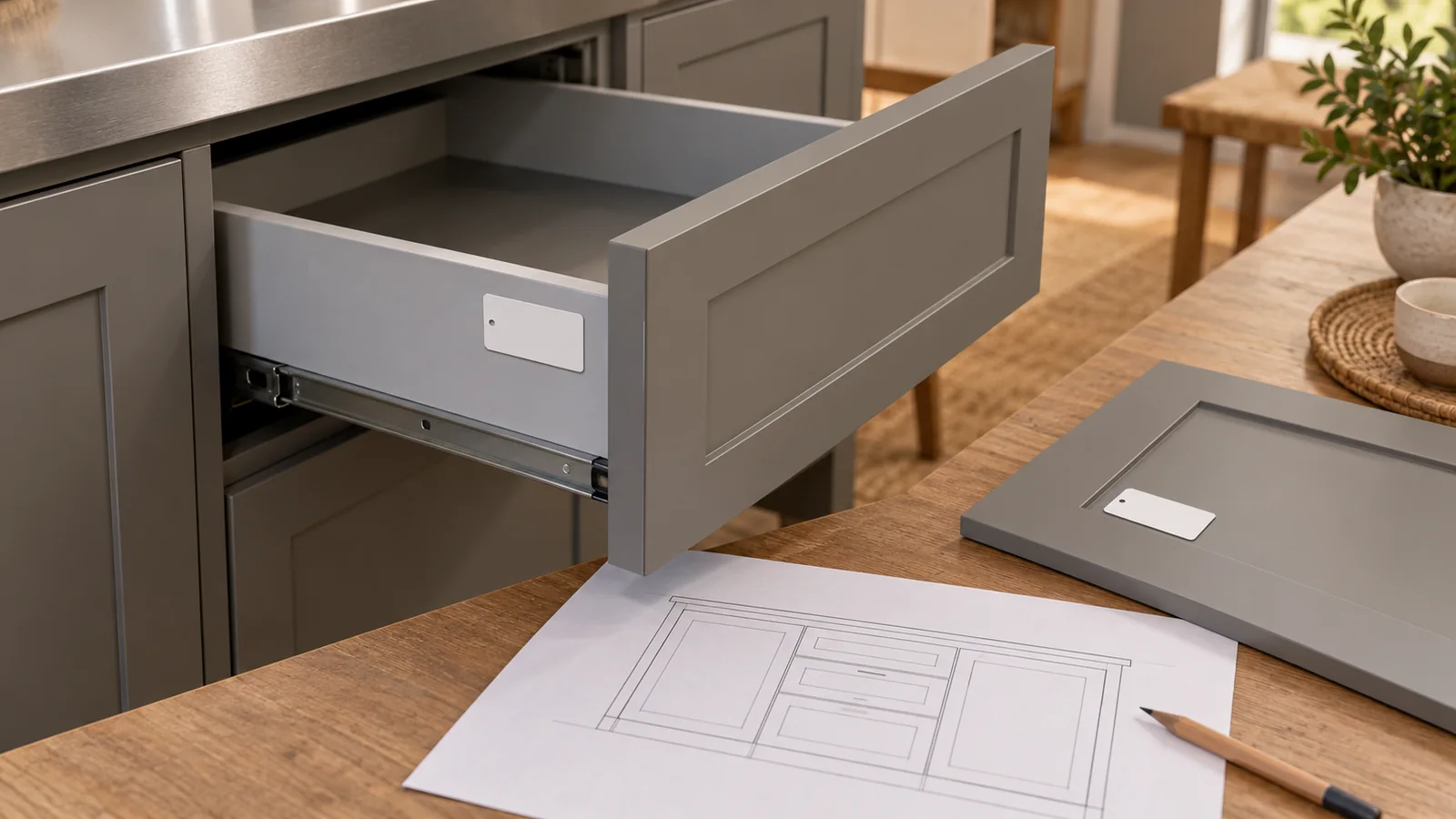
Request a video sequence that can be followed
Agree a recording sequence that shows where each detail belongs in the kitchen:
- Show the order reference, drawing revision and overall assembled arrangement.
- Move along the cabinet run in plan order. Show each module label before the corresponding details.
- Demonstrate the doors, drawers and agreed storage fittings. Include the neighbouring fronts when checking clearance.
- Show each agreed measurement with both reference points visible. Add a still image if the value is hard to read.
- Return to any corrected item and show its repeat check, retaining the earlier issue reference.
Request additional views when a corner, underside or label cannot be seen. A continuous overview helps establish context, while close photographs make a particular feature easier to inspect. Neither replaces a measurement or test that was not performed.
Decide in advance whether the protective film needs to be lifted for any finish review, who will do that and how the surface will be protected afterwards. A film-covered surface cannot show every finish detail.
Record a problem so it can actually be closed
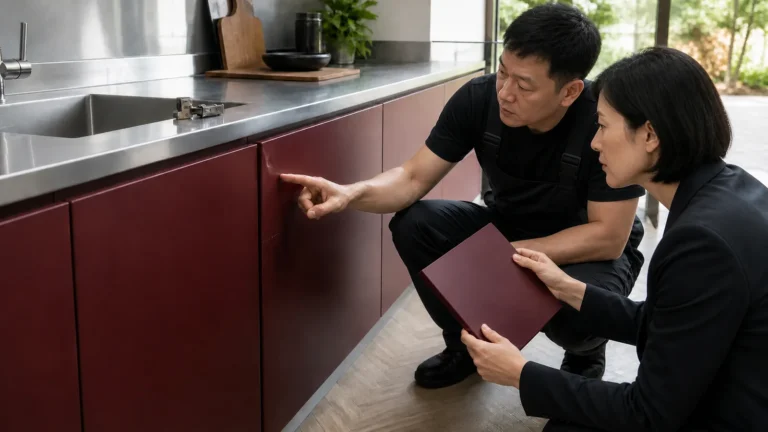
Consider this hypothetical example, not an Anray customer case: during the trial, the drawer in module M04 contacts the handle on the adjacent front. A message saying “please adjust the drawer” leaves too much open.
A more useful record identifies M04, the adjacent module and the relevant drawing revision, then links a video of the contact. Record the agreed correction and repeat the same movement after it is completed. Keep the result under the original issue number.
If the correction changes the cabinet, front or hardware specification, update the affected drawing or parts reference too. Otherwise the evidence may show one configuration while the packing documents describe another. Close the issue only against the agreed requirement; do not mark it passed because a new photograph looks tidier.
Trial assembly and inspection cover different questions
Trial assembly concentrates on how specified parts fit and work together. A broader shipment inspection may also review quantities, documents and packaging. For example, SGS lists dimensional, documentation, visual, packing and marking checks among its inspection services. That is a general scope reference, not a statement that Anray orders carry SGS inspection or certification.
If an independent inspector is appointed, provide the same drawing revision and agreed checklist. Define access to the parts and whether the inspector will witness assembly, review existing records or perform other checks. Inspection scope should be written down rather than inferred from the agency’s name.
After assembly review, connect the accepted module list to the packing list. Follow the separate shipping damage and missing-parts guide for packing and arrival records. Parts shown together at the factory still need to be identifiable when unpacked.
What still has to be checked at the property?
The factory setup does not reproduce the actual floor, wall positions, service outlets or delivery route. The customer’s local team must confirm those conditions and the installation arrangement. The site-fit guide covers the measurement handoff.
Separate any factory demonstration from live appliance commissioning, plumbing checks and other work required at the property. If an appliance was represented by a template during assembly, record that fact. Do not sign off its actual installation as tested.
Anray has no local installation team. Site measurement, final verification and installation are arranged by the customer. Factory trial assembly supports that handoff within its agreed scope.
Define the trial-assembly scope
Planning a custom kitchen? Send the kitchen plan, destination country and proposed module list, with the interfaces you want included in a trial-assembly scope review.