Blog / Systems
Systems · Buyer guide
Flush or Surface-Mounted Induction Hob on a Stainless-Steel Worktop?
The short answer
Choose flush mounting only when the exact hob model and stainless-steel worktop assembly have an approved installation detail. Surface mounting uses a different edge and sealing arrangement. Compare cleaning access, support, ventilation and future removal before ordering; an attractive flush appearance alone does not confirm that the appliance can be installed that way.

A flush induction hob can give a steel worktop a continuous visual line. A surface-mounted model leaves a visible perimeter above it. The decision needs more than a preference for one photograph: the selected appliance, worktop section and later service route must be reviewed together.
This guide concerns a domestic induction appliance in a residential stainless-steel kitchen. It does not approve a cutout, specify electrical connections or establish that a particular Anray assembly supports flush installation. Those decisions require the actual model information and an agreed manufacturing detail.
Check the exact model before choosing the appearance
Look for an installation option explicitly supported for the model and market version being purchased. A frameless appearance does not by itself establish flush-mount compatibility. Ask the appliance supplier which current document defines the permissible worktop materials and installation method.
The Miele KM 7564/7574/7575/7594/7684 manual distinguishes surface mounting from flush fitting. For materials outside its listed flush-fit options, it directs consultation with the worktop manufacturer. It also addresses access for later maintenance.
Use that as a model-specific example of the checks needed, not as a universal permission for steel. Send the selected appliance’s current instructions to the worktop supplier and your local installer before the opening is released for production. Keep the approval tied to the full model reference.
Compare the two edge details
For each supported option, request a section through the glass perimeter and worktop. The drawing should show how the appliance is located, supported and sealed. A top view with the same outer rectangle can hide different requirements underneath.
For a surface-mounted appliance, ask what sits between its perimeter and the top and how the edge is cleaned. For a flush installation, ask who forms the recess or support detail and how the perimeter joint is maintained. Do not assume that one method is always easier to clean; inspect the proposed detail and the owner’s access to it.
- Appearance: review the visible edge at normal standing height.
- Cleaning: identify the reachable perimeter and the permitted care method.
- Support: retain the approved section for the complete assembly.
- Servicing: establish how the appliance can be removed without an improvised worktop alteration.
- Replacement: record what a future model change would require.
These are purchaser review points, not performance rankings between brands or installation methods. If cleaning is the deciding factor, ask to see a representative edge detail rather than comparing unrelated showroom displays.

Draw the section, not just the opening
Ask the manufacturing drawing to include the relevant cutout dimensions, corner treatment, supporting surfaces and adjacent cabinet components from the actual appliance instructions. Record the revision and who approved it. Where the stainless worktop has a formed edge or a multi-part assembly, show that construction separately from the glass perimeter.
The installer should also review the space below the hob, any drawers and the model’s ventilation requirements. This article supplies no universal clearance, silicone temperature or recess depth. Copying a number from another appliance can leave a technically different installation concealed beneath a similar-looking top.
For the broader problem of changing appliances later, read our cooktop cutout replacement guide. Choosing flush mounting does not make future appliances share one opening or service method.
Do not add sealant solely to stop crumbs
A small perimeter gap can tempt an owner to add silicone, extra foam or a purchased trim. Check the appliance instructions first. In the named Miele manual, the surface-mounted detail uses its sealing strip and warns against added sealant between the hob and worktop because removal for servicing may cause damage.
That instruction illustrates why advice for one installation type should not be transferred to another. If debris collects at an installed edge, ask the appliance supplier for its approved cleaning method and ask the installer whether the edge matches the specified detail. Do not modify the seal on the assumption that every gap is a defect.
For a permitted flush detail, retain the applicable joint instructions and the local party responsible for future renewal. Use the chosen appliance and sealing-system guidance, including compatibility with the worktop. Do not borrow a forum’s grease, sealant or release-agent method as a default repair.
Plan for removal before the first installation
Ask the local team to describe the service sequence in plain language: how power is safely isolated by the appropriate professional, which cabinet access is required, which trim or joint needs attention and how the worktop is protected. Have the appliance service provider confirm anything that depends on its repair procedure.
Storage should not permanently block the agreed access. Retain the model plate information and installation document where they can be found without first dismantling the kitchen. An attractive edge is of limited help to a future technician if nobody can identify how it was installed.
Approve the combined kitchen interface
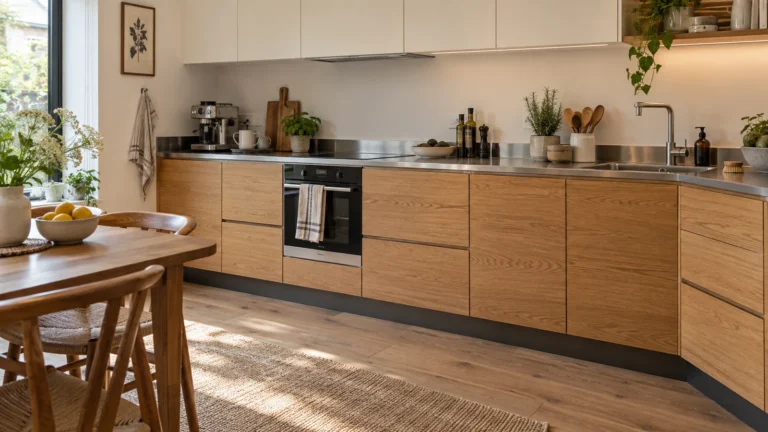
Review the proposed hob, steel finish and decorative fronts together. A domestic kitchen can use a visible steel worktop with timber, white or coloured fronts; there is no need to turn the whole cabinet run into a commercial equipment-bank appearance.
Send the exact model, destination and approved local survey information with the project drawing. You appoint the local measurement and installation team, including the appropriate electrical professional. Anray does not provide a local installation team; any worktop detail or manufacturing capability must be confirmed within the agreed scope.
Questions about flush induction hobs
Does frameless mean flush-fit?
Use the manufacturer’s installation options for that model. The visible glass edge alone does not establish which mounting method is supported.
Is a flush hob automatically easier to replace?
Review the removal and replacement detail before ordering. The current cutout, joint and underside access remain relevant, and a future appliance may require a different arrangement.
Can I choose the opening before the appliance?
For a custom top, approve the exact model and installation method first. Then release the coordinated drawing, with its revision and responsibilities recorded.
Review the project before production
Send your floor plan, destination and the exact equipment drawings for a preliminary kitchen-interface review. You appoint the local measurement and installation team; any manufacturing detail remains subject to the agreed drawings and scope.