Blog / Materials
Materials · Buyer guide
How to Approve Cabinet Finish Samples Before Production
The short answer
Approve a physical cabinet sample that represents the proposed front construction and finish, then record what it covers. Identify the colour, sheen, texture, direction and edge treatment, together with the cabinet parts using that specification. Photographs help document the decision, but should not be the sole basis for colour approval.

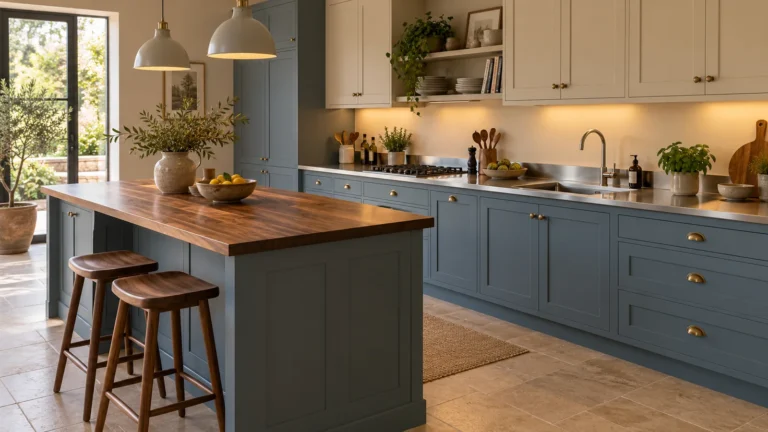
A stainless steel kitchen can combine a metal worktop with warm wood-look fronts, quiet whites or a stronger island colour. Record the decorative front finish separately so the factory knows which colour and surface you have approved.
In a Houzz discussion about cabinet colour, an owner questioned the difference between their chosen colour and the finished cabinets. Another participant described approving a corrected physical sample before work proceeded. These individual experiences point to a purchasing question worth settling early: which sample will both parties use to check the finished order?
Use a colour code to identify the idea, then examine the sample
A code is a useful starting reference. Ask the supplier to state the proposed finish system and how the submitted sample relates to it. A colour chip for one material is not confirmation of the finished cabinet door’s construction or edge treatment.
Dulux’s colour-accuracy statement explains that screens, settings and lighting can change how a displayed colour compares with the actual product, and recommends a colour sample. Apply that distinction when collecting kitchen inspiration: keep the photograph for the design direction and use a representative physical sample for the order decision.
For a powder-coated proposal, there are manufacturer processes that use a coated swatch for approval, such as Dulux’s CustomColour service. This is an example of the confirmation method, not a statement that Anray uses Dulux or offers that service’s terms.
Choose samples for the decisions you still need to make
Ask which decision each sample can support. A small finish swatch might help narrow a colour, while a representative door section can show the edge and visible construction. If the design includes a large island end, ask whether a larger representative panel is available before treating the small swatch as sufficient.
Agree the sample scope, cost and timing with the supplier. Do not assume every sample size, finish or complete door is available without a separate arrangement.
| What you want to decide | What to request | What remains a separate check |
|---|---|---|
| Colour beside the worktop | A labelled finish sample viewed with the proposed worktop sample | Complete door construction and project specification |
| Sheen and surface character | A representative finished surface with its description | Any claimed performance or cleaning resistance |
| Visible edges | A sample showing the intended edge or return detail | Appliance clearances and fixing positions |
| Wood-look direction | A marked sample and elevation showing the proposed orientation | Whether adjacent pieces will be matched in the quoted scope |
| Large exposed end panel | An agreed representative panel or demonstration of the proposed finish | Final dimensions, attachment and installation |
This table is a suggested buyer review process. It does not certify a finish’s durability or establish a universal acceptable variation.

Review the visible kitchen as a group
Place the proposed front, worktop and splashback samples together where the kitchen will be used, if possible. Look at the arrangement in daylight and with the planned room lighting. Then view it from the room entrance and the seating area as well as close to the worktop.
When you approve a finish, put the sample reference in the message or approval form. Identify the sample and the parts it covers. Is the island the same as the wall run? Are the visible cabinet ends included? Does the plinth match the doors or use another finish?
For a wood-look design, mark the intended direction on the elevation. Ask the supplier what continuity or matching is included, rather than inferring it from an inspiration photograph. For a coloured design, confirm whether fronts and exposed side panels use the same specified finish system.
Our guide to a warmer residential stainless steel kitchen covers the broader visual choices. Keep the selected samples and their references with the order specification.
Keep an approval record both parties can use
A practical record should identify the project, sample reference, revision and approval date. Add the finish description and the cabinet parts to which it applies. State whether the approval is for appearance only or also for a documented construction detail.
Agree where the physical reference will be kept and whether matching reference pieces are needed by the buyer and factory. Use photographs to record labels, orientation and visible details. Keep the physical sample as the reference for the appearance decision where that is the agreed method.
Describe any unresolved item explicitly. For example: “Front colour accepted; exposed island-end sample still to be reviewed.” That is a hypothetical record entry, but it shows why a partial approval should not silently become approval of every visible surface.
Reopen approval when the specification changes
Suppose the proposed island end changes from a narrow panel to a broad exposed face. Ask whether the existing sample still represents the new item and whether another review is appropriate. Similarly, a change in finish process, substrate or edge detail should prompt the supplier to identify what is different before manufacture continues.
Ask how the approved sample will be used during the factory check and how any agreed variation will be assessed. Do not invent a numerical colour tolerance or assume a measuring procedure is included. If a measured tolerance matters to your project, agree the method and acceptance criteria with the supplier before ordering.
Approval of a decorative surface does not verify everything behind it. Use the cabinet materials breakdown to check the separate descriptions for the front, core, cabinet body and worktop. Request evidence separately for any performance claim that matters to the purchase.
Define the sample package for your kitchen
Send your layout and shortlisted finishes through Anray’s project review page. Mark the visible island ends, appliance fronts and contrasting areas so the required sample scope and supply conditions can be discussed before you approve production.