Blog / Systems
Systems · Buyer guide
What Size and Depth Should an Integrated Stainless-Steel Sink Be?
The short answer
Choose the usable bowl size around your largest regularly washed items, then check the cabinet, plumbing and remaining preparation space. Confirm depth separately from width. For a welded-in sink, approve a dimensioned bowl drawing and test the reach before fabrication, because changing the bowl later can involve the worktop.
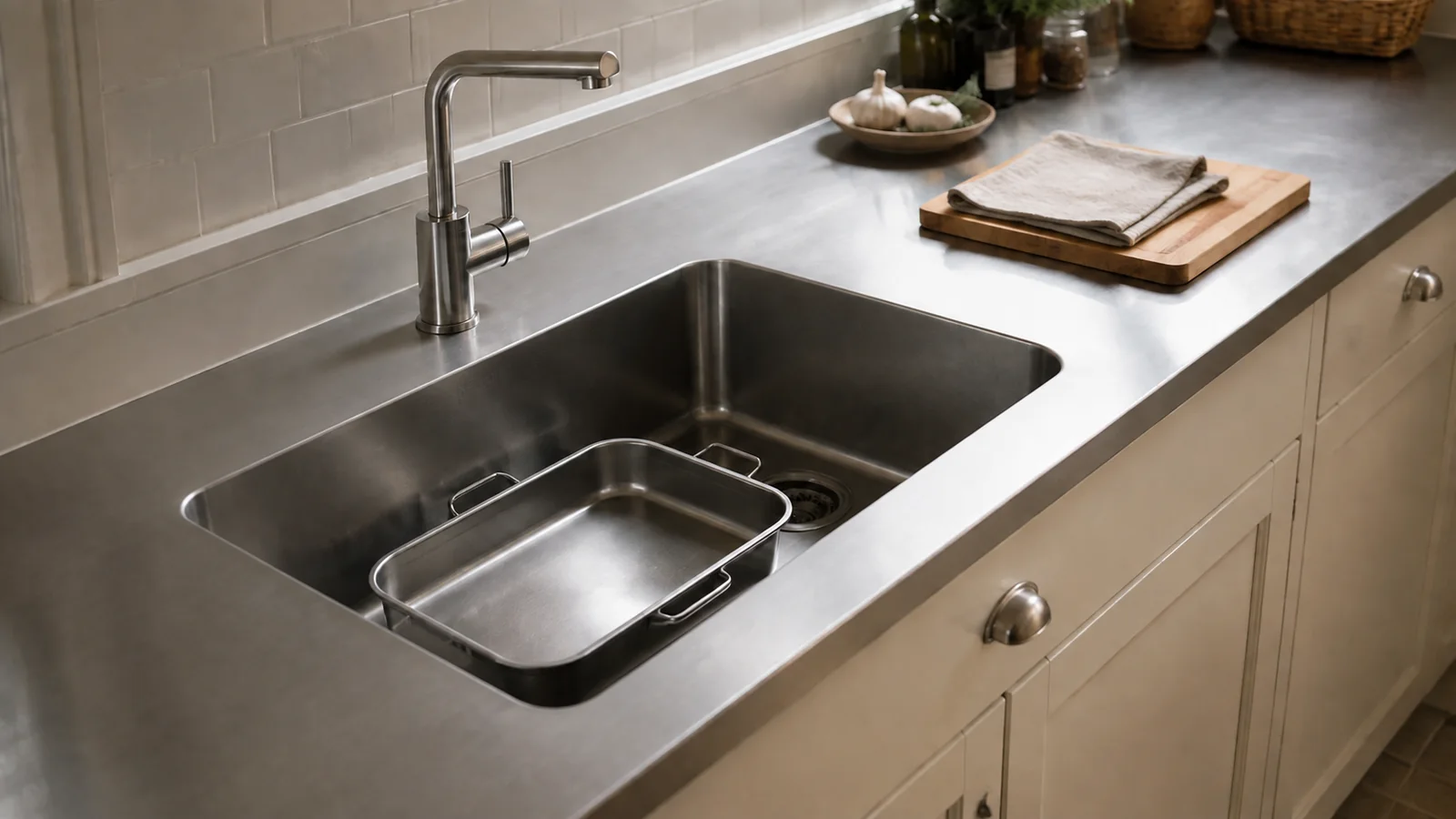
A bigger sink can make washing a roasting tray easier. It can also take space from the preparation area you use every day. The right choice is the bowl that fits your routine and the surrounding kitchen, not the largest rectangle that can be drawn into the worktop.
In a 2026 homeowner discussion about large single-bowl sinks, users weigh cookware fit against lost counter space, filling the bowl and reaching its bottom. Experiences differ. The discussion supports testing your own tasks, not a claim that one size suits most households.
Which measurement are you actually comparing?
| Dimension | What it tells you | What it does not tell you |
|---|---|---|
| Overall sink dimensions | The external envelope of a supplied sink | The flat usable area inside the bowl |
| Internal bowl dimensions | The space available for washing | Whether the supporting cabinet and connections fit |
| Bowl depth | The distance down into the bowl, from a defined reference | Whether reaching the bottom feels comfortable |
| Cabinet dimensions | The enclosing furniture envelope | The clear space after walls, rails and services are included |
For a custom integrated sink, ask the fabricator to label the internal opening, bottom dimensions, depth reference and outside envelope. Rounded corners or tapered sides can affect how a rectangular tray rests inside. An attractive top-view rendering is not a substitute for these measurements.
Use your largest regular washing task as the test
Choose the items that genuinely need the sink: perhaps a baking tray, chopping board, wok or stockpot. Include handles. Note whether they need to lie flat for soaking or only be held at an angle for rinsing. An occasional oversized item may not justify sacrificing a substantial part of a compact worktop.
Make a cardboard outline of the candidate bowl and place it on the proposed worktop plan. Then mark a chopping board and a place to set washed items beside it. You are comparing a working area, not an isolated product. If two people commonly cook together, test their tasks at the same time.
BLANCO recommends selecting a sink before the layout, counter and cabinet choices are settled. For an integrated stainless-steel worktop, use that principle to agree the bowl before the fabrication drawing is released.
Choose depth with a reach test
Do not assume that deeper automatically means better. Test a bowl at a comparable finished worktop height, standing as you would at home. Can each regular user comfortably reach and retrieve an item from its bottom? Repeat with the intended front-to-back position; a bowl set farther away changes the task.
This is a practical preference test, not medical or accessibility advice. Where a project has accessibility requirements, have the local designer apply the relevant requirements to the complete arrangement rather than selecting a sink from this article.
Specify depth in words as well as numbers: identify the top reference and the bottom reference. A dimension labelled only “depth” can mean front-to-back size in one catalogue and vertical bowl depth in another. Resolve that ambiguity before approval.
Check what happens below the bowl
Ask for a section showing the bowl, waste fitting, trap, water connections and proposed storage. If a food-waste disposer, filter or other equipment is planned, provide its exact model and service-space requirements. A deeper bowl changes the space left for those components; the plumbing professional must confirm the proposed connection arrangement.
BLANCO’s sink-cabinet guidance highlights the need to coordinate storage with hoses and plumbing. It is a useful reminder that an impressive sink and an impressive under-sink drawer cannot be specified independently.
Single bowl, divided bowl or an accessory system?
A single bowl provides one uninterrupted washing area. A divided arrangement gives separate compartments, but each compartment must be tested against the cookware it needs to hold. Choose according to how you wash rather than assuming one arrangement is more advanced.
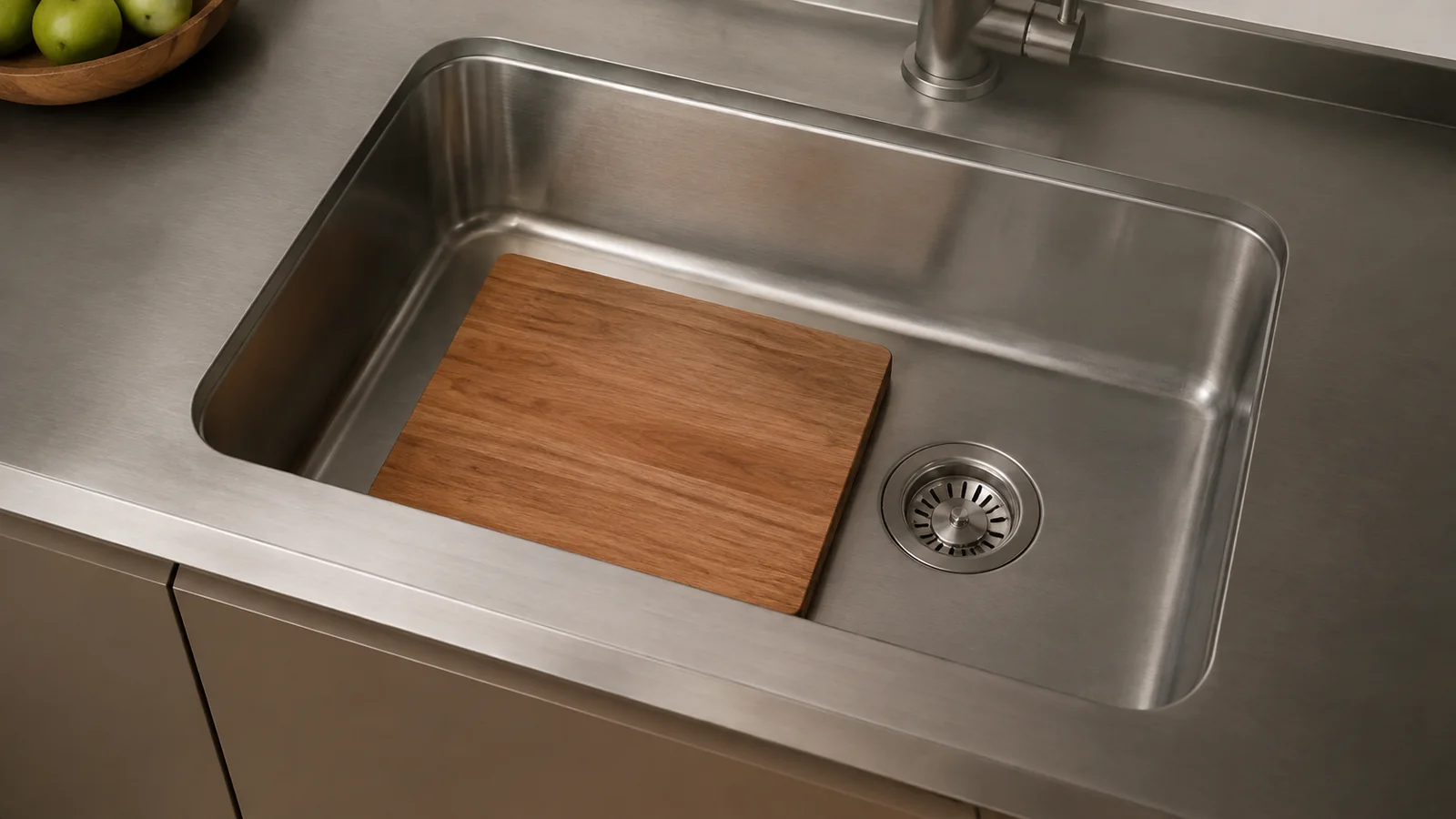
If you use a small washing basin inside a larger sink, test its stability and how you will empty it. If you want a board, colander or drying rack that sits over the bowl, specify the compatible accessory and support detail. Do not assume an accessory from another brand will fit a custom integrated bowl.
An over-sink board can provide a working surface while in position, but that is not the same as permanently available worktop. Check what happens when someone needs the sink while someone else is preparing food on the board.
What belongs on the approval drawing?
- Usable bowl width, front-to-back size and vertical depth, with reference points.
- Bowl location relative to the worktop front, wall and cabinet divisions.
- Corner shape, drain location, tap position and any accessory interfaces.
- External bowl and plumbing envelope below the surface.
- Remaining clear preparation area and the neighbouring appliance arrangement.
- The agreed inspection method for dimensions, finish and drainage.
Drainage is a separate acceptance issue: a suitable bowl size does not prove that water will drain as intended. See the integrated-sink drainage guide.
Can the bowl be changed later?
Do not plan on a simple swap when the bowl is welded into the worktop. The feasible remedy depends on the assembly, access and the fabricator’s assessment. Our welded-in sink repair and replacement guide explains that decision. Approving the bowl around real tasks before production is the more useful starting point.
Review the project before production
Send your floor plan, destination country and project quantity for a preliminary specification review.