Blog / Materials
Materials · Buyer guide
Stainless Steel vs Solid Wood Kitchen Cabinets: Warmth Without a Wood Box
The short answer
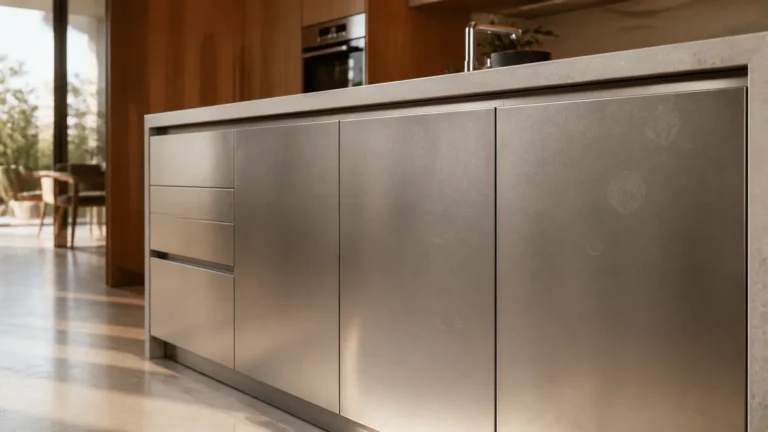
A stainless cabinet body can support a warm residential kitchen while avoiding wood’s moisture-driven swelling and shrinkage in that body. The doors remain a separate choice. Compare genuine timber, veneer and wood-look finishes deliberately, and confirm which parts of each “solid wood” or “stainless” proposal actually use the named material.

You can start with the timber appearance you want beside the dining area and consider a stainless structure behind it. The visible fronts and concealed cabinet bodies do different jobs, so give each its own material decision.
In a Houzz discussion about a humid oceanfront home, an owner wanted attractive wood cabinetry that would work with the conditions and existing woodwork. That is a useful starting point: keep the desired room appearance in view while choosing the construction beneath it.
What does “solid wood kitchen” include?
The phrase may describe the doors or face frames rather than every cabinet side, shelf and back. A proposal can combine solid timber fronts with plywood bodies, veneered panels or other materials. Ask the supplier to identify those components before comparing the proposal with steel cabinetry.
The stainless proposal needs the same clarity. A steel worktop over a wooden cabinet body is not the same as a steel cabinet body. Nor does a silver-looking door identify its hidden construction. This article compares the material of the specified components; it does not assume that either kitchen is made entirely from one substance.
Use our guide to what is actually stainless in a kitchen if the quotation stops at a broad product name.
Humidity and the cabinet body
Wood exchanges moisture with the surrounding air. As its moisture content changes below fibre saturation, it can swell or shrink. The USDA Wood Handbook, Chapter 4, explains these relationships and notes that coatings slow moisture exchange rather than completely preventing it.
Timber design accommodates this behaviour. How a particular cabinet performs depends on its species and construction as well as the indoor environment; humidity alone does not predict failure.
A steel component has no wood fibres undergoing that moisture-driven movement. The buyer’s advantage is therefore specific: a genuinely steel cabinet body removes that wood-related mechanism from the body. Timber fronts mounted to it remain timber, and their construction still needs to suit the room.
For a humid home, this gives you a reason to discuss steel bodies early, even when the desired front elevation is warm and natural. It allows the concealed structure and visible timber elements to be chosen for their different jobs.
Choose which kind of wood appearance matters to you
| What you want to see | What to specify | How stainless can fit |
|---|---|---|
| Genuine timber fronts | The wood species, door construction and finish. | Discuss a separately specified steel body with suitable front fixing details. |
| A real wood veneer | The veneer and the complete panel beneath it. | Keep the decorative panel specification distinct from the cabinet structure. |
| A wood-look decorative surface | The actual finish, substrate and edge appearance. | Ask whether the proposed steel cabinet system can provide the approved front appearance. |
| Painted cabinetry with timber accents | The coloured fronts and selected visible timber elements. | Use steel where wanted in the cabinet body and work area without making it the room’s main visual feature. |
These options are not interchangeable. A buyer who wants natural timber may not accept a printed grain, however convincing a photograph looks. Make that preference explicit rather than leaving the supplier to choose the meaning of “wood finish.”

Keep warmth in the visible room
Consider a hypothetical kitchen with an oak-tone island face, pale tall cupboards and a stainless sink worktop. From the dining area, the fronts and island end establish most of the composition. You can review a steel cabinet body behind them without turning the entire room silver.
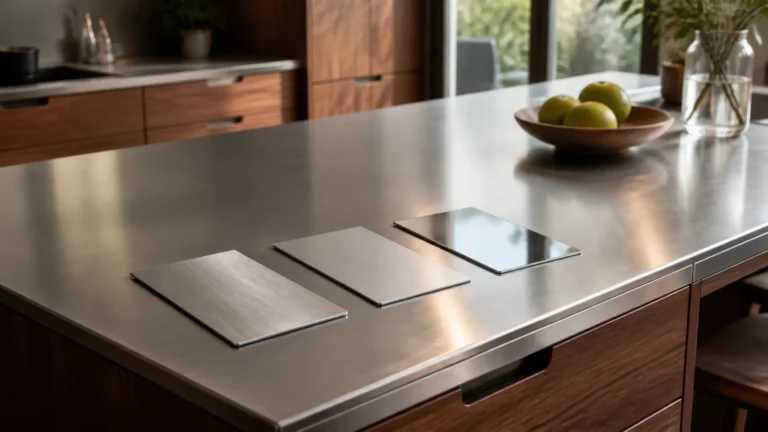
Ask for a front sample beside the intended worktop finish. Review the grain direction at the island end and the colour under the lighting you plan to use. Keep the underside of the breakfast overhang and the exposed side panels in the drawing; they are visible from seated positions.
There are residential market examples of this separation. Cleanup’s STEDIA range identifies a stainless cabinet structure while offering coordinated door and side-panel choices. That supports the design principle, not an assumption that Anray supplies the same panel system.
Our warm residential kitchen guide covers the broader composition. Here, the material comparison gives you a way to preserve that composition while changing the concealed body.
Give the supplier a room-specific brief
State whether the kitchen is regularly conditioned, open to the outside, or used only during part of the year. Describe actual conditions without converting them into a blanket “tropical-proof” requirement. If the home is coastal, have the supplier assess the exposure when selecting the metal grade and finish.
Then identify the components you want in steel. You might start with the sink run, or prefer the same body construction across the kitchen. Discuss whether the chosen door and end-panel design can be retained in either arrangement.
Ask for one section through the proposed cabinet and front connection. That drawing should make clear where the steel ends and the decorative construction begins. For a genuine timber front, the supplier should explain how the front is built and attached; the metal box does not change the timber into a different material.
When stainless is the more useful structural choice
Choose a stainless body where you want to remove wood from the concealed structure while keeping a warm front elevation. Ask the supplier to document the assembly that connects the two, especially in the areas where moisture concerns prompted the change.
If the project is mainly about retaining traditional timber joinery and its existing construction, that preference also belongs in the decision. Compare the actual proposals instead of treating “solid wood” as a single quality rank. A steel body can be a deliberate upgrade without replacing every timber feature that makes the room appealing.
Keep the wood appearance in your brief
Send Anray your kitchen plan and timber or wood-look references. Say whether genuine wood is essential, describe the room conditions and identify the cabinet bodies you want considered in stainless steel. Material combinations are confirmed for the project, with final measurement and installation arranged locally by the customer.